Gilded Map Art Inspired by Pinterest

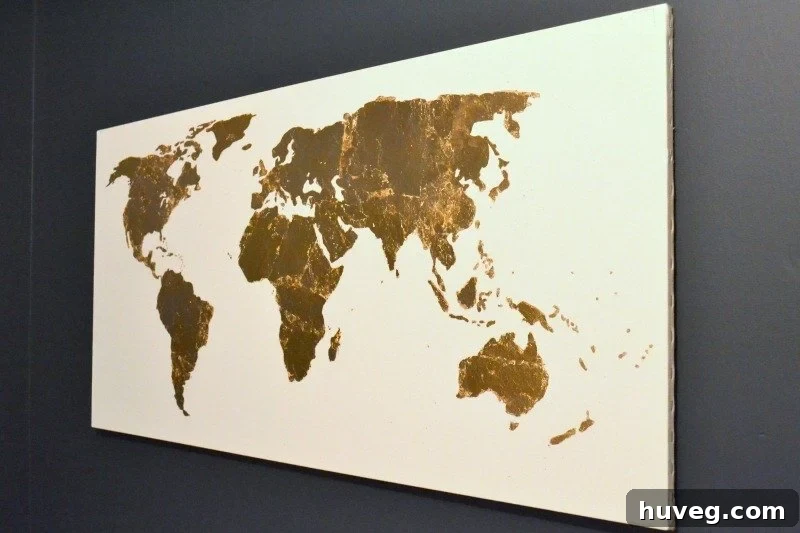
The world of online inspiration, particularly platforms like Pinterest, often evokes a mix of exhilaration and overwhelm. It’s a treasure trove of creative ideas, a visual feast that sparks imagination and ignites the desire to embark on countless DIY adventures. Yet, this very abundance can also lead to a charming form of procrastination, diverting attention from pressing tasks – say, the still-unfinished drywall repair in the bathroom – towards more enticing, often spontaneous, creative endeavors. This delicate balance between essential chores and irresistible projects is a common dilemma for many DIY enthusiasts. It was precisely this delightful distraction that led to the creation of my new office map art, a captivating piece adorned with elegant gold leaf, a project I might otherwise have saved for a metaphorical “rainy day.”
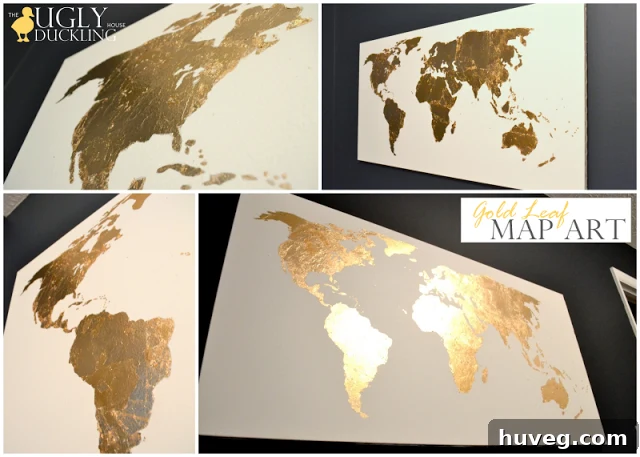
Embracing the Pinterest Challenge: Inspiration Strikes Amidst the Rain
As fate would have it, the weather this week provided the perfect excuse for indoor creative pursuits – it’s been absolutely pouring! The persistent rain not only kept me indoors but also coincided perfectly with a surge of camaraderie among my fellow blogging friends. These wonderful “enablers” often collaborate on exciting, shareable spectacles, such as the highly anticipated Pinterest Challenge. While I’ve previously managed to resist the siren call of past challenges, often due to an overwhelming schedule, this time felt different. The combination of dreary weather and a genuine desire to tackle a new project converged, making it the ideal moment to dive in. My specific inspiration for this project stemmed from this captivating image I had pinned, a piece that beautifully blended cartography with the luxurious touch of gold.
| Original inspiration from The Happier Homemaker. |
The Genesis of Gold: Repurposing and Prepping the Canvas
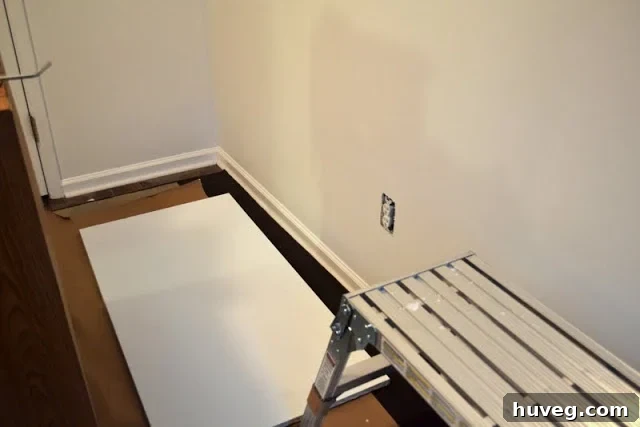
The journey to this golden map art began shortly after a fresh coat of paint transformed my study-o (my combined study and office space). During the post-painting tidy-up, I stumbled upon a forgotten treasure in the back of my closet: an old canvas. It was, I must confess, rather hideous – unfinished, uninspired, and begging for a new purpose. Canvases of this size are not a trivial expense, so the opportunity to repurpose and revitalize it felt like a smart, sustainable, and budget-friendly choice. To give it a clean slate, I simply grabbed some leftover wall paint, a practical and cost-effective solution, and applied an even coat to completely cover its previous drab existence. This simple step breathed new life into the old canvas, preparing it for its grand transformation into a piece of art that would truly reflect the refreshed aesthetic of my study-o.
Mastering the Map Transfer: An “Old School” Approach for Precision
With the canvas prepped and pristine, the next phase involved the delicate, yet incredibly satisfying, process of transferring a detailed map outline. I opted for a tried-and-true, “old school” method, which, despite its manual nature, offers exceptional control and accuracy. This method is particularly rewarding for those who appreciate a hands-on approach to their DIY projects.
Step-by-Step Map Transfer Guide:
1. Scale, Print, and Assemble Your Map Outline: First, find a suitable world map outline image online. Look for high-resolution images that are clear and detailed. Utilize a graphics program, or even a basic word processor, to scale the image to your desired size, ensuring it will fit aesthetically on your canvas. If your map is larger than standard printer paper, you’ll need to print it in multiple sections. Carefully trim the edges of each printed section and meticulously tape them together, ensuring a seamless and accurate overall outline. Precision here is key for a professional-looking final product.
2. Prepare for Transfer with the Pencil Method: Once your full map outline is assembled, grab a soft-lead pencil (a standard HB or B pencil works perfectly). Flip the entire taped paper image over so the printed side faces down. Using a strong light source – a window during the day, or a brightly lit desk lamp – position the paper so you can faintly see the dark outline of the map through it. Now, meticulously rub the pencil lead along every single part of the outline on the back of the paper. You’re essentially creating a graphite transfer layer. Ensure an even, dark application of pencil lead to guarantee a clear transfer. This step is crucial for the subsequent tracing process.
3. Trace Your Way to a Perfect Outline: With your graphite-backed map ready, carefully position it onto your freshly painted canvas. Secure it gently with painter’s tape to prevent any shifting during the tracing. Now, flip the image back over to its original, printed side. Using a slightly firmer, but still careful, hand, trace along the map’s outline with a pen or a sharp pencil. As you press, the graphite on the back of the paper will transfer onto the canvas. When you meticulously lift up the paper, you will be left with a clean, albeit probably light, pencil outline of your transferred map image on the canvas. Don’t worry if the lines are faint; they serve as your guide for the next exciting step.
For those who prefer alternatives, graphite paper (also known as carbon paper) offers a similar, often cleaner, transfer method. Simply place the graphite paper between your printed map and the canvas, then trace. Another option for larger, more complex designs is using a projector to cast the image directly onto the canvas, allowing you to trace it freehand.
The Midas Touch: Applying the Gold Leaf with Finesse
Now for the truly transformative step: applying the gold leaf to bring that coveted “Midas touch” to the map. For this intricate process, I utilized a specialized adhesive pen designed specifically for gold leaf application. This tool offers excellent control, allowing for precise lines and easy filling of larger areas.
I meticulously traced along the delicate pencil outline of the map on my canvas using the adhesive pen. Additionally, I used the pen to fill in entire sections of continents, creating solid gold areas that would stand out. A key characteristic of gold leaf adhesive is its quick drying time; it typically becomes tacky and ready for leaf application in only about five minutes. To manage this efficiently and prevent the adhesive from drying too much before the gold leaf could be applied, I approached the project in small, manageable sections, working continent by continent or even country by country within a larger continent.
The most challenging aspect of working with gold leaf is its extreme delicacy and susceptibility to damage. Exposure to finger oils can easily tarnish the leaf, leaving unsightly smudges or dull spots. It’s incredibly tempting to handle each sheet directly, but it’s vital to avoid this. I found that using soft cotton gloves, or even just carefully manipulating the sheets with the paper they come on, greatly helps. Applying each sheet as a whole is ideal for larger, unbroken areas. Once the gold leaf is carefully placed over the tacky adhesive, gently press it down with a soft, clean brush or a piece of tissue paper to ensure good contact.
To remove the excess gold leaf that didn’t adhere to the adhesive, a very soft, dry paint brush is your best friend. Gently brush away the loose flakes, revealing the crisp, gilded lines and solid gold areas beneath. Don’t discard these delicate flakes! They can be collected in a small bag or container and reused for additional applications, such as filling in any small gaps or imperfections you might find later. These tiny, ethereal flakes have a tendency to waft everywhere with the slightest breath, so containing them is crucial for a tidy workspace.
This meticulous process, involving hours upon hours of careful tracing, applying adhesive, and delicately pressing and brushing gold leaf, eventually culminated in a nearly finished product. The dedication required is immense, but the visual reward is truly unparalleled. Each stroke and carefully placed piece of gold leaf brought the world map to life in a shimmering, opulent display.
The Final Flourish: Sealing and Displaying Your Masterpiece
Once all the gold leaf was applied and the excess removed, a crucial final step remained: sealing the artwork. Gold leaf, particularly imitation leaf, can be fragile and prone to tarnishing or flaking over time if not properly protected. A clear sealer is essential to lock in the brilliance and ensure the longevity of your stunning creation. There are various types of sealers available, including spray-on and brush-on options, with finishes ranging from matte to glossy. For this project, I opted for a clear, non-yellowing spray sealer, applying several light, even coats according to the manufacturer’s instructions, allowing adequate drying time between each application. This protective layer ensures that the gold leaf retains its luster and durability for years to come.
With the sealer dry and the gold leaf securely protected, my new study-o art was officially ready for its debut. Hanging this personalized piece immediately elevated the aesthetic of the space, adding a touch of sophistication and global charm.
Pinterest Challenge: Gold Leaf Map Art – A Creative Triumph
Stepping back to admire the finished gold leaf map art, a sense of deep satisfaction washed over me. The piece turned out even better than I had envisioned, truly transforming the once-drab canvas into a focal point for my home office. I particularly appreciate the subtle imperfections that emerged during the intricate process; they lend the map a beautiful, worn, and authentically aged character, adding depth and history to the piece. Every well-designed office, in my opinion, benefits from a few aged and unique elements that tell a story. This DIY gold leaf map art perfectly fulfills that desire for a personalized touch.
Having successfully met the creative demands of the Pinterest Challenge, and created a piece of art that perfectly complements my newly painted study-o, I can now, perhaps, return my attention to more pragmatic household tasks. The bathroom drywall, for instance, still awaits its much-needed repair.
(That last thought still doesn’t quite sound right, but the sentiment remains!) It’s a reminder that while creative projects fuel the soul, practicalities always beckon. But for now, I’m content basking in the golden glow of this DIY success, a testament to the power of inspiration, repurposing, and a little bit of patience. This project not only added a stunning piece of art to my home but also reinforced the joy of bringing personalized visions to life through DIY.