Craft Your Own Plywood Wine Art Display

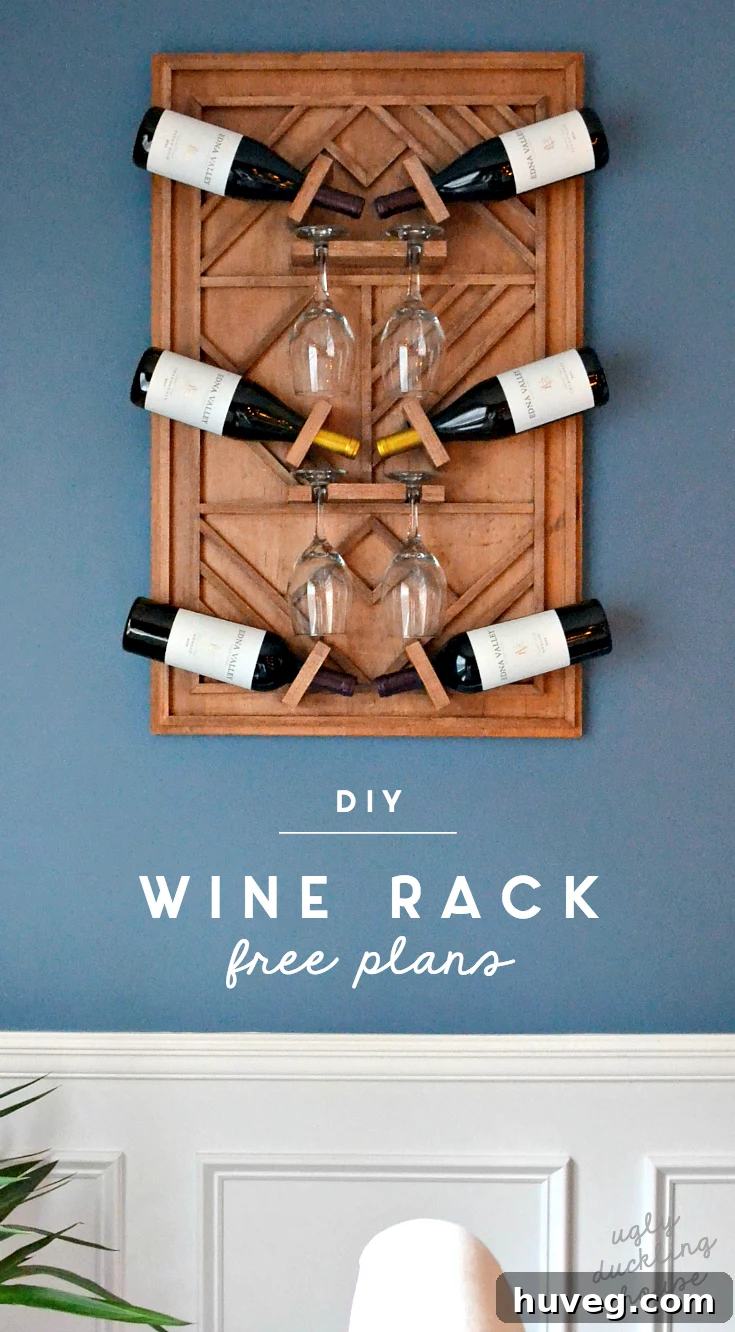
Welcome to a project that has truly transformed my dining room! This DIY plywood art wine rack is more than just a storage solution; it’s a statement piece that brings warmth, a contemporary aesthetic, and incredible functionality to our entertaining space. After months of planning and dedicated work, I am thrilled to finally unveil this unique creation that perfectly blends artistic flair with practical design.
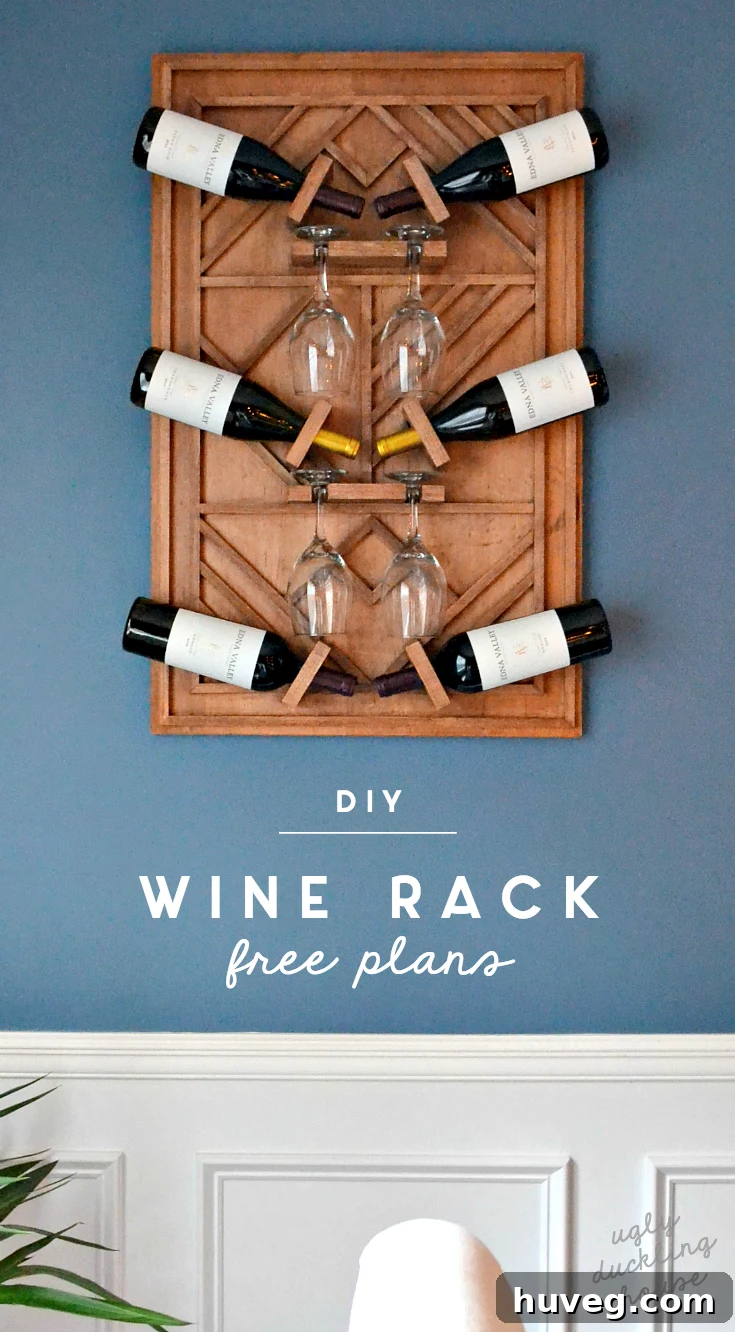
Honestly, the photos don’t quite capture the elegance and craftsmanship of this piece. It’s a true labor of love, designed to not only hold your favorite wines but also serve as a striking focal point in your home.
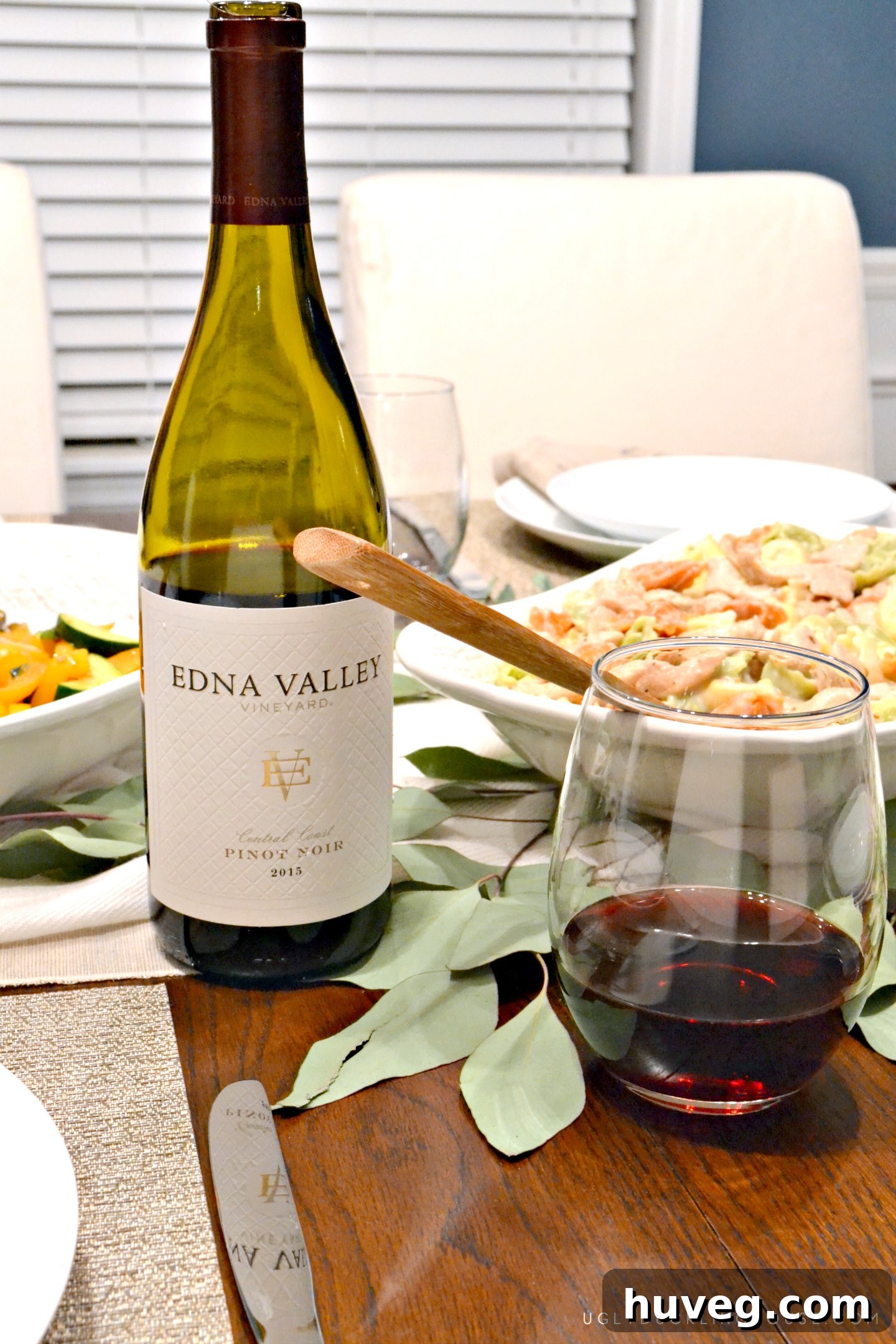
This special post is proudly sponsored by Edna Valley Vineyards. As a genuine wine enthusiast, the opportunity to experience their exquisite wines and pair it with a custom build like this was simply irresistible. My passion for building a unique wine rack truly shines through in every detail of this project. Rest assured, all thoughts, images, and perspectives shared are entirely my own.
Embracing the Full Circle: From Renovation Mess to Entertaining Success
For those of you who have followed my journey, you might understand the profound significance of a project like this. Home remodeling is a wonderfully humbling experience. The constant state of flux makes you hyper-aware of every imperfection, yet paradoxically, you also become accustomed to the chaos. You get used to the quiet, to the mess, to a home that isn’t quite “ready” for guests. Then, suddenly, a moment arrives—a turning point where the pieces begin to fall into place, symbolizing a return to normalcy and a new chapter of enjoyment.
Imagine being able to cook effortlessly in your own kitchen again – or, in my case, for the very first time as a true adult! The joy of inviting friends over without hastily stashing tools under the coffee table you just built is immeasurable. It opens up new possibilities, perhaps even rediscovering interests that involve less or even more sawdust. Most importantly, it grants you the chance to unwind, appreciate your hard work, and savor the really good things in life that truly enrich your experiences.
While I’ll probably always have power tools close at hand (they’re BFFs for life), navigating a serious relationship during this remodeling phase brought a poignant realization: I had unconsciously shied away from opening my home to others. In a sense, it mirrored a broader feeling about myself. I was spending far too much time waiting for the house to be “finished enough,” hesitant to expose my incomplete projects to scrutiny. The lingering question was always, “Will they see the potential I envision, or only the imperfections?” It was time to shift that mindset and embrace the journey.
Sharp-eyed readers might recall a bottle of Edna Valley Vineyards making an appearance when I crafted an outdoor drink station earlier this fall. That particular occasion highlighted a clear need in my home:
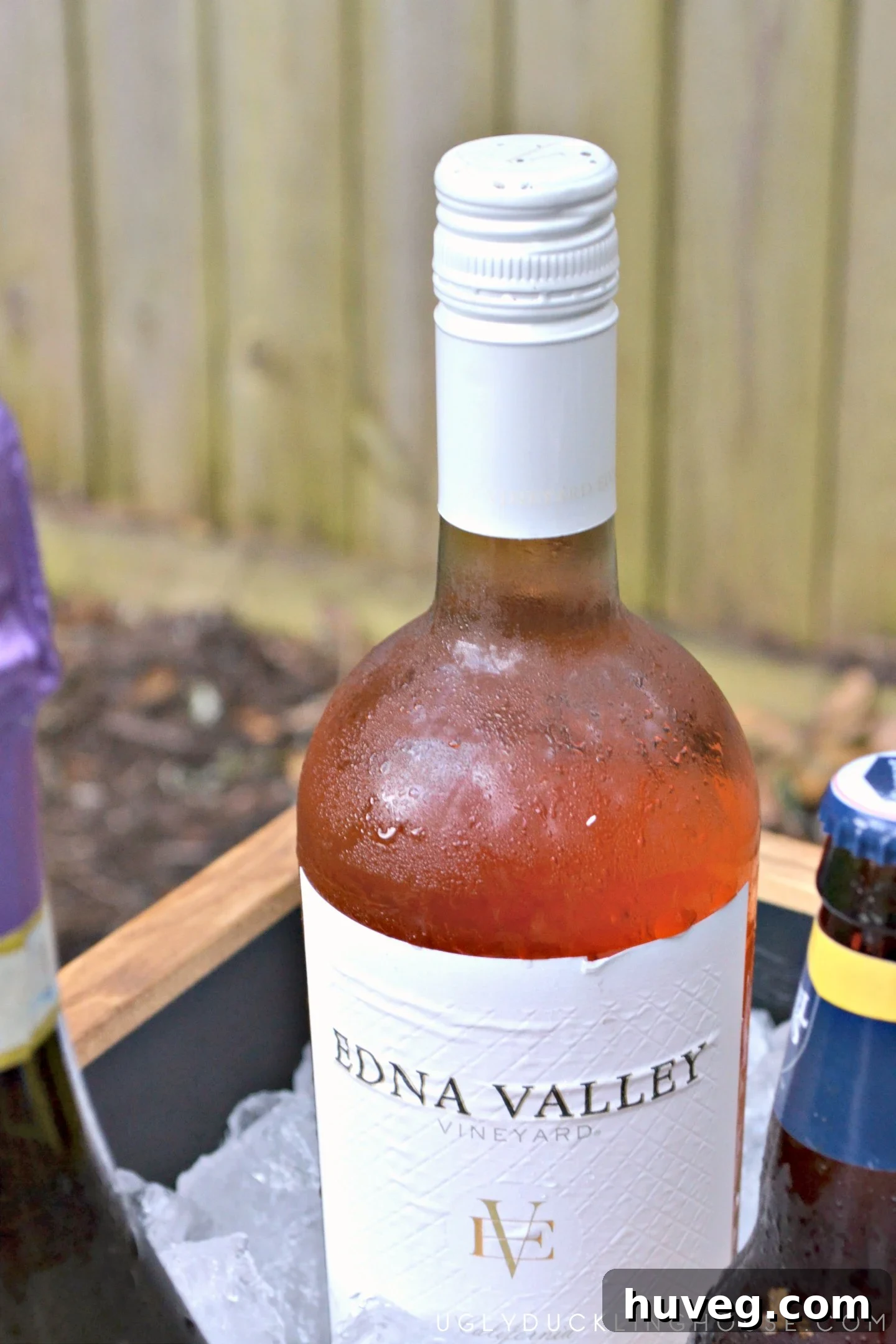
Despite my appreciation for good wine, I lacked a suitable, dedicated space for long-term storage of finer bottles. Wine is often a shared pleasure for me, enjoyed with company or brought to a friend’s gathering. To properly care for my growing collection and prevent corks from drying out, I decided to embark on a project that would serve a dual purpose: an eye-catching art piece for the dining room that also functions as a sophisticated wine rack, perfect for dinner parties and special occasions.
Inspiration and Design Evolution for a Modern Wine Rack
The concept of wood art or plywood art isn’t entirely new, and I certainly don’t claim it as my singular stroke of genius. Many talented DIYers have explored this genre, drawing inspiration from various sources. For instance, Love and Renovations crafted a piece inspired by Brepurposed, who in turn was inspired by All the Bells and Whistles. Similarly, Vintage Revivals found her muse in a restaurant setting. My primary inspiration, however, came from an unexpected place: my new living room rug.
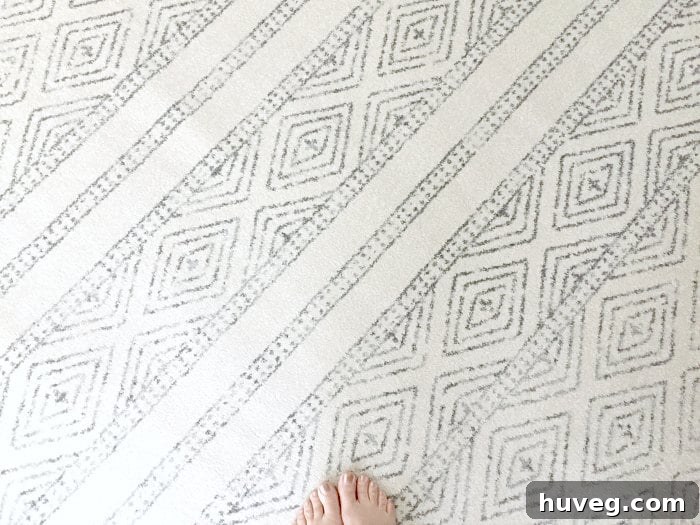
While the finished wine rack may not overtly resemble the rug, its initial design concept certainly did. My first draft for the plans looked quite different:
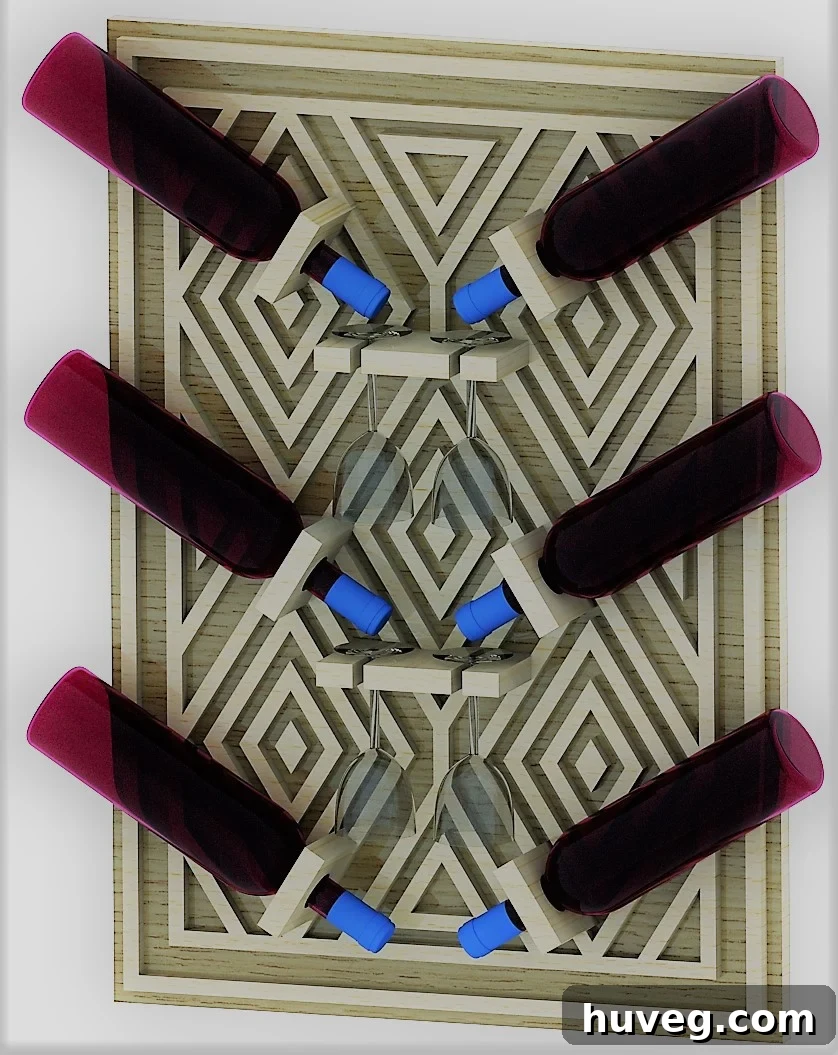
You can see how the intricate pattern closely mirrored my rug! Unfortunately, I was a little too ambitious and didn’t fully consider the practicalities of execution. As I began to translate the design into reality, I quickly realized that the complex angles were far too challenging for my intermediate woodworking skills to achieve with the necessary consistency and precision. Gaps are a major issue in projects like this, and even a slightly misaligned piece could compromise the entire structure. A simpler, more achievable design concept was clearly needed.
Even with a simplified design, I won’t lie—this project still demanded a high degree of precise cuts, leading to several frustrating moments. However, working with square wooden dowels becomes much less intimidating when you have a stable setup for cutting. If you have a generous amount of time and patience to invest, this project is incredibly rewarding, especially during the quieter winter months when the urgency of summer outdoor tasks isn’t pressing. Imagine sitting by a cozy fire, sipping wine, and admiring your handiwork! It’s a fantastic way to enhance your home’s aesthetic and functionality.
I’ve provided a basic list of materials and tools. However, if you prefer not to “wing it” when it comes to the precise placement of each dowel, I highly recommend downloading the detailed plans. I’ve consciously focused on utilizing 45-degree angles wherever feasible, making it much easier to achieve clean cuts with a simple miter box rather than requiring more sophisticated equipment.
DIY Plywood Art Wine Rack: Step-by-Step Construction Guide
Materials Needed for Your Custom Wine Rack
- Approximately 15 – 1/2″ wooden dowels
- 3/4″ sanded plywood for the backing
- 1 – 1x4x48″ poplar board for wine bottle supports
- Wood glue – I recently discovered this amazing product; it’s fantastic!
- Wood stain and poly (optional, but highly recommended for protection and finish) – I opted for American Walnut to achieve a rich, warm tone
- Veneer edge banding for a polished finish
- Wood screws for secure assembly
- Heavy-duty French cleat hanger for safe wall mounting
This post may contain affiliate links — for the full disclosure policy, click here.
Essential Tools for This Project
- Vise – An inexpensive one for a drill press works well / similar options are available
- Pull saw for precise cuts
- Miter box, essential for consistent angles
- Sander and various grits of sandpaper for smooth finishes
- Iron for applying edge banding
- Drill and a set of drill bits
- Ruler (though an angleizer can be even more precise)
- Square for ensuring right angles
- Table saw or circular saw for cutting larger plywood sheets
- 1 3/8″ Forstner bit – ideally used with a drill press for best results
- Paint pyramids to elevate your project during finishing
Step 1: Precisely Cut Plywood to Size
The foundation of any successful woodworking project is a well-prepared base. For this wine rack, the first crucial step involved cutting the plywood down to its final, manageable dimensions. My particular board was a remnant from a previous project – creating a plywood countertop in my laundry room – which meant it lacked a perfectly square factory edge. Achieving a perfectly square backing is paramount. Any deviation at this stage will inevitably throw off the alignment of the entire piece, making subsequent measurements and cuts significantly more challenging and impacting the overall aesthetic.
Step 2: Master the 45-Degree Dowel Cuts
A distinctive feature of this art wine rack is the use of precisely angled dowels. While not every dowel requires a 45-degree cut, a significant number do. To begin, I secured several dowels in the miter box and, using a pull saw, carefully made 45-degree cuts on approximately ten of them. This initial batch provides a good starting point and allows you to get a feel for the cutting process.
Step 3: Cut Each Dowel Piece to Specific Lengths
With the 45-degree angles established, the next task was to cut each dowel piece to its specific length according to the design plans. I found it most effective to use the plans as a visual guide, starting from the outermost “box” and working my way inwards. This meant cutting the longest pieces first and progressively moving to shorter ones. This “outside-in, longest-to-shortest” strategy is incredibly efficient as it minimizes waste. Each discarded segment from a previous cut can often be repurposed for a smaller piece, and crucially, one side of the 45-degree angle is already perfectly cut. There were also a few instances where exact 90-degree cuts were necessary, which are easily managed by hand with the miter box.

Remember, this is your project, so feel free to customize the design! I opted for a good amount of empty space and embraced a slightly asymmetrical arrangement, but you can absolutely get creative with the overall look and density of the dowels. Here’s a diagram illustrating the specific placement I chose for mine:

Step 4: Craft the Wine Bottle Holder Pieces
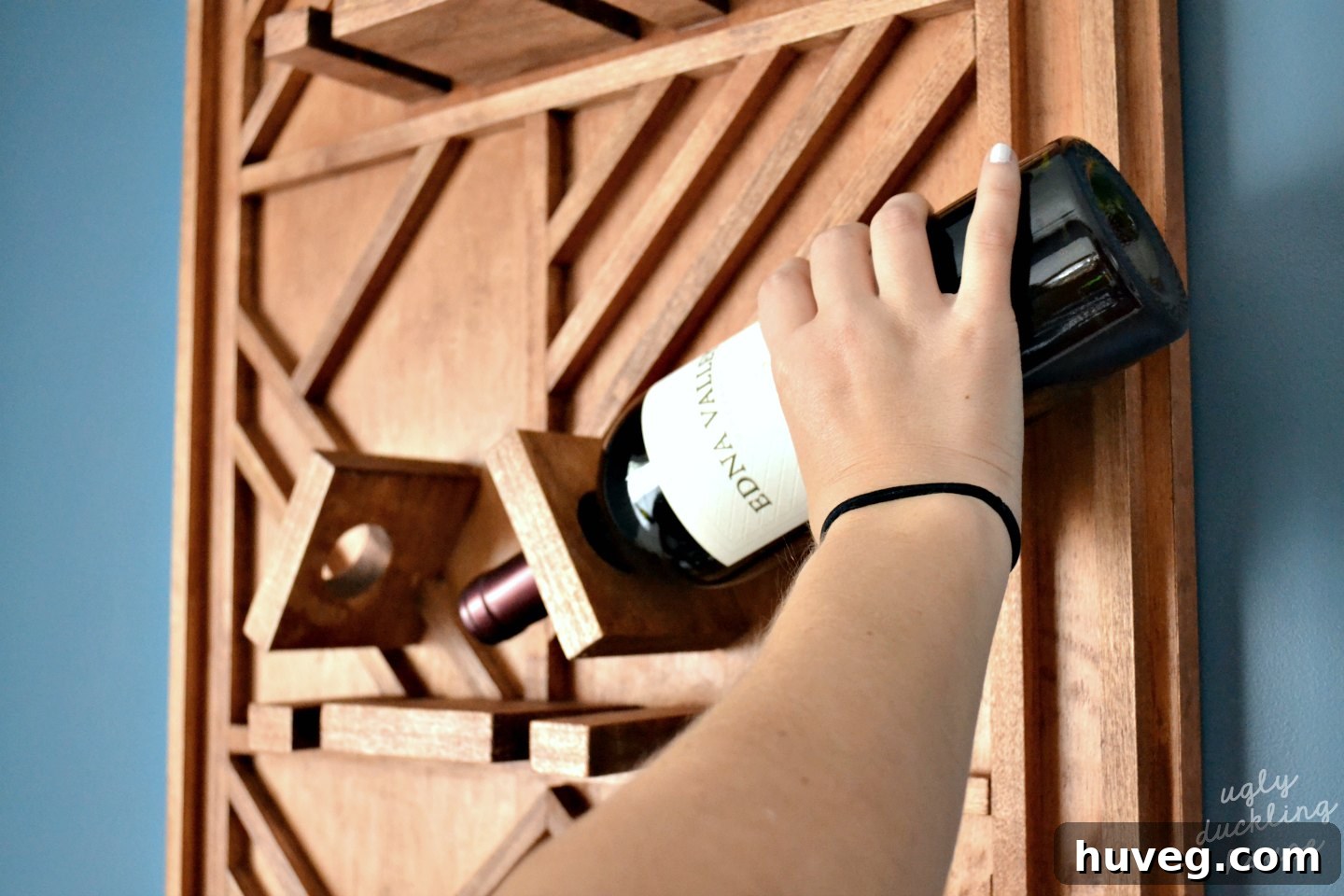
The pieces designed to hold the wine bottles are critical for both stability and function. Because of their importance, I held off on gluing any other elements until these were precisely cut and dry-fitted. I made these supports from 1×4 poplar board. Poplar is an excellent choice here because it often matches the wood species of the dowels found at most home improvement stores. This ensures that when stained, all components will blend harmoniously, resulting in a cohesive and professional finish.
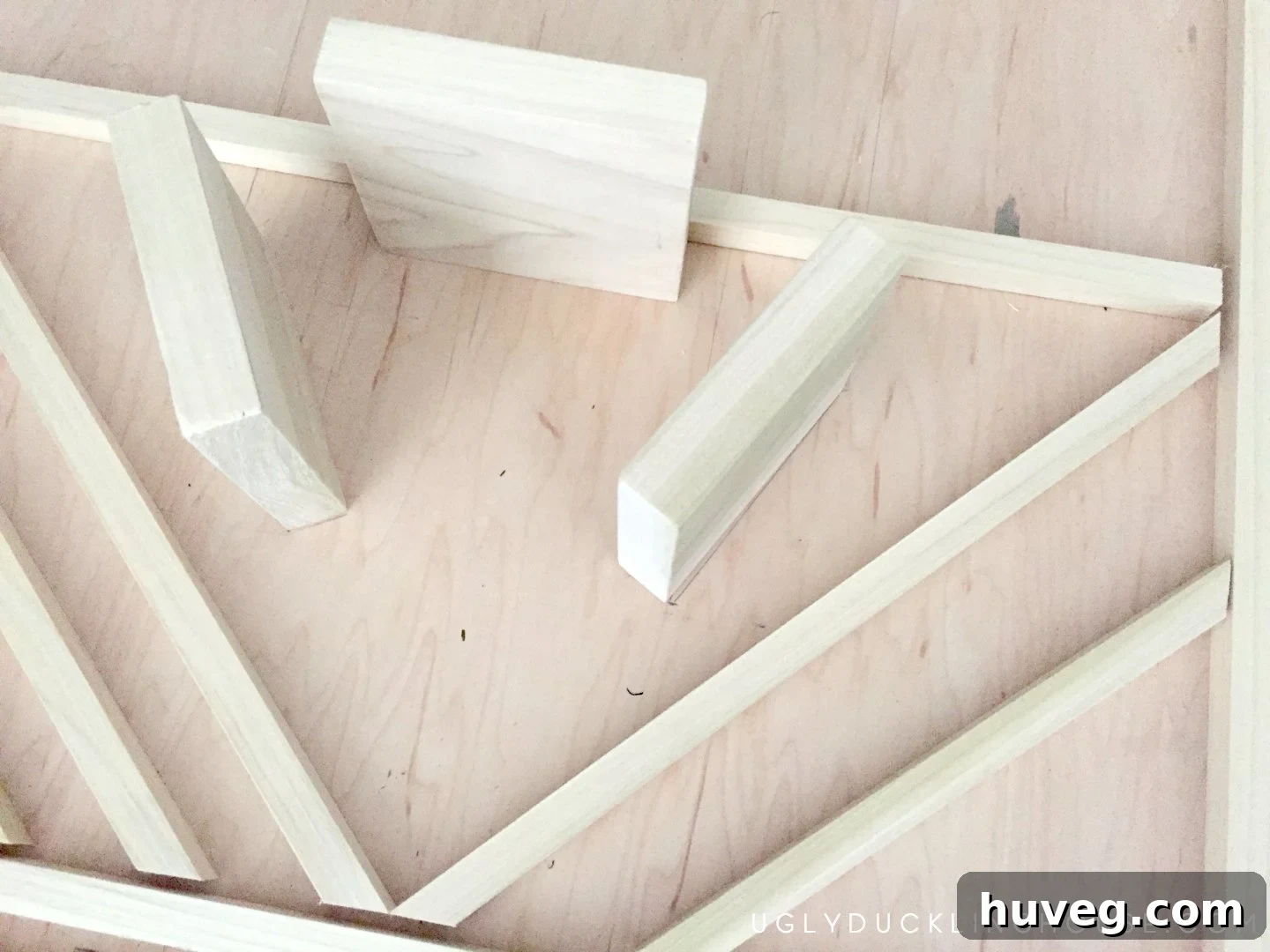
Step 5: Drill Precision Holes for Wine Bottles
Drilling the holes for the wine bottles proved to be one of the more challenging aspects of this project. My initial attempt was done by hand, which, while not impossible, requires immense care to maintain precise placement and keep the wood perfectly steady. A crucial safety note here: always secure your workpiece firmly to prevent slipping, which could lead to injury. My first attempt resulted in quite a mess!
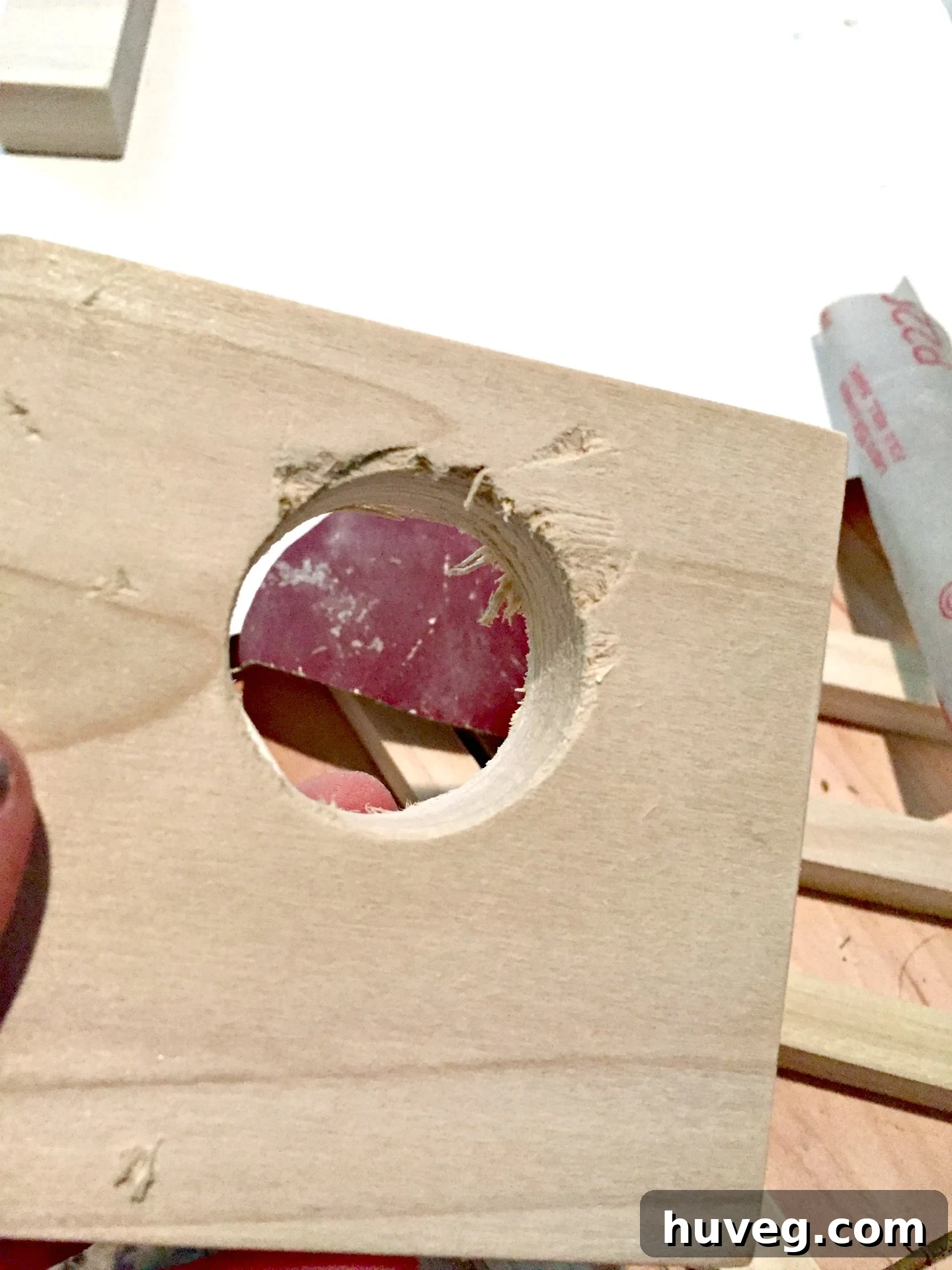
For this task, a Forstner bit is essential. Online recommendations for wine bottle neck openings typically range between 1 3/16″ and 1 1/2″. Lacking these exact sizes, I used a 1 3/8″ bit, which after a quick visual test with a sample bottle, seemed to be just right.
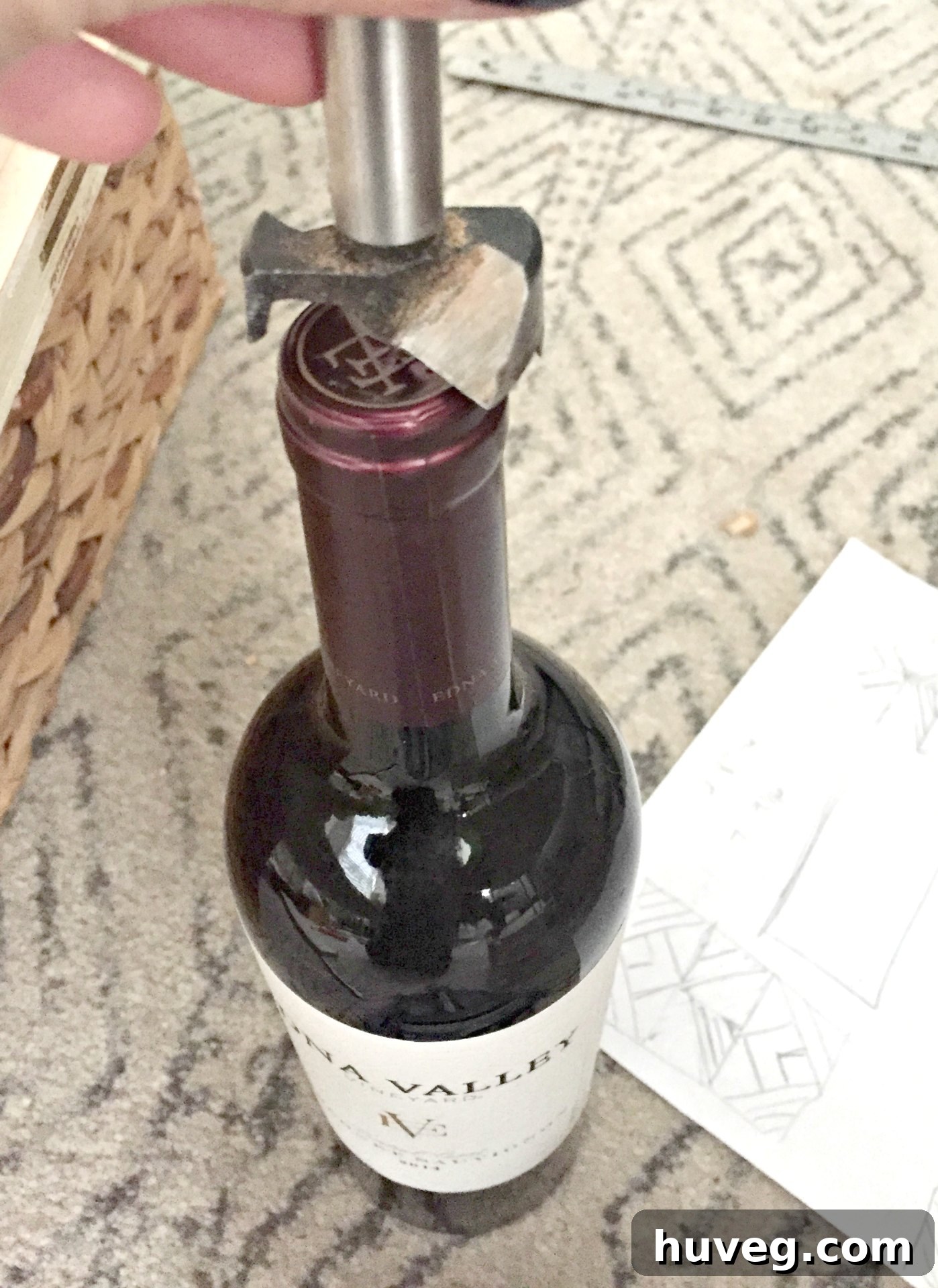
After wrestling with the drill by hand and failing to achieve a clean cut, I decided to set up my dad’s old drill press for the very first time. What a difference! It worked like a charm, creating perfectly clean and consistent holes with ease.
Step 6: Meticulously Arrange and Glue All Pieces
With the wine bottle supports prepared, I first glued these crucial pieces down. Before applying any glue, I pre-drilled two screw holes into the plywood for each support. This thoughtful step ensured that all the necessary marks for the wood screws were precisely in place on the back of the plywood, simplifying the later fastening process.
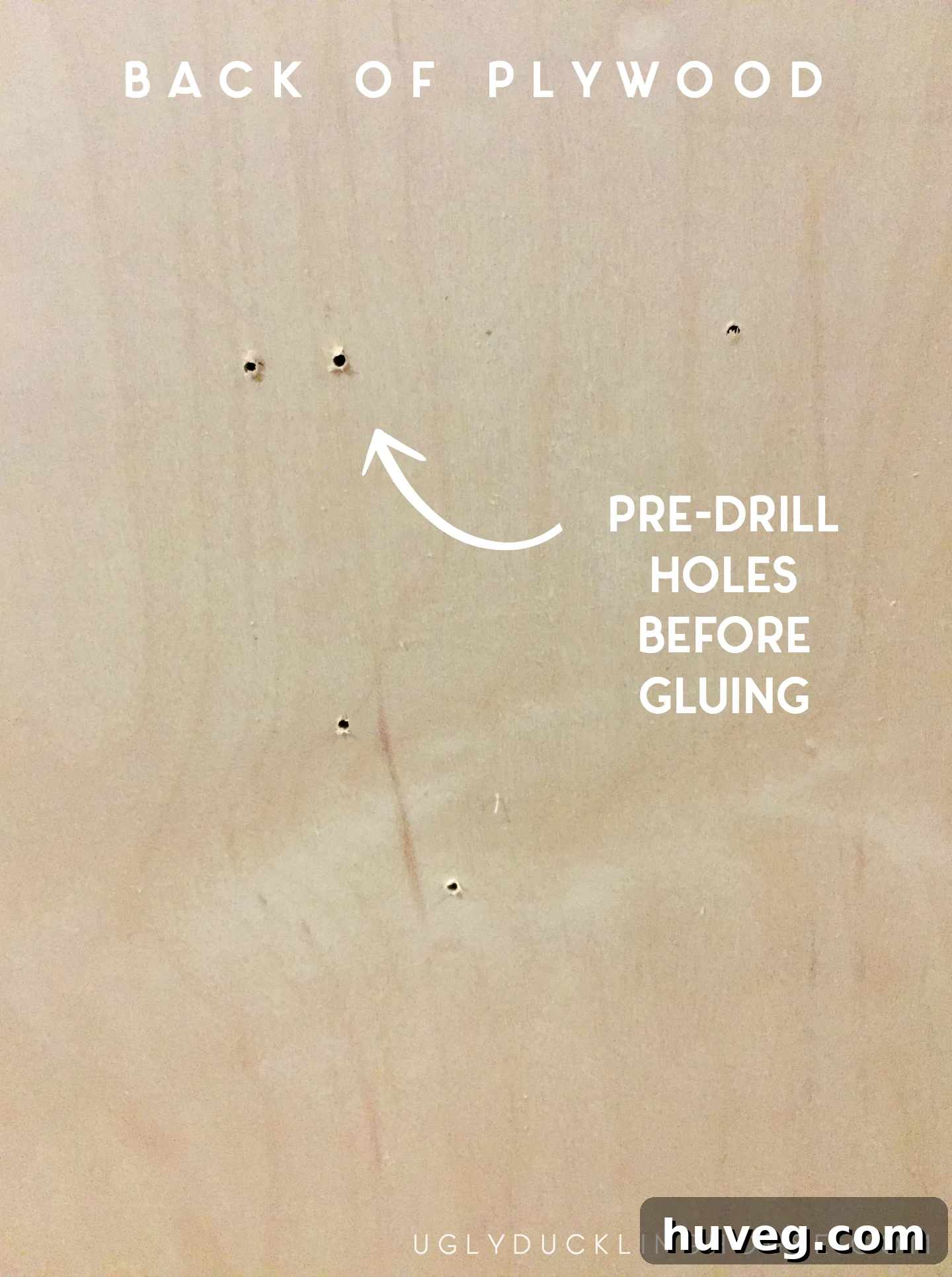
Following this, the remaining dowel pieces on the front were carefully glued into position. A key tip here: while the wood glue I used can accept stain, it doesn’t match the bare wood perfectly. Therefore, it’s absolutely critical to sand away any excess glue as much as possible. Failure to do so will result in unsightly light spots appearing once the staining process begins, detracting from the overall finish.
Step 7: Secure Wine Holder Pieces with Wood Screws
Despite all my careful pre-drilling, I encountered a setback with the smaller side arms of the wine glass holders. My plan was to use screws for every supporting piece to ensure maximum stability and durability. However, as I drove in the first screw…
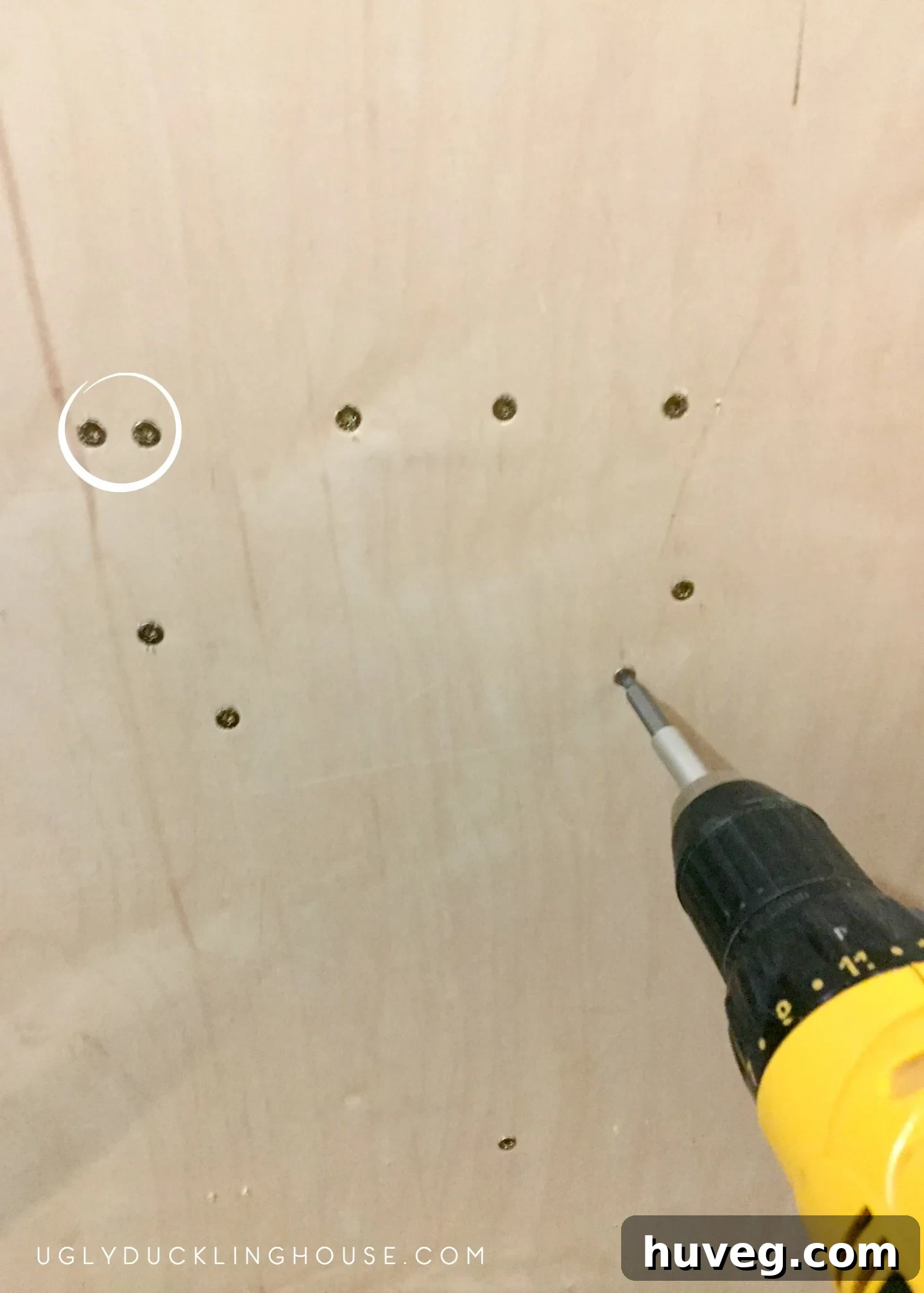
Upon turning the piece over, my heart sank. The wood, under the strain of closely spaced screws, had split. These learning moments are certainly “for the birds,” as they say!
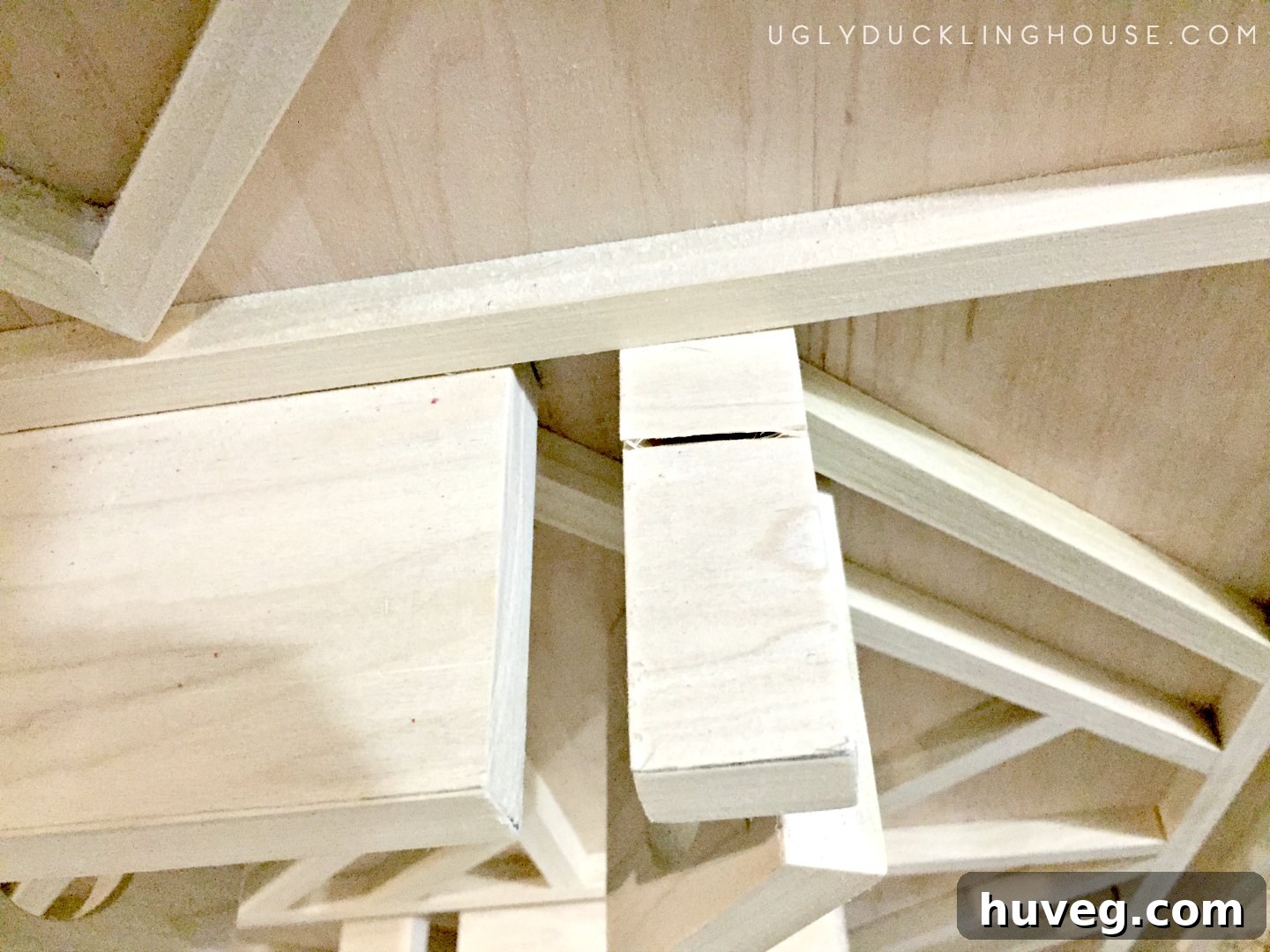
For a brief moment, I considered removing the damaged piece and re-cutting it entirely. However, given the incredibly strong bond of the wood glue to the plywood, I decided the easiest and most practical solution was to simply remove the problematic fastener and use a single screw for each of the smaller arms. The main, larger support pieces still received two screws each. I then applied a bit of wood glue and used a tiny clamp to straighten the broken piece. Once cured, the damage was barely noticeable, especially since it was on the underside of the piece – a lucky break!

Step 8: Apply Veneer Edge Banding for a Refined Look
Instead of traditional framing, I opted for veneer edge banding to give the plywood edges a clean, finished appearance. The iron-on application process for edge banding is incredibly straightforward and creates a professional, seamless look with minimal effort.
Step 9: Sand and Stain for a Beautiful Finish
To achieve the desired warm aesthetic, I selected American Walnut wood stain. This step brings all the elements together, highlighting the natural beauty of the wood.
Important Notes on Sanding and Staining Order
You might notice some pencil marks, unsanded areas, or uneven staining in the process photos, even though the piece is fully assembled. This highlights an ongoing debate in woodworking: the order of operations for sanding and staining. Often, for projects with intricate or hard-to-reach areas, it’s advisable to sand and stain (or paint) each individual piece *before* assembly. This method ensures every surface receives a consistent, even coat.
However, for this project, I chose the opposite approach: full assembly followed by sanding and staining. There’s no definitively “wrong” way, but each method involves trade-offs, and you must decide which compromise you’re more willing to make. If you cut, sand, stain, and *then* assemble, there’s a higher chance of slight misalignments (even 1/16th or 1/8th of an inch) due to the nature of first-time precision cuts. Conversely, if you assemble first, you risk missing spots in all the small nooks and crannies, or simply spending significantly more time and patience ensuring complete coverage. I chose the latter because even dry-fitting every tiny piece to stay put was a frustrating endeavor. So, I prioritized a solid glue-up, then tackled the finish.
Don’t forget the environmentally friendly tip: re-use old clothing or purchase t-shirt fabric for excellent staining rags!
If you follow my route, protective gloves are a must to get into every tight space, along with a small craft paintbrush. This method works very well, but allocate a couple of hours for thorough coverage. It’s easy to miss a side, so constant double- and triple-checking is essential. Additionally, using small paint pyramids to elevate your workpiece off the surface allows you to stain all four sides of the edge banding in one continuous process.
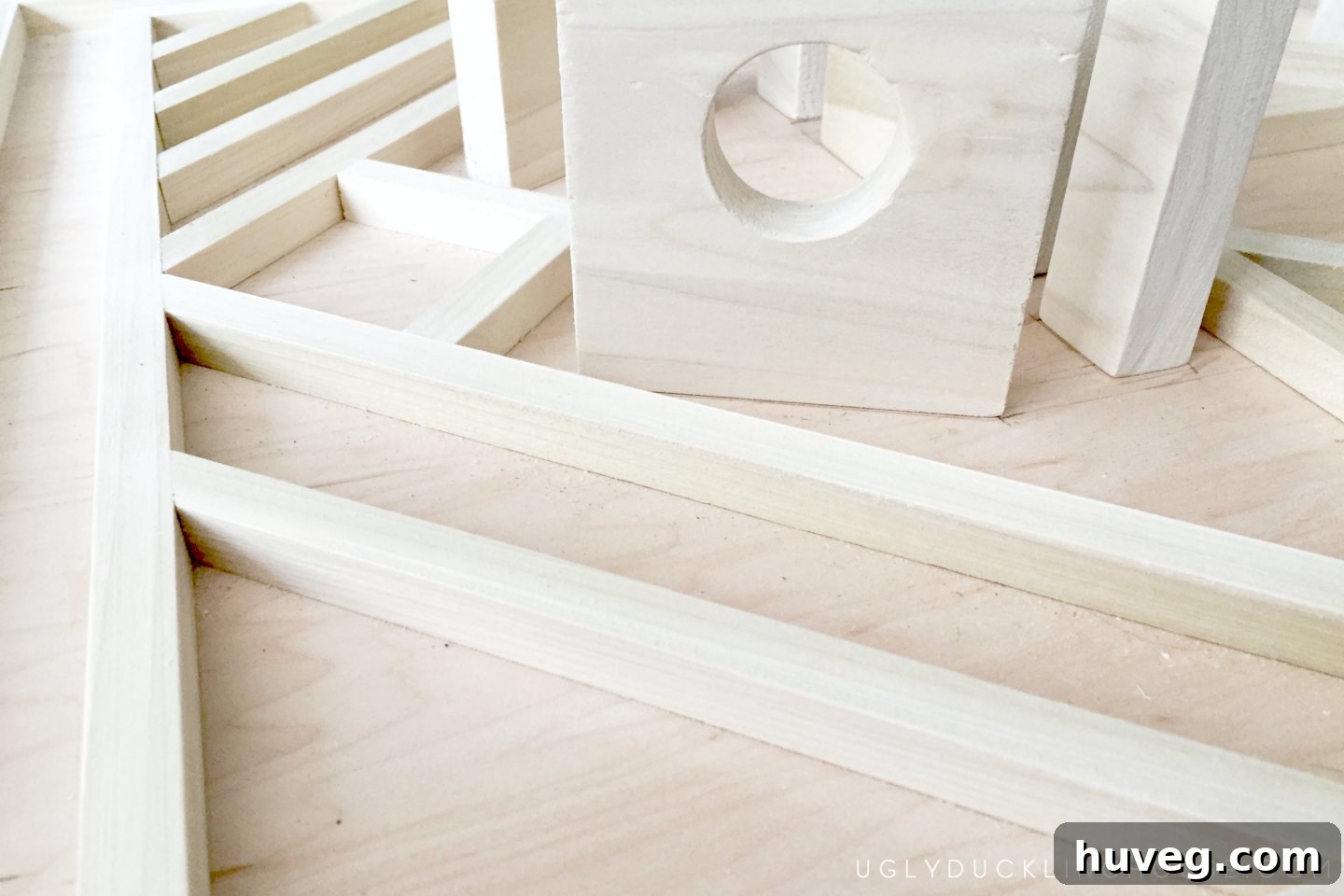
And with all the effort, here it is: my new wood art piece that beautifully doubles as a functional wine rack!
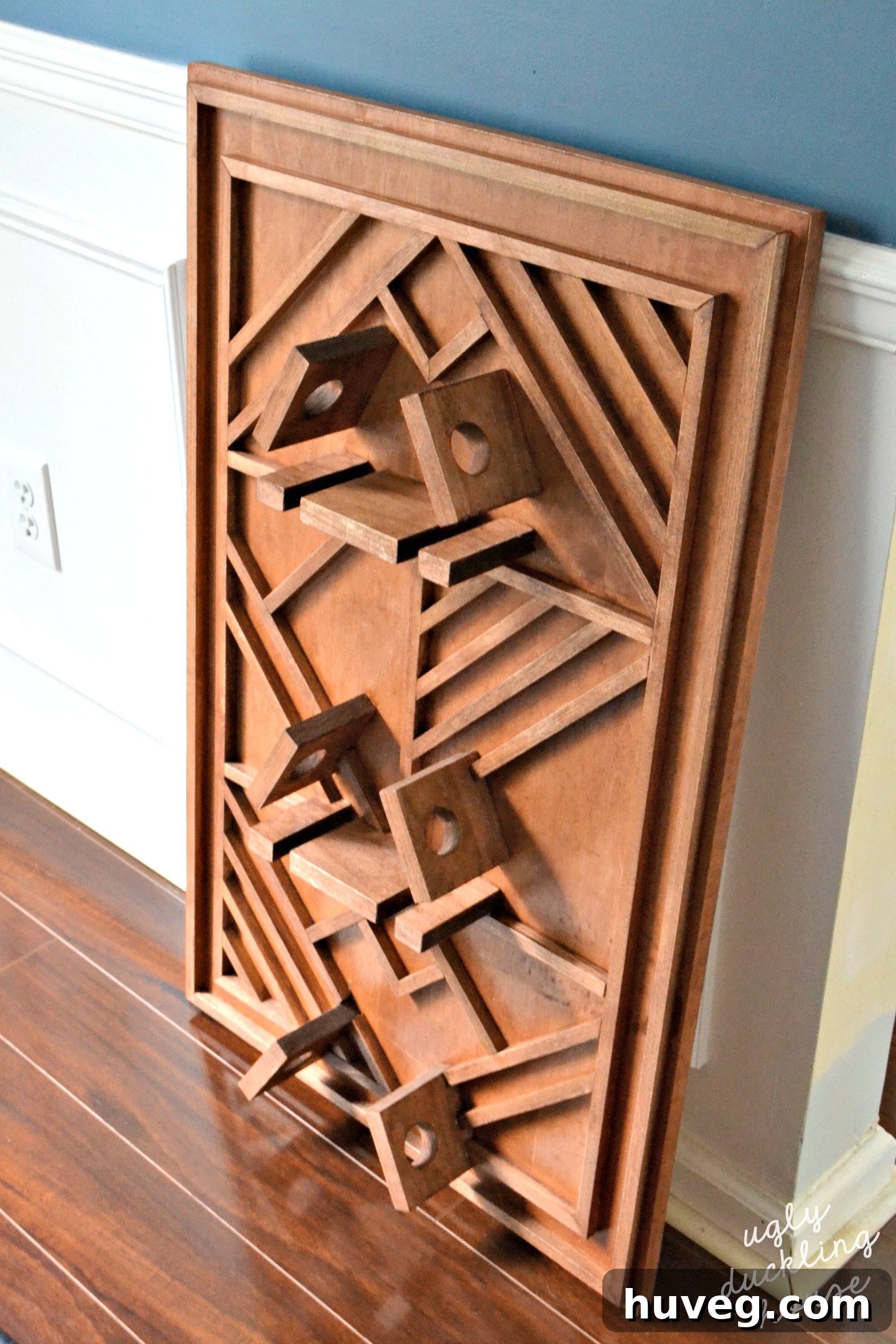
Step 10: Secure Wall Mounting for Your Wine Rack
To safely and securely mount this substantial piece on my dining room wall, I invested in a heavy-duty metal French cleat system. After careful consideration, I determined that positioning the cleat approximately 3 inches down from the top edge of the wine rack would provide optimal balance and visual appeal.
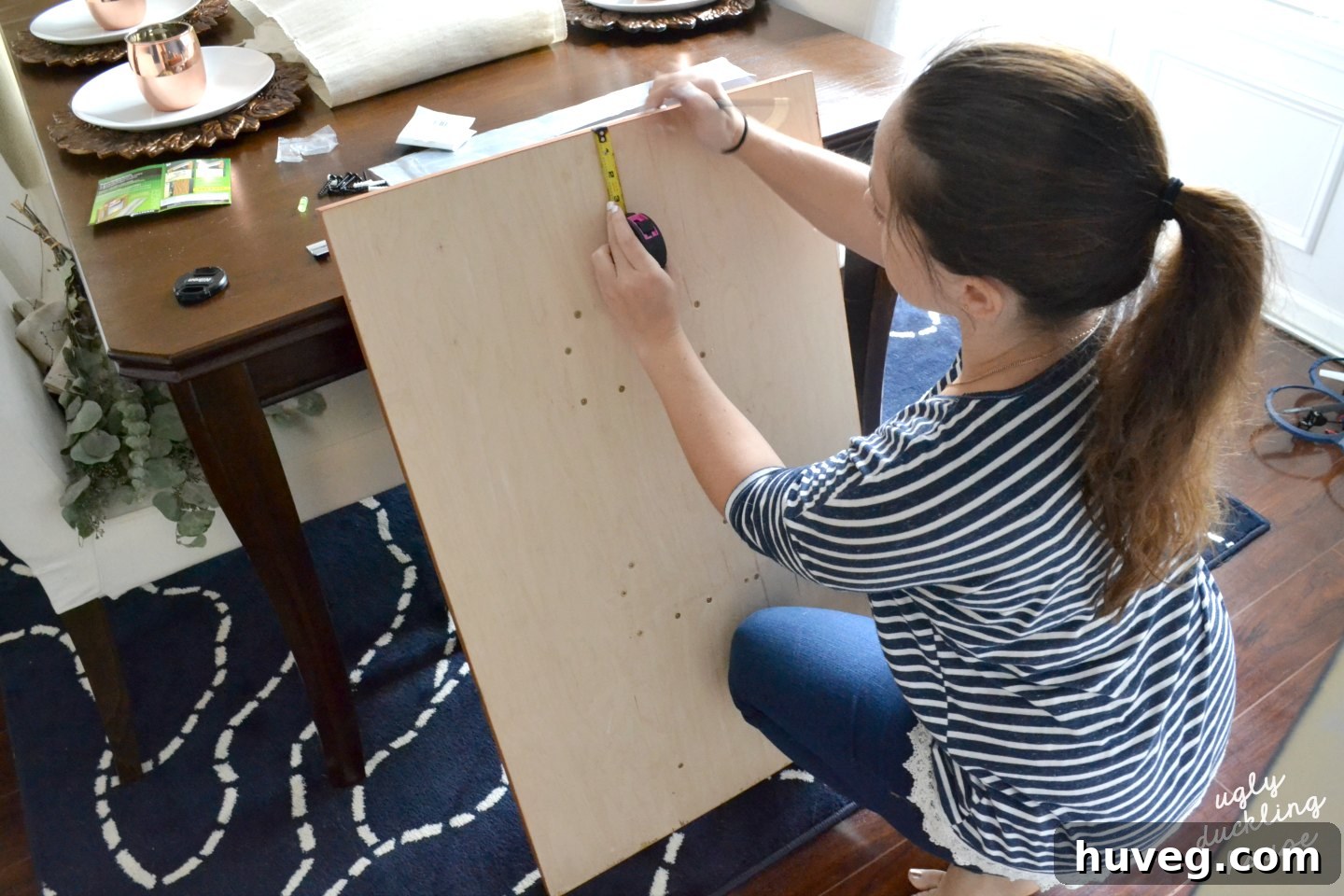
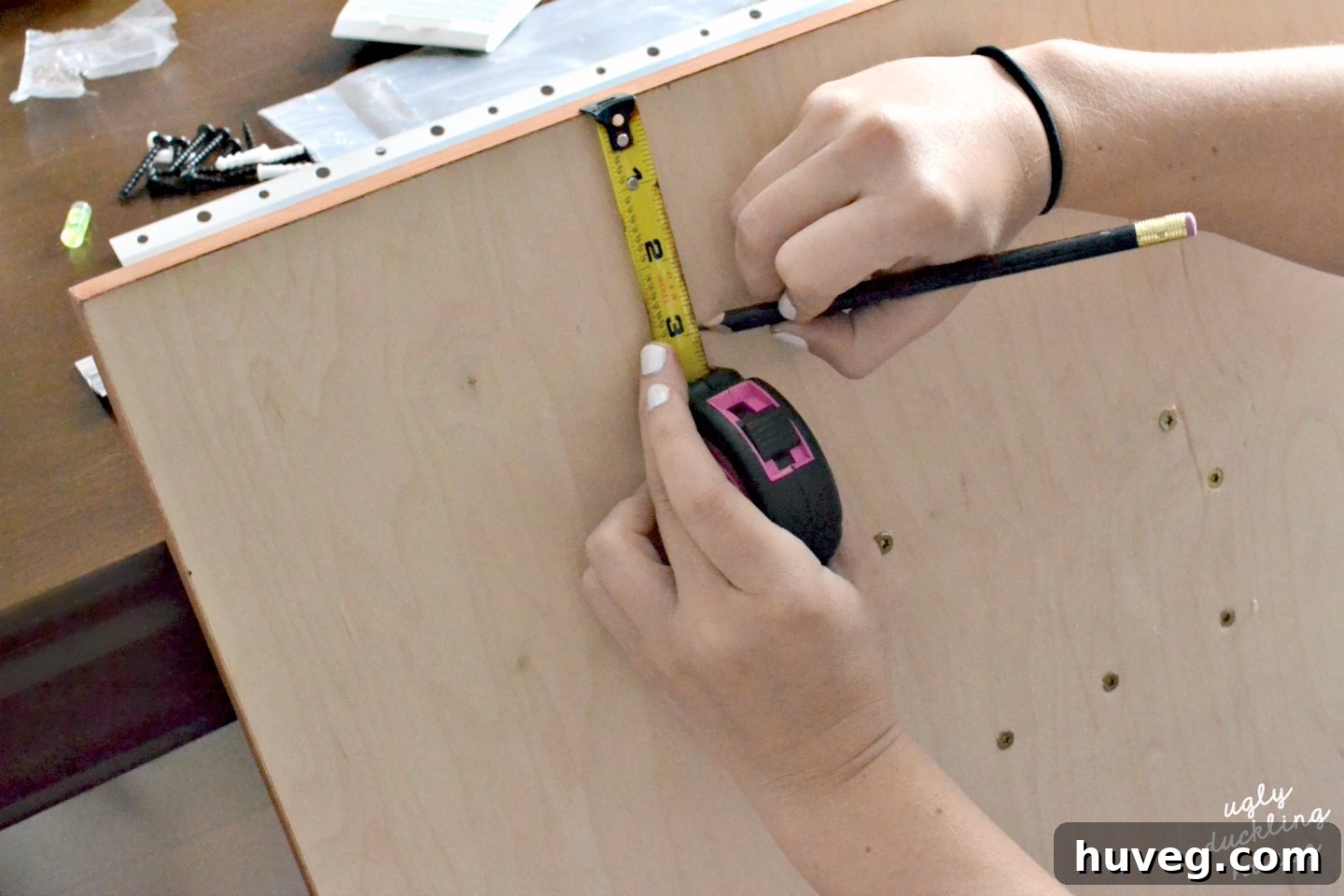
I then transferred this measurement to the wall, first identifying the desired top position of the wine rack and then measuring 3 inches down to mark the wall cleat placement. The cleat system thoughtfully includes wall anchors, which are invaluable if you don’t have studs exactly where you plan to mount. However, to eliminate any chance of accidental spills and to ensure maximum stability (wine deserves to be savored, not spilled!), I made sure to screw the cleat into at least one wall stud.
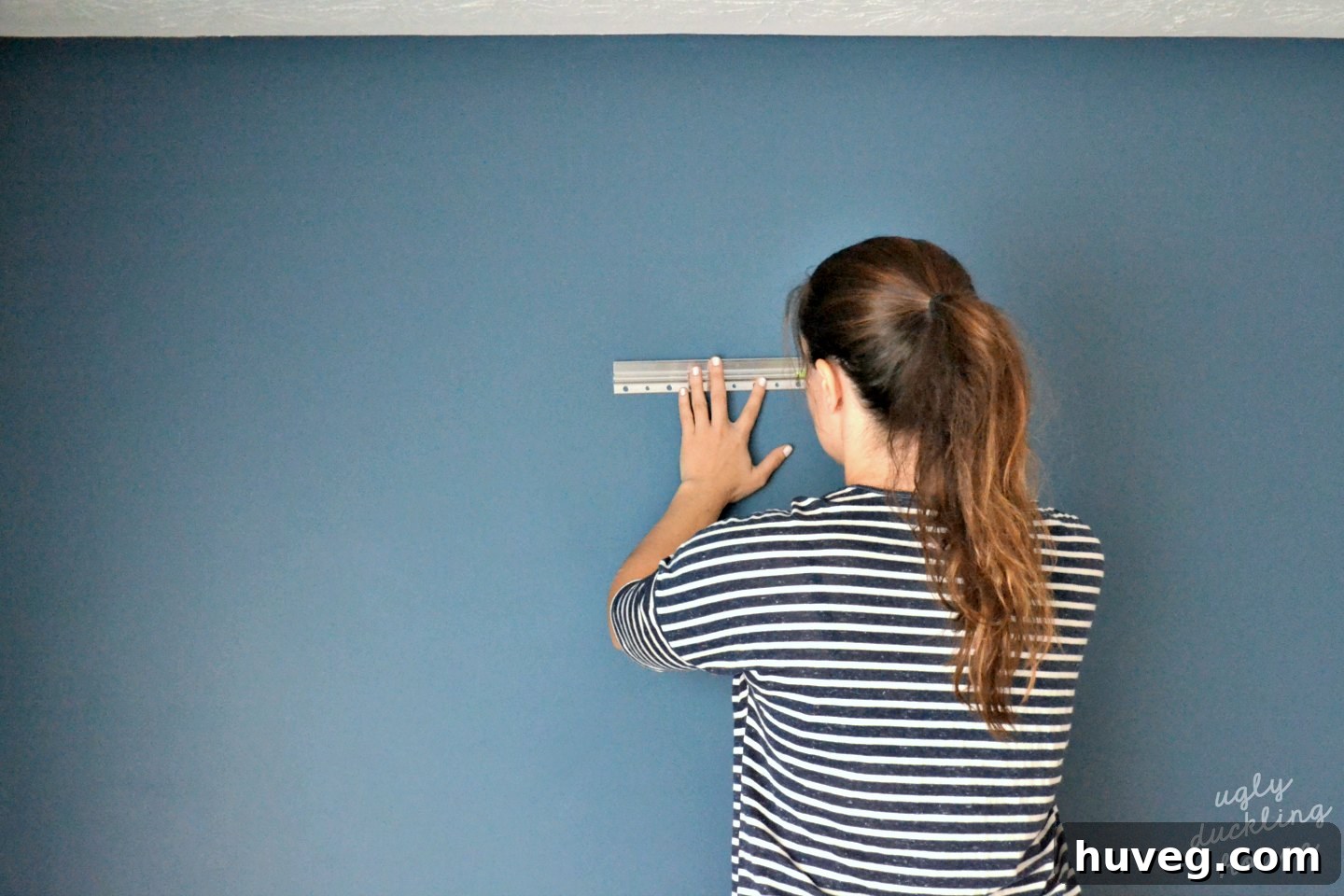
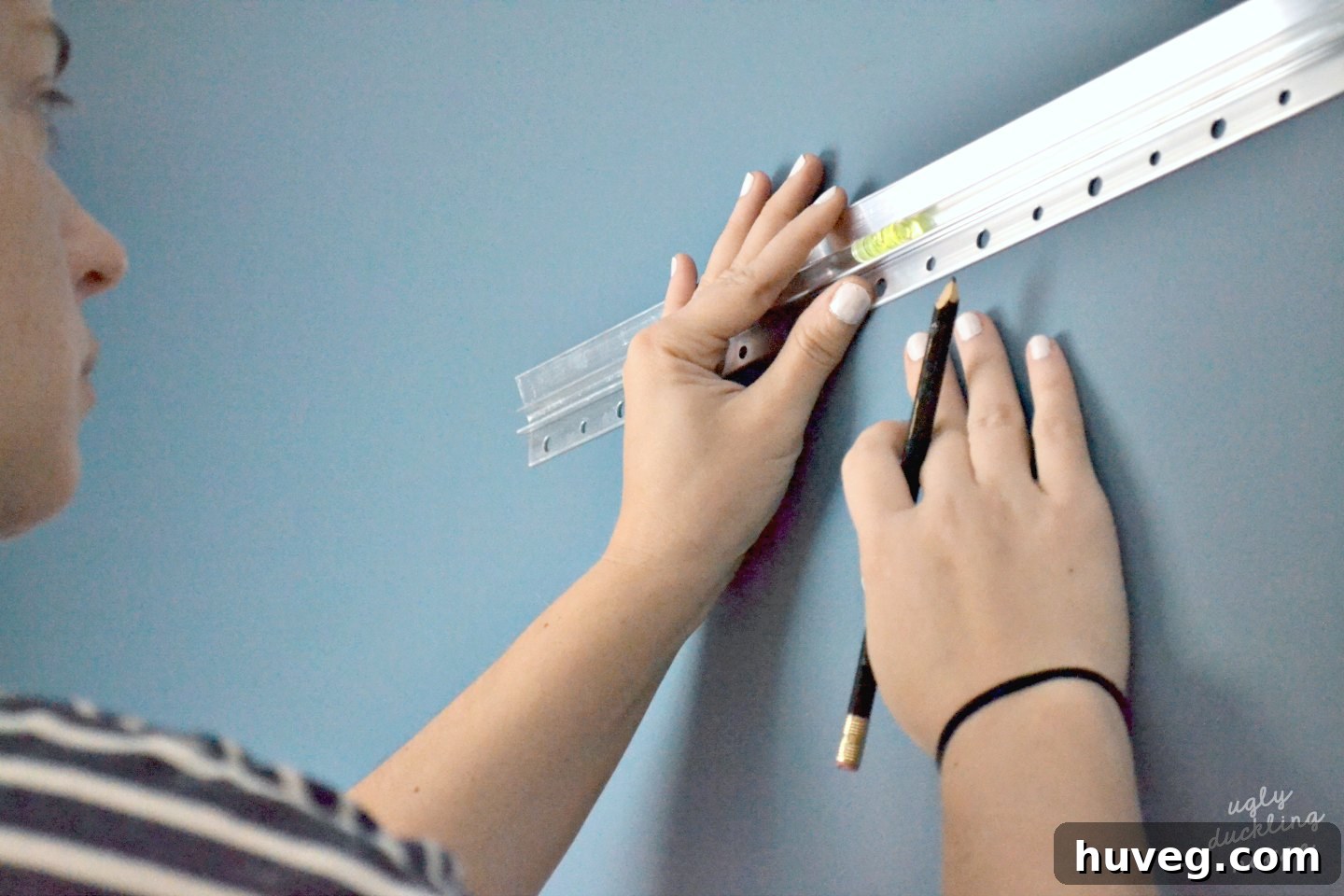
The kit conveniently provided a small level that inserts directly into the cleat. Given that my walls aren’t perfectly square, this allowed me to make slight adjustments, ensuring the wine rack would appear perfectly level relative to the ceiling and chair rail, rather than simply following the wall’s imperfections. This ingenious feature made the mounting process significantly easier and more accurate!
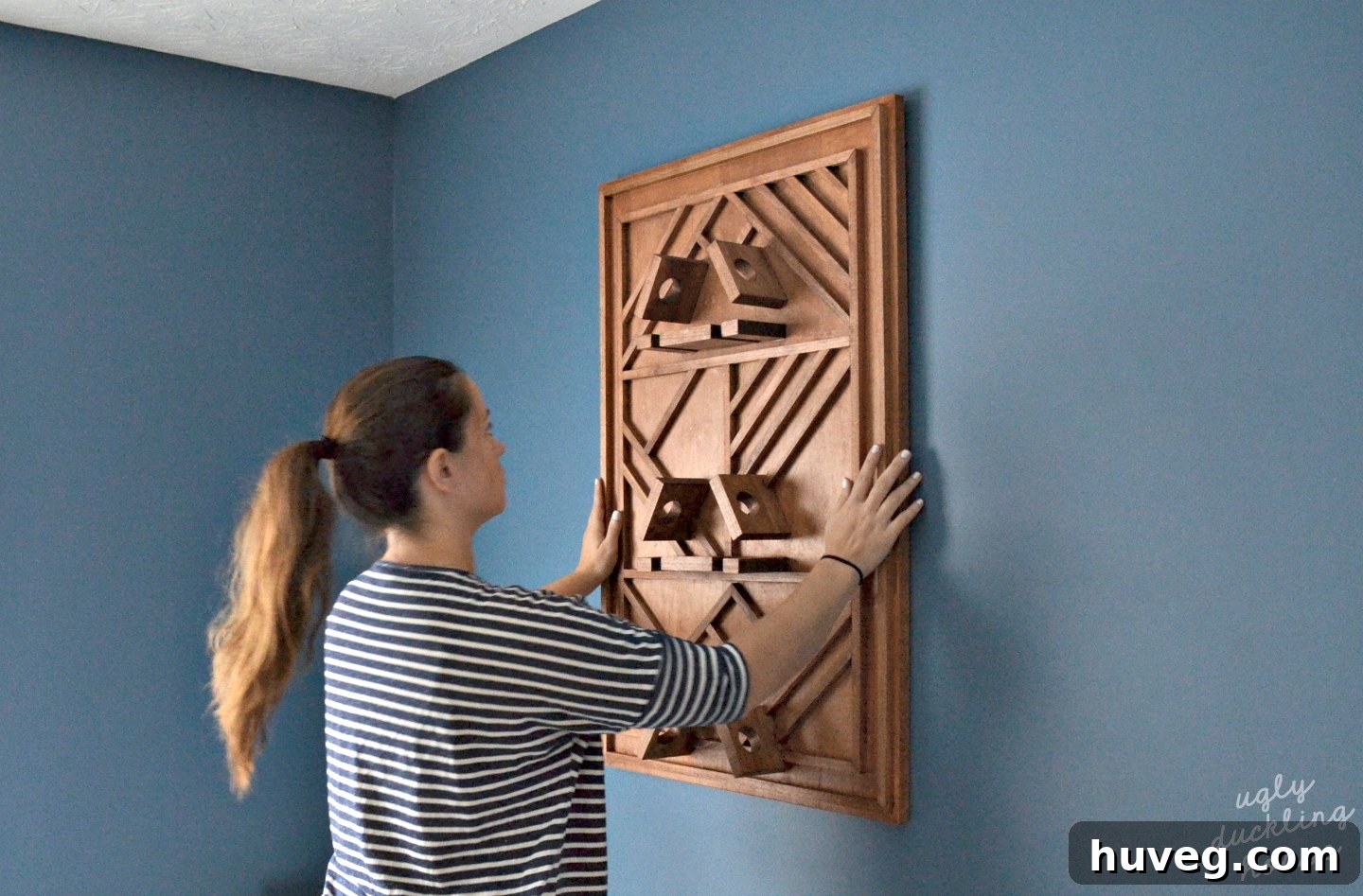
Step 11: Adorn Your New Wine Rack with Favorite Wines and Accessories
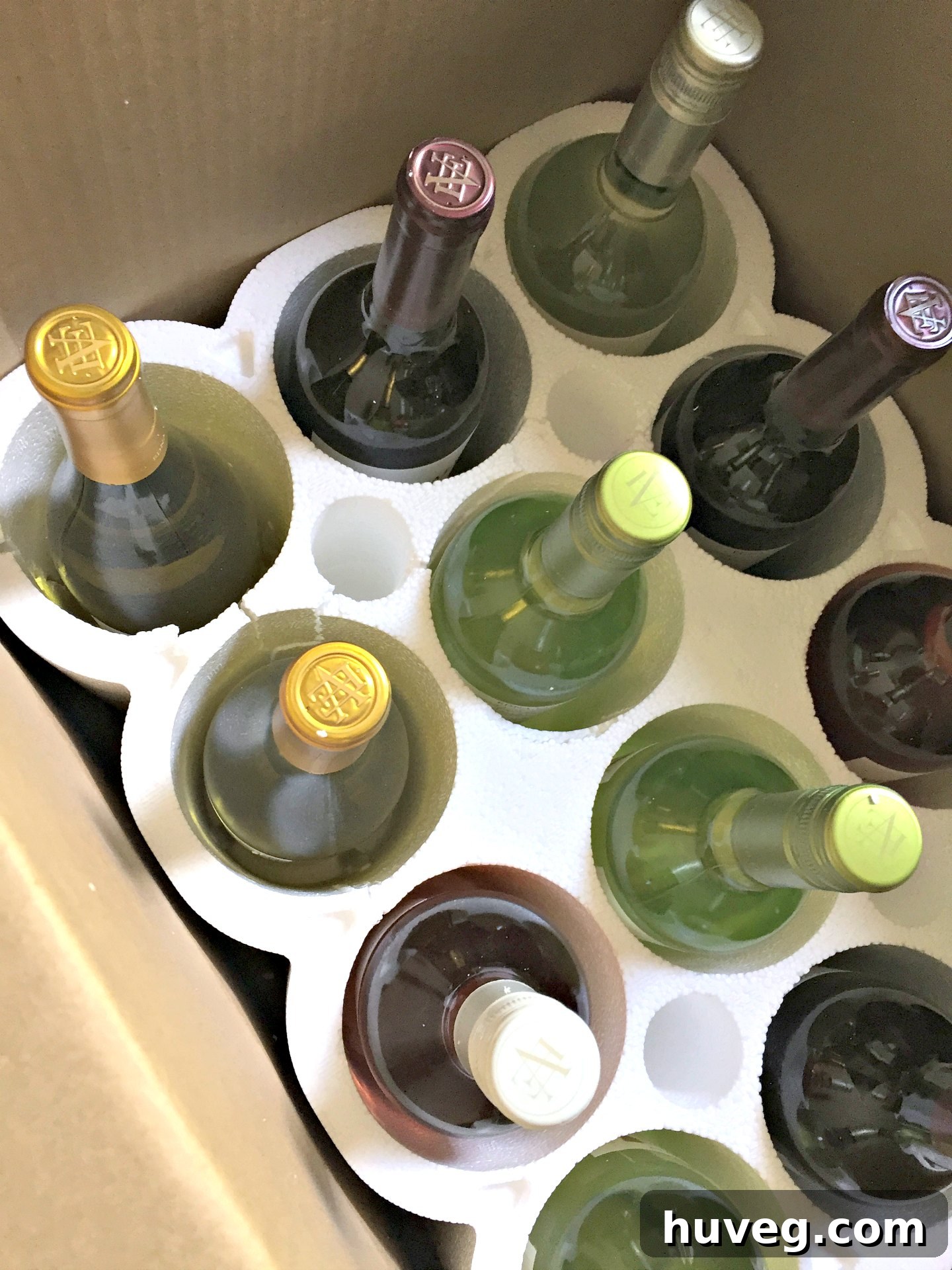
With the new wine rack securely mounted on the wall, it was finally time for the most enjoyable step: adding the finishing touches. I carefully placed my favorite Edna Valley Vineyard wines (the rack comfortably holds 6 bottles) and paired them with appropriate wine glasses (which it holds 4). Personally, I have a strong preference for their Merlot—it was my absolute favorite among all the samples I received.
So, what do you think of the final result?
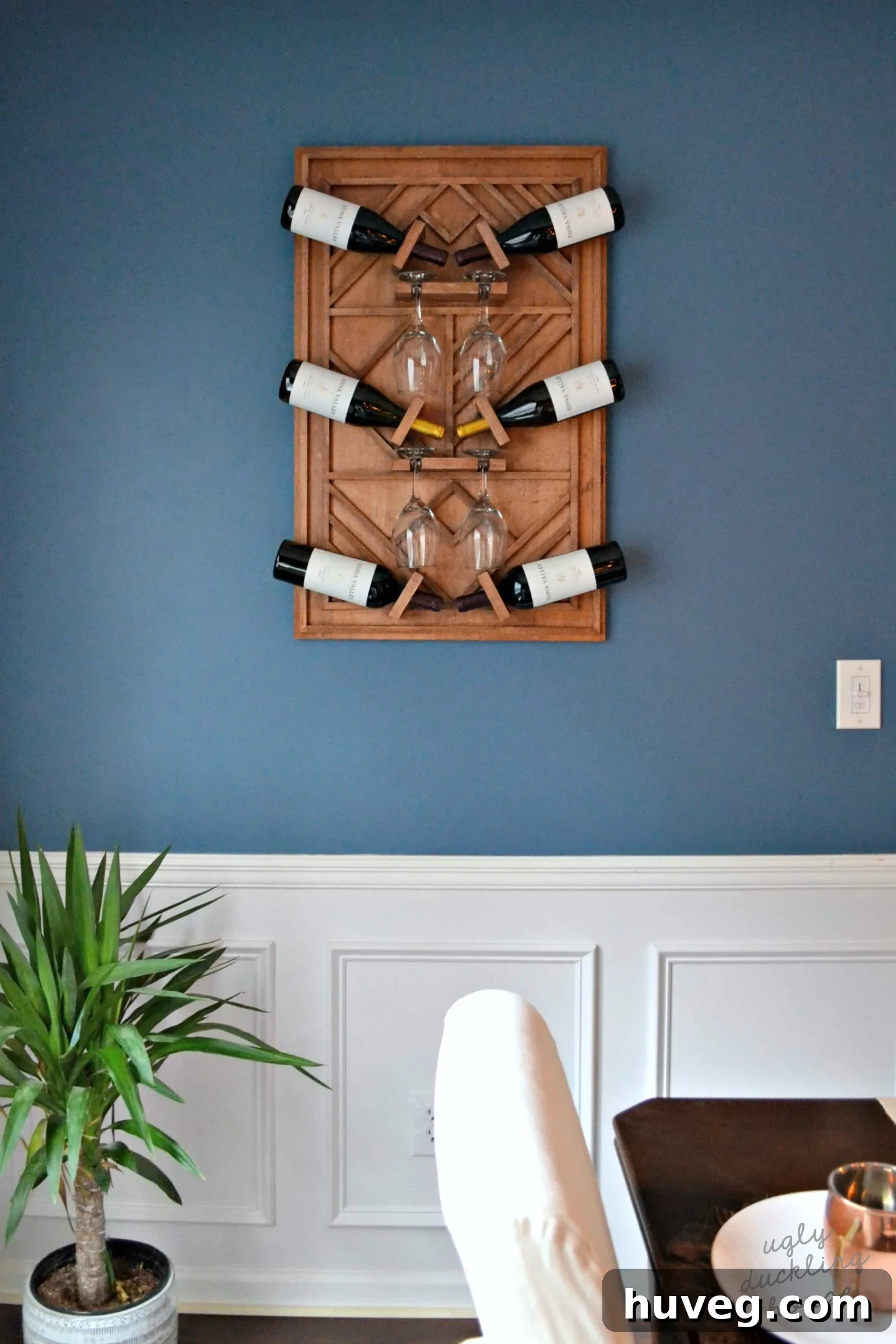
From my usual seat at the dining table, I absolutely adore the elegance and character it adds to the room. I intentionally positioned it slightly higher than the exact center, anticipating future additions to the space. My plans include a small bar area for buffet-style dinners (similar to the setup on the opposite side of this wall in the kitchen). Therefore, the wine rack’s placement needed to be in perfect proportion to these forthcoming elements, which will also include crown molding and potentially narrow mirrors flanking either side.
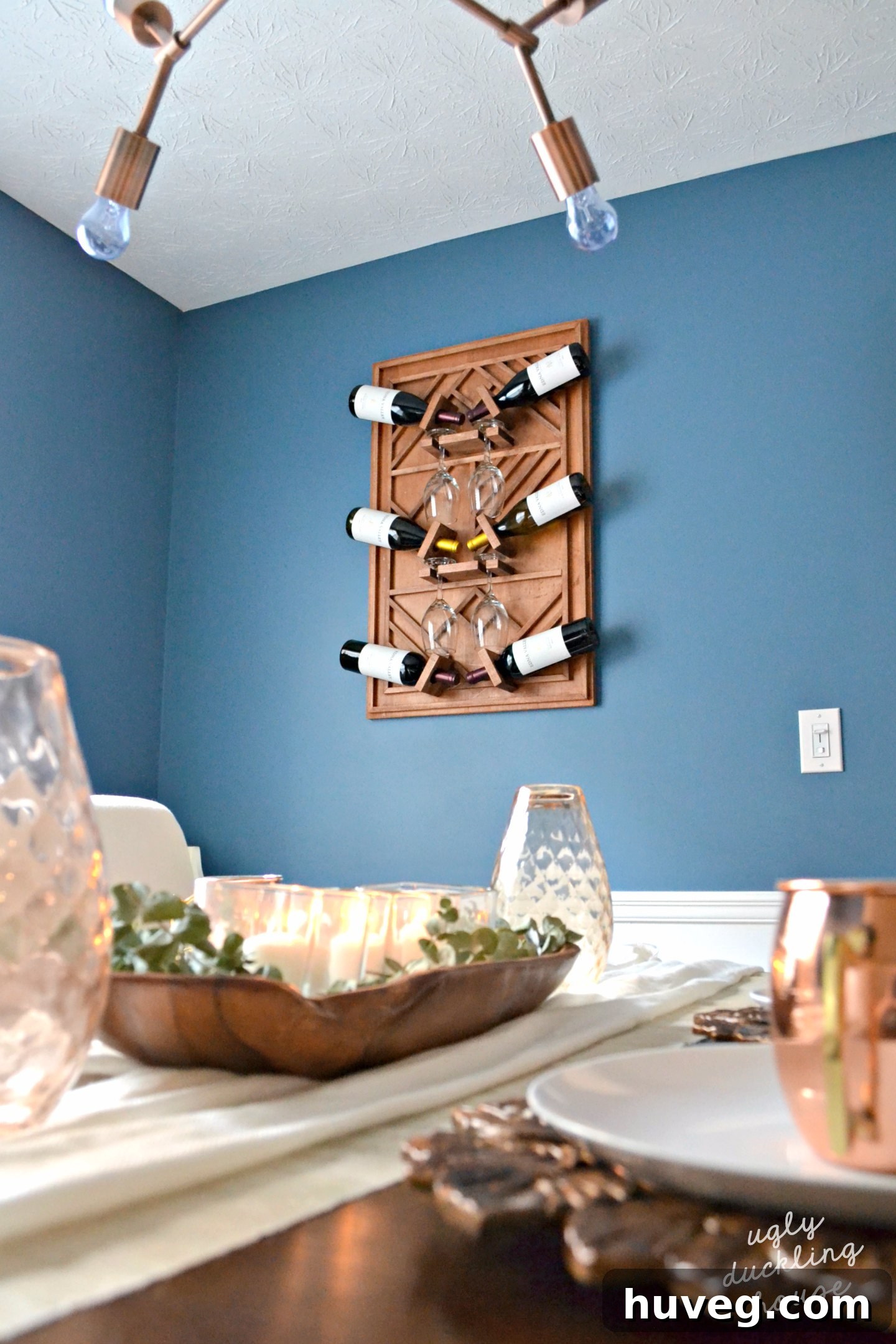
The warm tones of the wood beautifully complement my existing floors and echo some of the angular elements found in my copper light fixture. Having enough coordinated accessories made my Thanksgiving and holiday table settings a breeze. My affection for copper clearly isn’t fading anytime soon!
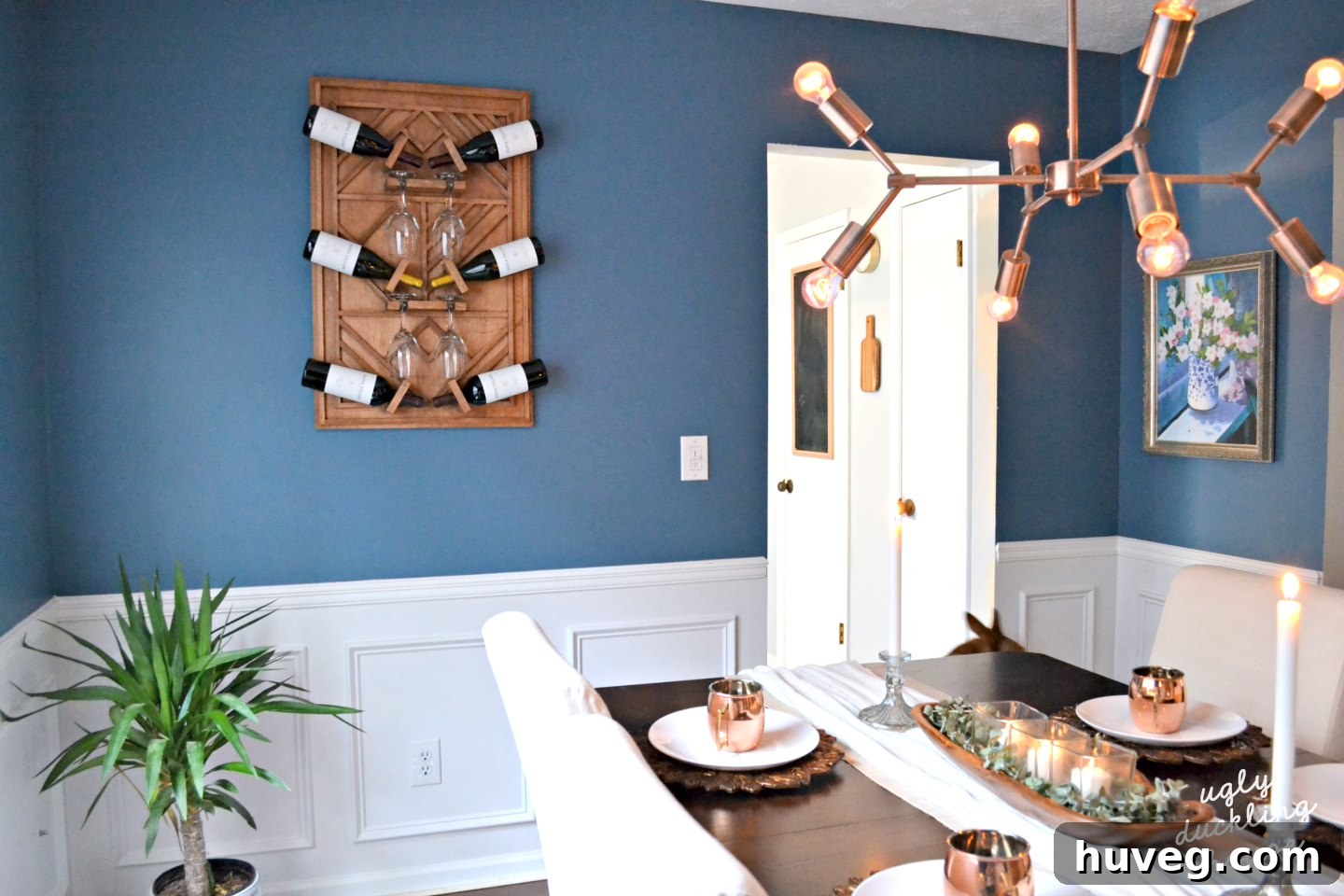
You might have noticed a familiar pair of ears in that last photograph. As always, my dedicated project supervisor is never far, diligently inspecting my work with keen interest.
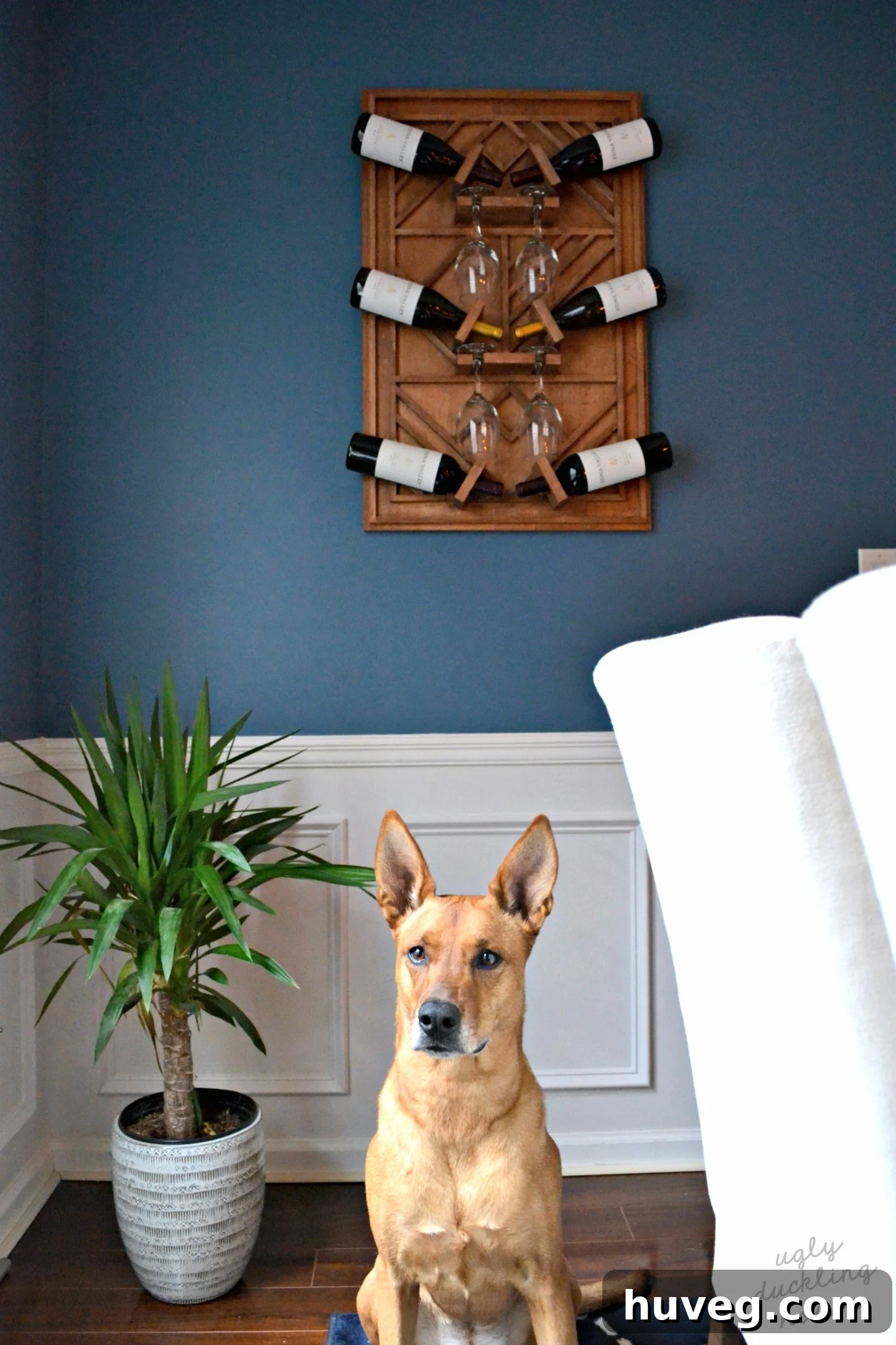
The verdict, both hers and mine: this wine rack is the perfect addition for my upcoming hosted dinners with family and friends. This year, I’m not only hosting Christmas but also throwing a New Year’s celebration right here at home—a truly monumental step for me!
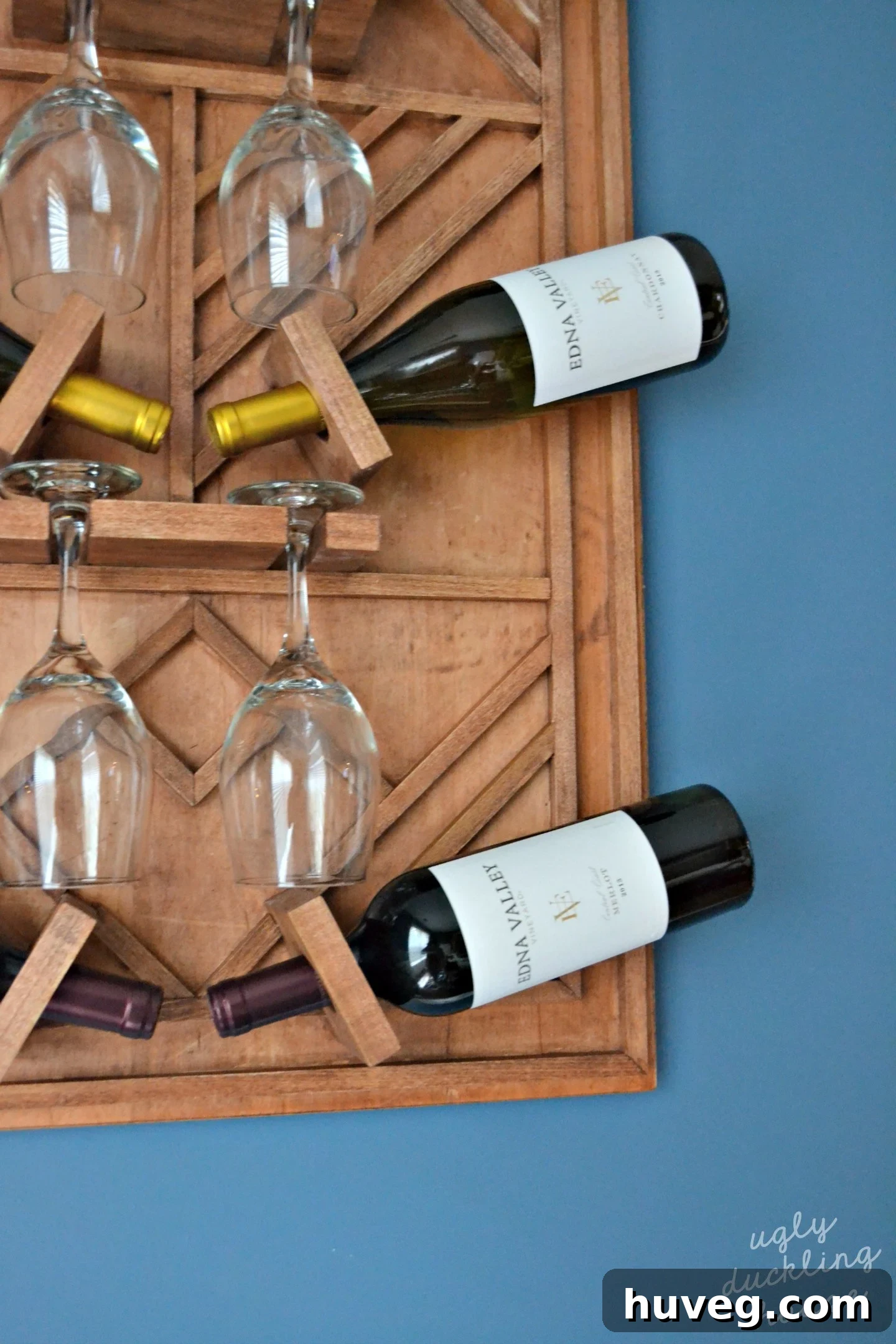
And now, for the most exciting part! I’m actually making a second one of these incredible wine racks, and it could be yours!
Exclusive Wood Art Wine Rack Giveaway!
This giveaway is a deeply personal gift from me to you, with Edna Valley Vineyards kindly covering the shipping. The entry rules are straightforward, as always: simply leave a comment on this post and confirm your entry via the link below. Due to legal requirements, this giveaway uses a system that requests your birth date solely to verify you are over 21; I will not use this information for any other purpose. Entry is limited to subscribers, not only because this project includes woodworking plans that require subscriber access to my plans library, but also because this was a truly complex build! I want this effort to reward one of you loyal readers who has followed along with my wild DIY adventures, rather than just a random visitor.
- To enter: As per my usual practice, leave a comment on this blog post. Then, click the link below to confirm your entry. If you’re reading this in a feed reader and don’t see the link, please navigate directly to the blog post URL here.
- Rules: Entrants must be 21 years of age or older (even though no alcohol is being given away, this restriction is necessary for liability reasons). Open to residents of the Continental U.S. only.
- Ends: Tuesday, December 12th at 11:59 PM EST.
- Comment about: Tell me something amusing about your most recent get-together with friends or family. This won’t affect your chances of winning; it simply makes the entry approval process much more enjoyable for me!
Click here to enter the Wood Art Wine Rack Giveaway!
Ready? Go! Best of luck to everyone!