The Ideal White

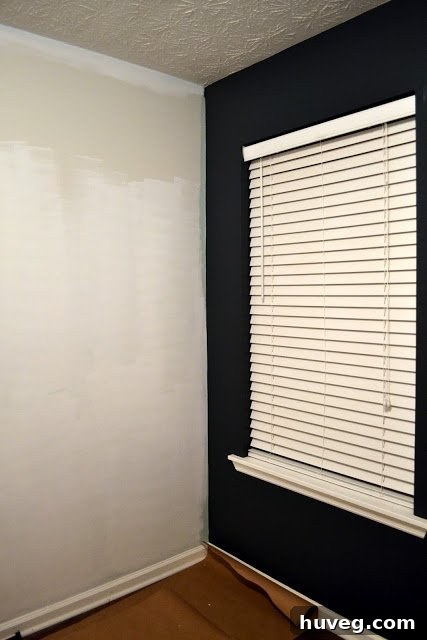
The quest for the perfect white paint is often whispered among DIY enthusiasts and seasoned designers alike as one of the most deceptively challenging tasks in home décor. Far from being a simple choice, white paint comes in an astonishing array of shades, each with unique undertones that can dramatically alter a room’s atmosphere. My own experience with transforming a study into a functional yet aesthetically pleasing “study-o” (a hybrid study and craft room) vividly demonstrated this complexity. Faced with the task of finding a white that would harmoniously complement two existing navy accent walls, while also considering the room’s existing blinds, a large table, and crisp trim, I embarked on a journey that proved to be quite the design odyssey.

To truly appreciate the transformation, it’s essential to rewind to the very beginning of this room’s colorful history. The space initially sported a vibrant teal, a hue I selected back when its sole purpose was envisioned as a craft room. This initial choice, though lively, eventually felt out of sync with the evolving needs and sophisticated aesthetic I aimed for in a multi-functional space.
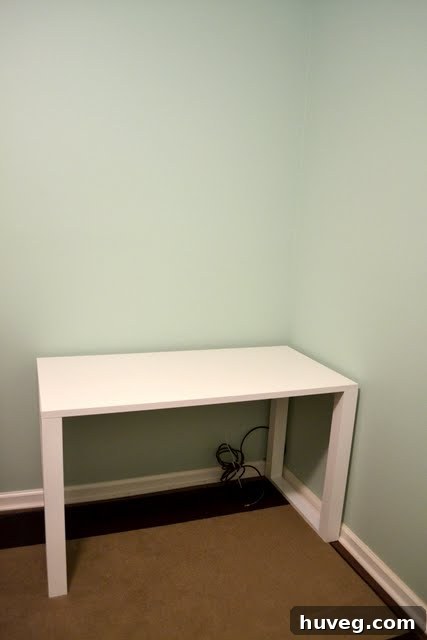
As the room’s function expanded beyond just crafting to include a dedicated study area, a new name – the “study-o” – was coined. With this change in identity came the perfect opportunity to rethink its entire color palette. I yearned for something more profound, something that would convey a sense of drama and sophistication. The decision was made to repaint it to something more dramatic and statement-y, a phrase I coined to encapsulate the bold shift I envisioned. It’s true, I have a knack for inventive language, and this creative freedom extends directly into my approach to interior design.
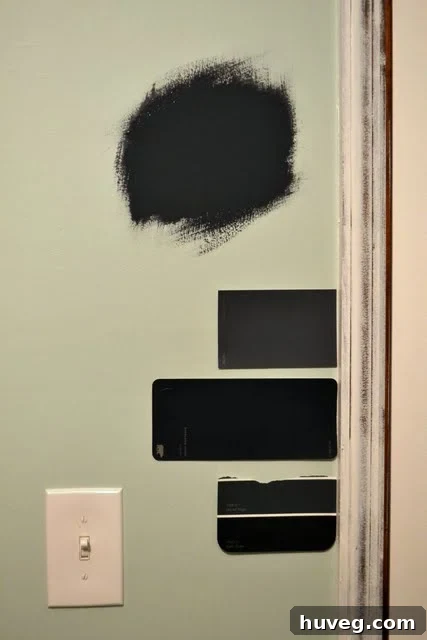
The chosen shade for the window and doorway walls was a rich navy blue – specifically, Benjamin Moore’s Hale Navy. This is a wonderfully sophisticated, deep, and slightly muted navy that commands attention without overwhelming a space. However, I understood intuitively that painting all four walls in such an intense, dark color would transform the room into a cramped, light-absorbing cavern rather than the open, inspiring, and creative space I desired. The goal was to harness the inherent drama and elegance of navy, but it crucially needed to be balanced with a lighter, more reflective shade on the opposing walls – either a crisp white or a soft, light gray. This contrast would prevent the room from feeling claustrophobic, ensuring it remained welcoming and airy while still delivering that desired dramatic impact.
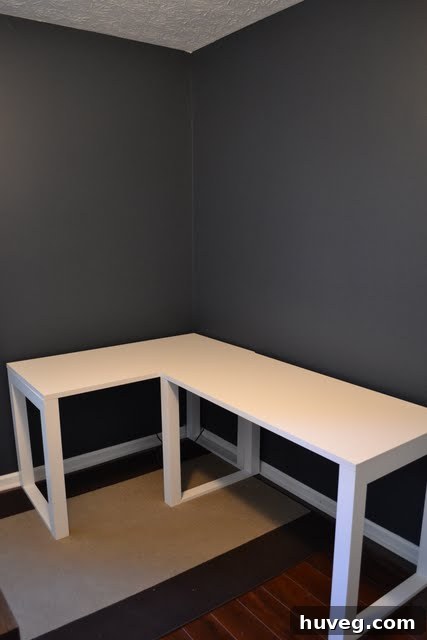
My initial foray into selecting the complementary light color was, I admit, driven largely by pragmatism – or perhaps, a touch of frugality. I had a significant amount of leftover light gray paint from a previous primary bathroom remodel. Thinking it might offer the necessary lightness, I thought I’d give it a shot on the study-o walls. This is a common pitfall in DIY projects: using existing materials without fully considering their suitability for a new context. Unfortunately, the outcome was far from ideal. The powerful, dramatic presence of the navy walls was immediately diminished by the drab, uninspired gray. It simply couldn’t hold its own against the depth of the navy, lacking the necessary crispness or warmth to create a cohesive balance. The room felt less sophisticated and more, well, merely patched together.
Furthermore, I had overlooked another critical factor: the paint’s sheen. The bathroom paint, naturally, had a higher sheen, which is excellent for a humid environment like a bathroom due to its durability and washability. However, when juxtaposed with the more matte finish of the Hale Navy, the discrepancy was glaring. The higher sheen of the gray made it appear overly reflective and almost plastic-like, creating an awkward visual tension rather than a seamless transition. This experience underscored a crucial design lesson: the choice of paint isn’t just about color, but also about its finish and how it interacts with other elements in the room.
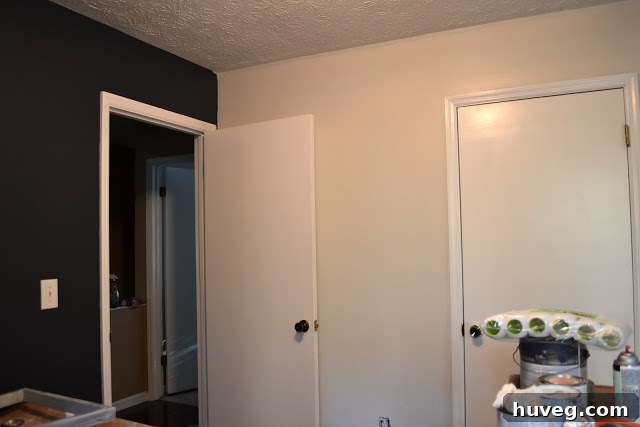
With the leftover gray deemed unsuitable, I moved on to what seemed like the most logical second option: matching the walls to the existing trim, doors, and the newly built DIY desk. All these elements were painted in Behr’s Ultra Pure White, a standard, bright white. It felt like an obvious choice – consistency across fixed elements, right? So, I purchased a quart, applied it with hopeful anticipation, and quickly realized I was terribly wrong. Ultra Pure White, while excellent for trim where a stark, clean edge is desired, proved too harsh and cold for the expanse of a wall, especially when paired with a deep navy. Instead of feeling bright and airy, it created a clinical, almost sterile contrast that felt jarring rather than harmonious. This experience highlighted the subtle but significant differences between “trim white” and “wall white.” Wall whites often need a touch more warmth or a specific undertone to prevent them from feeling stark and uninviting.
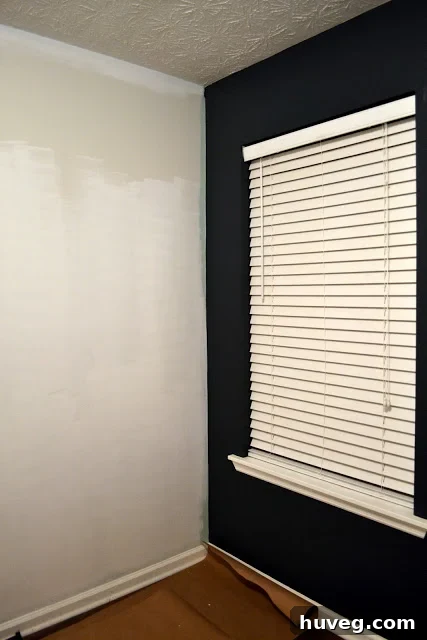
What then was the solution? With two failed attempts under my belt, I started looking for inspiration within the room itself. My eyes settled on the blinds – a consistent element that would receive and reflect natural light beautifully. I took a piece of the blind to the local Home Depot, explaining my dilemma and my desire for a perfect match. The helpful crew there, experts in custom color tinting, whipped up a custom match for me. Returning home, I was eager but cautiously optimistic. This time, I didn’t “slap it on”; rather, I meticulously and gently rolled the paint onto the walls, although the inevitable splatters on my arms by the end of the day told a different, more vigorous story of dedicated application. The transformation was immediate and undeniably satisfying. This custom-matched white was neither too stark nor too drab. It had a subtle warmth that perfectly complemented the navy, creating a serene yet sophisticated balance that allowed both colors to shine without clashing.
Without a shadow of a doubt, this third choice was the right one. It was the “just right” white that brought the entire room together, providing the necessary lightness and airiness without sacrificing the dramatic depth of the navy. The custom tint provided a nuanced shade that felt integral to the room, rather than an afterthought. The sheen was appropriate, the undertone was perfect, and the overall effect was precisely what I had envisioned for my study-o. The journey to find it was certainly one of trial and error, but the outcome was a testament to patience and persistence in design.
Moreover, having a custom-matched paint meant I had a little extra on hand. Resourcefully, I kept right on rolling, extending the newfound harmony beyond the walls. I covered a couple of plain canvases with this perfect white, creating a unified backdrop for some artwork I’m planning to display in the room. This not only utilized the leftover paint effectively but also contributed to a cohesive aesthetic, linking the walls to the decorative elements. It’s a small detail that contributes significantly to the overall curated feel of the space, showing how a single design decision can ripple through an entire room’s decor.


This entire process, from the initial missteps to the final triumph, has cemented a recurring theme in my home renovation journey. At this point, I am seriously considering adopting “The Goldilocks House” as a secondary, perhaps even primary, name for this home. It seems every project, every design choice, every piece of furniture, and especially every paint color, has required a quest for the “just right” solution. It’s a house of Goldilocks and the three *everything* – three attempts at paint, three versions of a room’s purpose, often three iterations of a design idea before finding the one that fits perfectly. This journey has taught me invaluable lessons about patience, observation, and the importance of truly understanding how light, texture, and neighboring colors interact to create a truly harmonious and inviting space. So, if you’re ever struggling with a seemingly simple choice like white paint, remember: it’s not just white; it’s a spectrum, and your perfect shade is out there, waiting to be discovered, perhaps just a custom mix away.