Kitchen Window Ledge Deep Dive

Master Your Kitchen Backsplash: Tiling Around Tricky Window Ledges Like a Pro
Embarking on a kitchen renovation, particularly a tiling project, often feels straightforward when tackling the major components. Resources detailing how to tile a kitchen backsplash are abundant online, guiding you through every conventional step. However, what happens when your project presents a unique twist, a specific hurdle that standard tutorials simply don’t address? This common scenario can leave even the most seasoned DIY enthusiasts feeling stuck and overwhelmed.
The reality is, you often don’t realize your situation is truly unique until you’re deep into the project, tools in hand, staring at an unforeseen obstacle. That moment of realization can spark what I affectionately call “DIY doubts” – the nagging fear that you’re doing everything wrong, jeopardizing the professional look you’re striving for. This indecision can lead to frustrating delays, with materials gathering dust, or worse, hurried fixes that leave you with a permanent “what if” in your newly renovated space. No one wants to live with regretful DIY choices.
To help navigate these less-traveled paths, I wanted to share a detailed account of a specific challenge I encountered: tiling the kitchen backsplash around a window ledge. While I can’t claim my method is the definitive “right” way, it’s a practical and aesthetically pleasing solution that stemmed from careful problem-solving and a desire for a polished outcome. My goal here is to provide insights into handling those minor details that often make a major difference in the overall success and satisfaction of your kitchen tiling project.
The Unique Challenge: When Your Window Trim Isn’t Standard
My tiling journey began with thorough research, consulting various tutorials like this excellent guide from Pretty Handy Girl. Many recommended a straightforward approach: simply cutting small sections out of the existing window molding to neatly slip the new tiles underneath. This method typically works flawlessly, especially when the molding is thicker than the tile, allowing for a clean, recessed look.
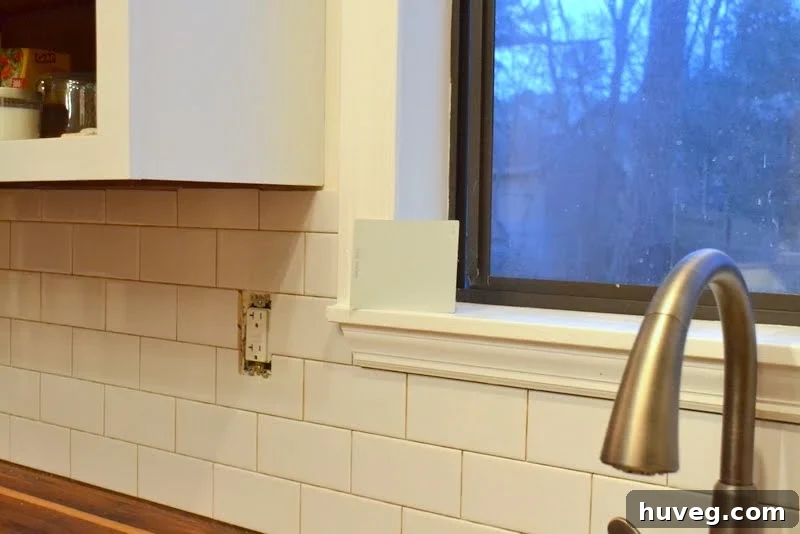
However, my kitchen window presented a distinct complication. Unlike the windows featured in most tutorials, mine had an additional piece of trim positioned directly underneath the main window ledge. Upon holding a tile against this trim, I quickly realized that the depth of my chosen backsplash tile was either just as thick as, or even thicker than, the molding itself. This crucial discovery immediately ruled out the standard “cut and slip” technique.
Attempting to force the tile under trim of inadequate depth would have resulted in a visually unappealing outcome – the tile would protrude, making the molding appear as though it was being “eaten” by the backsplash. While one might humorously suggest this is fitting for a kitchen where food is consumed, it certainly wasn’t the sophisticated and seamless look I envisioned for my renovation. This meant a different approach was essential to achieve a professional, integrated finish.
Step-by-Step Guide to a Flawless Window Backsplash Finish
Overcoming unique DIY challenges requires a methodical approach. Here’s how I tackled the window ledge dilemma, transforming a potential design flaw into a perfectly integrated kitchen backsplash feature.
1. Thoughtful Molding Removal: A Crucial First Step
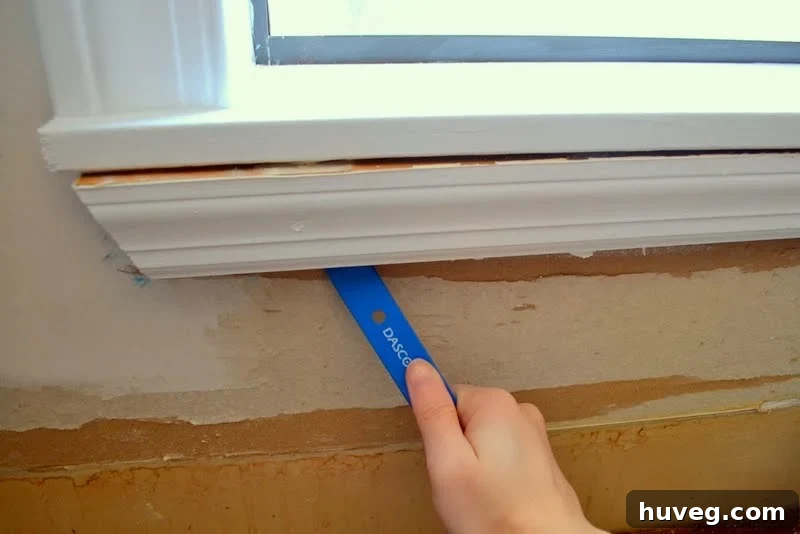
Given the depth disparity, the only viable solution was to completely remove the existing window molding before commencing any tile work. This step, while seemingly minor, is critical for achieving a flush and professional finish. Careful removal ensures the molding can be reused, saving both time and material costs.
Before proceeding with tile installation, it’s also a prime opportunity to address any wall imperfections. I made sure to complete tasks like patching the drywall and priming the walls, ensuring a smooth and prepared surface for optimal tile adhesion and a long-lasting backsplash.
2. Strategic Tiling Around the Window Frame
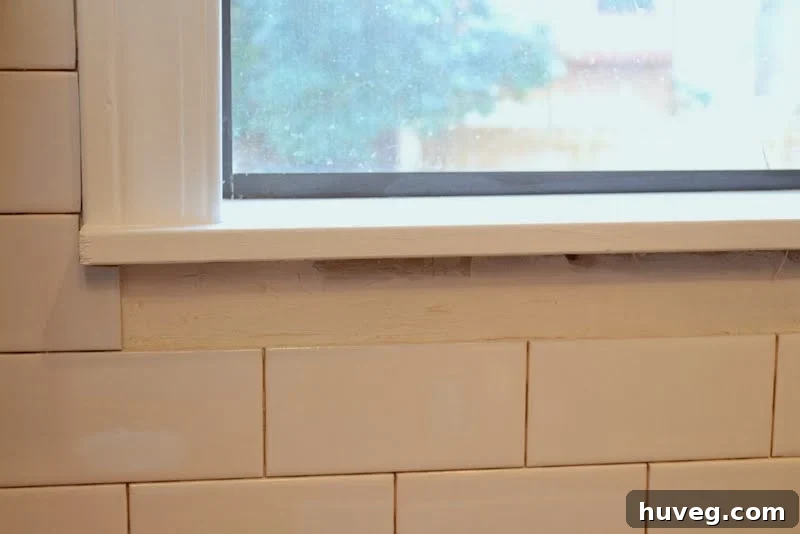
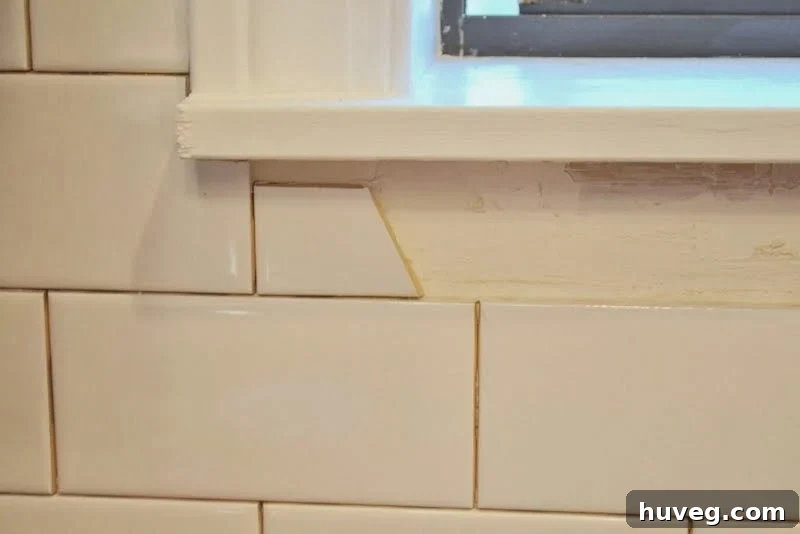
As I progressed with tiling around the sink and window, I exercised careful foresight. Instead of tiling directly up to the window ledge, I intentionally left a small, precise gap where the molding would eventually be reattached. This strategic spacing is vital.
The primary reason for this gap is practicality: reattaching molding securely requires nailing it into the wall. Attempting to nail through hard tile is not only exceedingly difficult but also carries a significant risk of tile breakage or even personal injury. By leaving a small untiled section, you create a clear, accessible area for the molding to be fixed back into the drywall, ensuring both structural integrity and ease of installation. This approach ensures your beautiful new tiles remain undamaged and your molding sits perfectly.
3. Smart Tile Placement with Spares
A smart trick for any tiling project, especially when working around features that will be partially covered, is to optimize your material usage. Knowing that a significant portion of the tiled area around the window would eventually be concealed by the reinstalled molding, I took advantage of this. This allowed me to strategically use smaller, broken, or imperfect tile pieces in those specific corners and edges that would be hidden.
Naturally, I made sure that any chipped or visually compromised parts of these “spare” tiles were positioned fully underneath where the molding would cover. This clever approach not only minimizes waste but also ensures that only the perfectly cut, pristine edges of the tile are visible, contributing to an overall professional and flawless appearance around your window frame.
4. Solving the Depth Dilemma: The Power of Shims
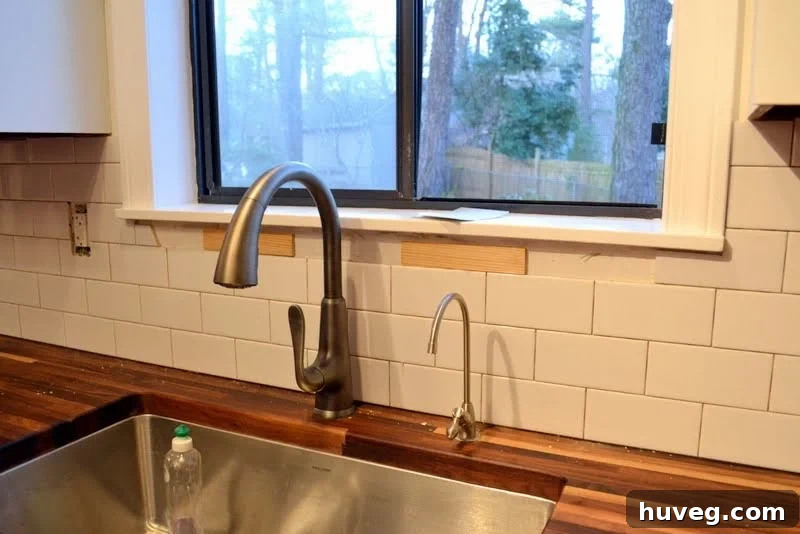
After allowing the tiles sufficient time to cure and bond firmly to the wall, it was time to reattach the molding. (While some might wait until after grouting, I opted to secure the molding first). However, the initial depth issue persisted. If I had simply nailed the molding back without any backing, the middle section would likely bow inward towards the drywall, creating an unsightly gap and making the window appear to sink into the newly installed tile.
To counteract this, I introduced a simple yet effective solution: wood shims. I found a couple of shims that were precisely the same thickness as the widest part of my tile. These shims provided the necessary structural support and depth, ensuring the molding would sit perfectly flush with the tiled surface. I secured them to the wall using a minimal amount of caulk adhesive; the finishing nails would do the majority of the work in holding everything firmly in place.
5. Meticulous Trim Cleaning: Ensuring a Snug Fit
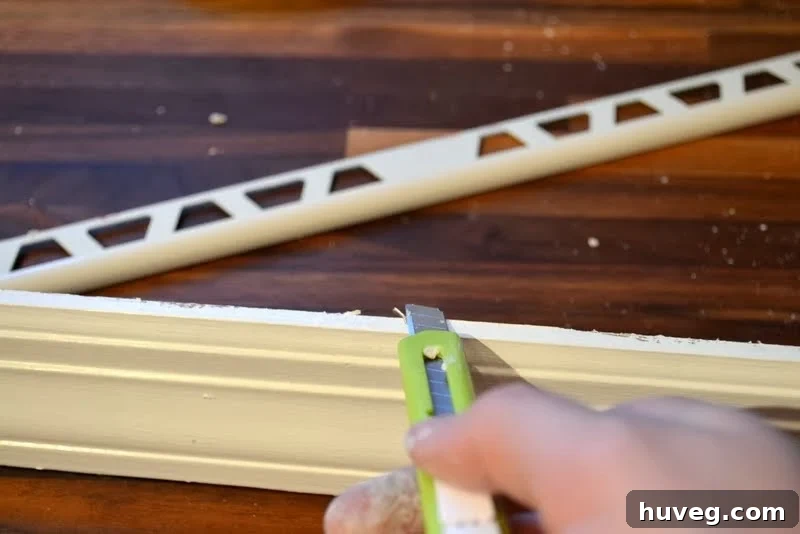
Before reattaching the molding, another critical step is to ensure a perfectly clean and obstruction-free surface. I carefully trimmed off any remnants of old caulk from both the molding itself and the underside of the window ledge. This seemingly small detail is paramount. Even minor bumps or dried caulk residue can prevent the molding from sitting flush against the ledge, leading to unsightly gaps or a compromised fit.
A clean surface guarantees that the molding will fit as snugly and seamlessly as possible, creating a sharp, professional line where it meets the window ledge. This attention to detail is what separates a good DIY job from a truly excellent one.
6. Reattaching the Window Molding with Precision
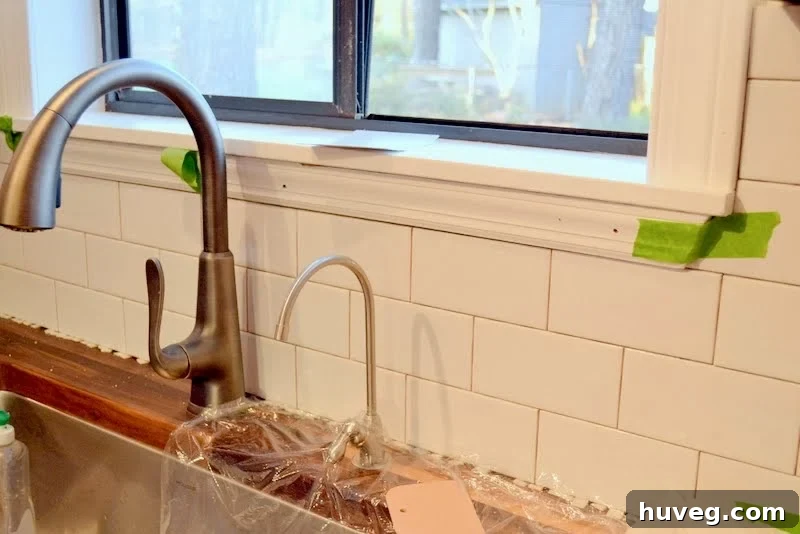
With the shims in place and the surfaces clean, it was time to rehang the molding. Accuracy here is key for aesthetic appeal. My molding piece was slightly shorter than the overall window width and had angled ends, necessitating precise centering. To achieve this, I used painter’s tape on either end of the molding to temporarily hold it firmly in its exact, centered position beneath the window ledge.
Painter’s tape offers a gentle yet firm hold, allowing for minor adjustments before final fastening. This step ensures that your molding is perfectly aligned, contributing significantly to the balanced and symmetrical look of your finished kitchen backsplash.
7. Secure Nailing Techniques for Durability
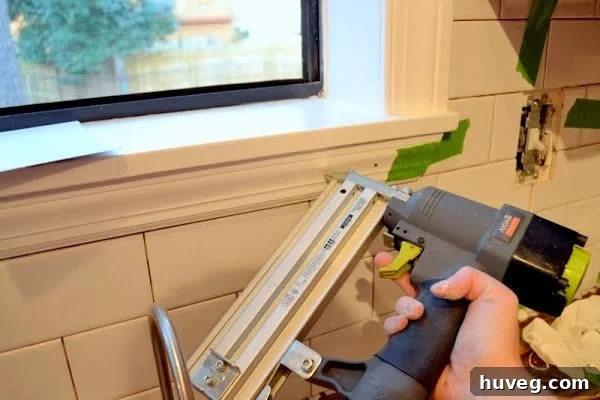
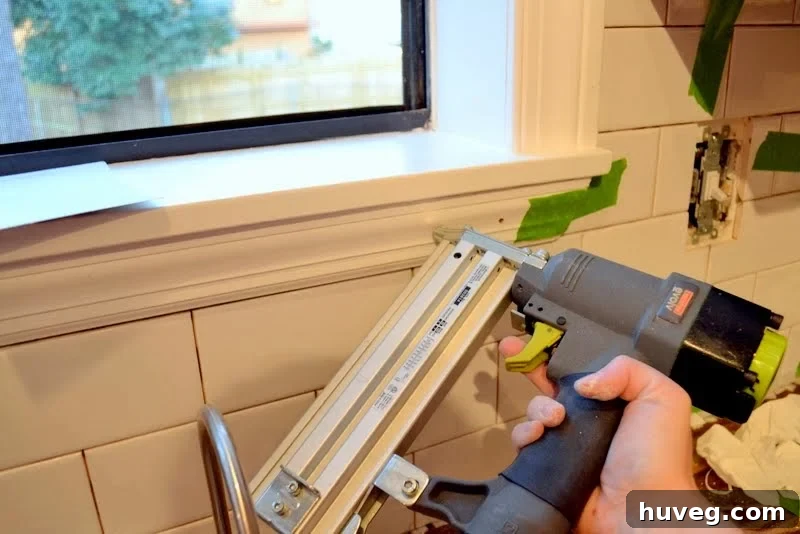
Once the molding was perfectly positioned and temporarily secured with tape, I proceeded to fasten it permanently using finishing nails. I strategically shot a few finishing nails along the molding piece, aiming to drive them through the thicker parts of the hidden wood shims. This ensures a robust connection, anchoring the molding firmly to the wall and preventing any bowing or movement over time.
Additionally, for enhanced stability, I drove a couple of shorter finishing nails angled upward, securing the molding directly to the underside of the window ledge itself. The use of shorter nails for this specific task is crucial; it prevents the nail from poking through the visible surface of the window ledge, maintaining a pristine finish. This dual-attachment method guarantees a rock-solid, durable installation.
8. The All-Important Finishing Touches: Caulking and Filling
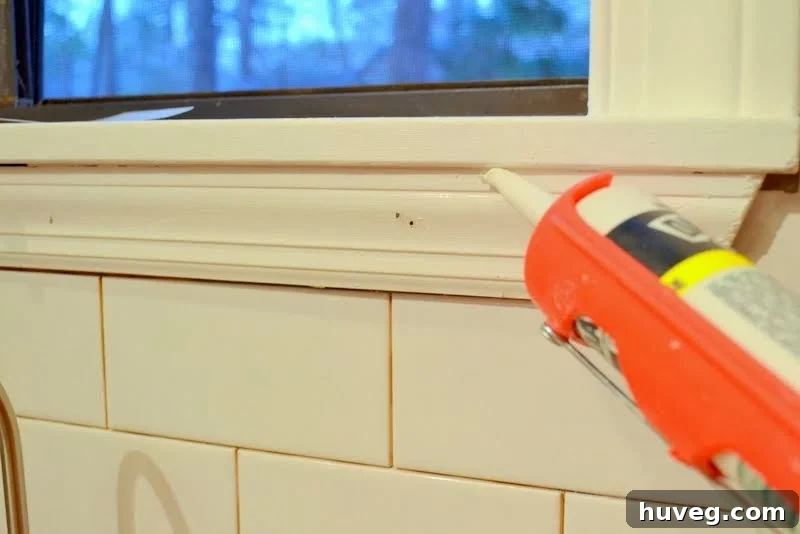
With the molding securely in place, the final steps involve refining the aesthetics. Caulking is indispensable for sealing any remaining gaps between the molding and the wall, as well as where the molding meets the window ledge. This creates a clean, seamless transition and helps protect against moisture infiltration.
Beyond caulking, it’s essential to address any visible nail holes – including those created during the initial removal of the molding. These should be meticulously filled with wood putty or spackle, then sanded smooth, ensuring a perfectly uniform surface ready for paint. These small details are often what elevate a DIY project from good to genuinely professional, leaving no trace of the work involved.
The Stunning Result: A Professional Backsplash You’ll Love
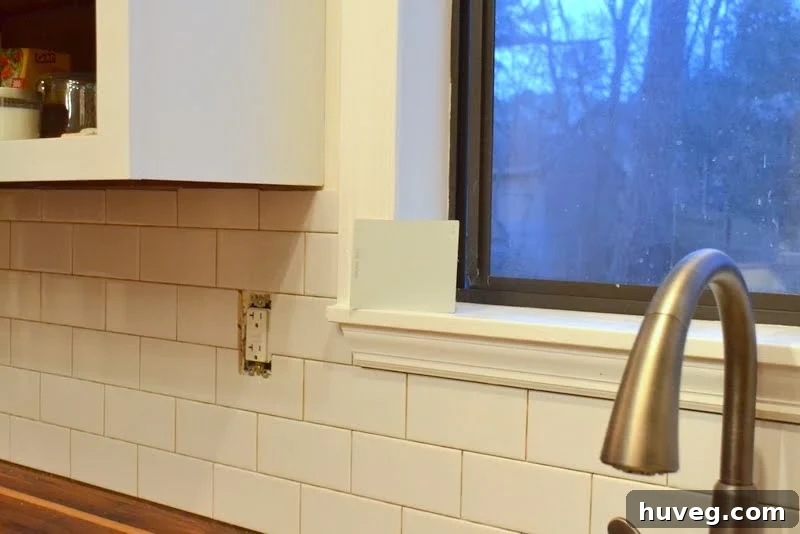
By carefully addressing the unique challenges presented by my kitchen window’s trim, I was able to achieve a truly integrated and professional-looking backsplash. The satisfaction of overcoming an unforeseen obstacle with a clever, custom solution is immense. With the molding perfectly seated, the next exciting phase involves grouting the tile once the entire wall is complete – a final step that truly brings the whole project together.
It’s these seemingly “minor” details that often make the biggest impact on the final outcome of any home renovation. Don’t let unique situations deter you; instead, see them as opportunities to learn, adapt, and innovate. The result will be a beautifully finished space that not only looks fantastic but also fills you with a sense of pride in your DIY accomplishments. (And psst – you might even catch a sneak peek of the new paint color in the finished shots!).
I hope these detailed insights help you confidently tackle your own unique kitchen backsplash challenges. Happy DIYing, and here’s to a great week of successful projects!