Modern DIY Fabric Display Rack

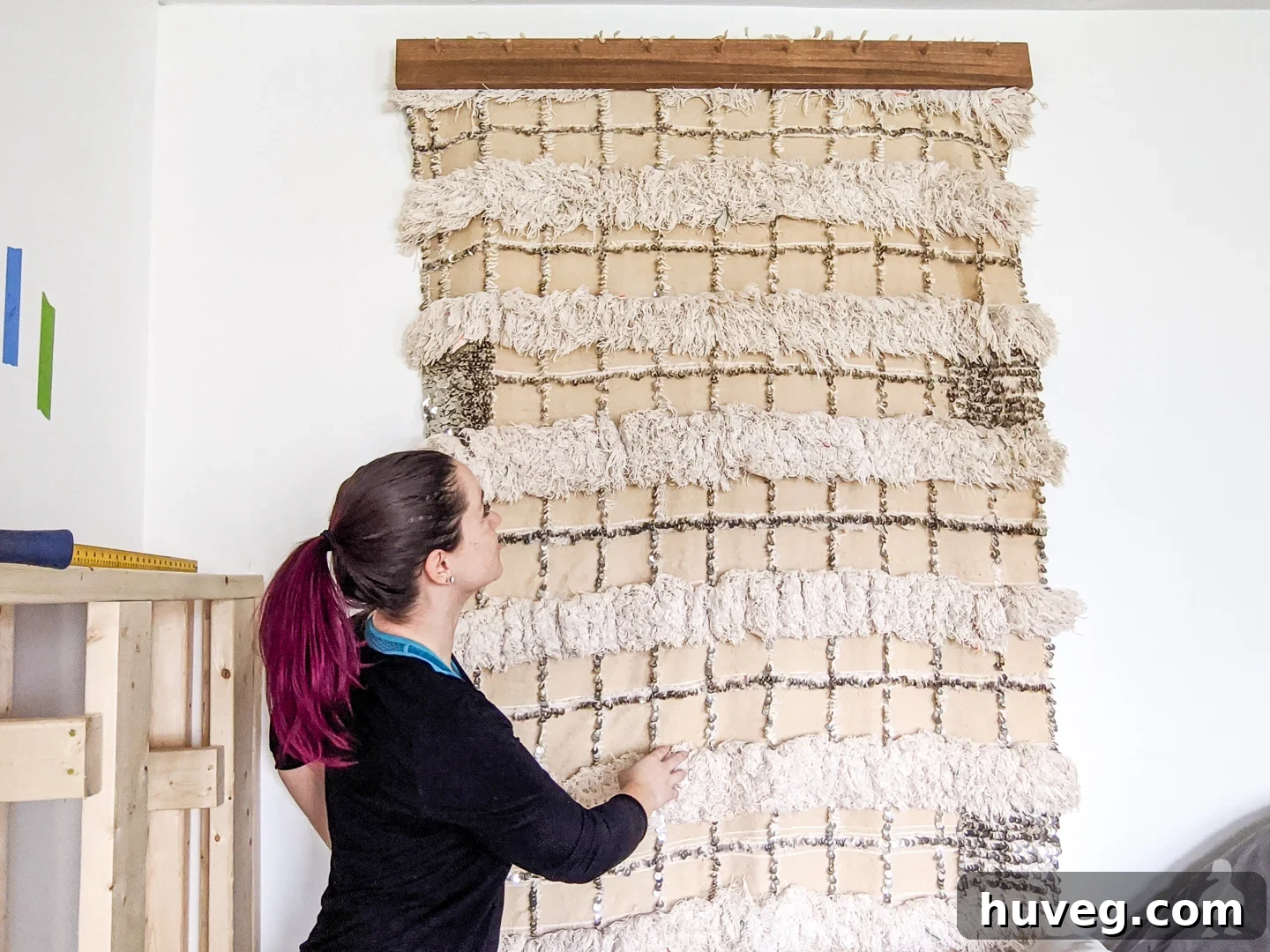
Transform your cherished textiles into stunning wall art with this easy-to-follow guide to building a robust solid wood compression quilt rack. Whether it’s a family heirloom quilt, an exotic tapestry, or a treasured decorative blanket, this DIY hanger ensures your pieces are displayed securely and beautifully, without any damage. Say goodbye to dusty storage and hello to elegant wall decor that tells your unique story.
My inspiration for this project truly blossomed last month during a captivating tour of the 2020 HGTV Dream Home. What struck me most wasn’t just the architecture or the lavish furnishings, but the ingenious ways the walls were adorned. From intricate bowls and woven rugs to natural driftwood sculptures and even a suspended canoe, it was clear that anything could become a captivating piece of wall art. This concept immediately resonated with me, becoming the number one idea I carried home – a brilliant, actionable decorating tip.
In particular, a beautifully hung rug within the Dream Home ignited a long-dormant desire to display my own Moroccan wedding blanket. I acquired this exquisite piece back in 2011, a time when these blankets were incredibly popular in interior design circles. I was mesmerized by their intricate beauty and painstakingly saved hundreds of dollars – essentially every dime I’d earned from my nascent blogging days and then some – to purchase an authentic one. I eagerly awaited its arrival, and once it was finally in my possession, it immediately went into its box and was tucked away. I was so afraid of damaging it before finding the perfect, permanent way to showcase its splendor.
Have you ever found yourself in a similar predicament with a beloved item? This blanket was simply so precious to me that I couldn’t bring myself to (literally) let it shine. For years, it remained hidden, a beautiful secret. Eventually, I brought it out and used it to decorate my bed, but its use there was intermittent. It wasn’t practical as a cozy, everyday blanket, meaning its true beauty was often obscured. Now, thanks to this quick, rewarding project, I finally have a dedicated place where I can admire it every single day, bringing a piece of treasured art into my living space!
For your convenience, I’ve prepared a comprehensive guide for this project, including a video (find it below for a visual walkthrough) and detailed step-by-step instructions. Whether you prefer watching or reading, you have all the resources you need to create your own beautiful textile display.
Are you searching for the best way to hang a rug, quilt, blanket, tapestry, or weaving on a wall without causing damage or putting holes in the precious textile?
This exact question led me down a rabbit hole of online research, where I soon discovered an elegant and long-standing solution: the compression quilt hanger. This method offers a superior way to display your valuable textiles, ensuring their preservation while showcasing their beauty.
While other hanging methods exist, such as velcro, carpet tack strips, or specialized rug hangers, the compression technique truly stood out as the most appealing and effective solution for several compelling reasons:
- No Sewing Required: Unlike velcro, which often demands sewing one side directly onto the textile, the compression hanger eliminates the need for any alterations to your blanket or quilt. This is a huge time-saver and preserves the original condition of your item.
- Damage-Free Display: Traditional methods involving nails, tacks, or even some rug clips can potentially snag, tear, or create permanent holes in delicate fibers. The compression method, however, securely grips the textile without inflicting any damage, making it ideal for irreplaceable pieces.
- Superior Weight Distribution: My Moroccan blanket is significantly heavy, and I needed a solution that could reliably support its weight. The two pieces of wood, tightly clamped together, provide an even distribution of pressure, preventing sagging or stress points that lighter hangers might cause. This robust design ensures your heaviest textiles hang perfectly flat and secure.
- Customizable and Budget-Friendly: This DIY approach allows for complete control over the aesthetic. You can customize the color with different stains or paints to match your decor, dictate the complexity of the installation, and choose materials that fit your budget. It’s a creative way to build a high-quality hanger without the premium price tag of custom-made options.
Compression quilt hangers have been a staple in textile display for decades, yet many commercially available examples tend to lean towards more traditional styles. My goal was to craft a modern, DIY version that perfectly suited my home and blanket. (Imagine a charming collection of smaller compression hangers, each displaying a mini quilt in an adorable wall arrangement!)
How to Effortlessly Hang a Heavy Blanket, Quilt, or Rug on Your Wall
Ready to transform your favorite textile into a captivating piece of wall art? This DIY compression hanger project is straightforward, budget-friendly, and perfect for showcasing your unique style. Follow these detailed steps to create a beautiful and secure display for your cherished blankets, quilts, tapestries, or rugs.
Materials & Tools for Your DIY Quilt Hanger
Gathering all your materials and tools beforehand will ensure a smooth and efficient building process. Most of these items are common workshop staples, making this an accessible project for many DIY enthusiasts.
- Pencil (for marking precise measurements)
- Miter Saw (essential for accurate, straight cuts)
- Orbital Sander (for achieving a perfectly smooth finish)
- Sandpaper (various grits, for refining the wood surface)
- Measuring Tape (for all your dimensioning needs)
- Safety Gear: Safety Glasses, Hearing Protection, Breathing Mask (always prioritize safety!)
- Wood Stain (to achieve your desired aesthetic)
- Drill (for pilot holes and countersinking)
- Drill Bits (various sizes for pilot holes)
- Forstner Bits (crucial for clean, flat-bottomed holes for countersinking and dowels)
- Wood Clamps (essential for stability during routing and assembly)
- Wooden Dowels (specifically 3/8″ wide, for grip and aesthetics)
- Wood Glue (for securing the dowels)
- Palm Router (for creating the fabric groove)
- Sanding Sealer (prepares wood for stain and finish)
- Wipe-on Polyurethane (for durable protection and a smooth finish)
- Heavy-Duty Hanging Hardware (for secure wall mounting)
Project Cost (Note: I already owned most tools and supplies): Approximately $14 (primarily for the wood)
Time needed: 1 hour
Difficulty: Remarkably Easy!
- Measure Your Textile for the Perfect Fit
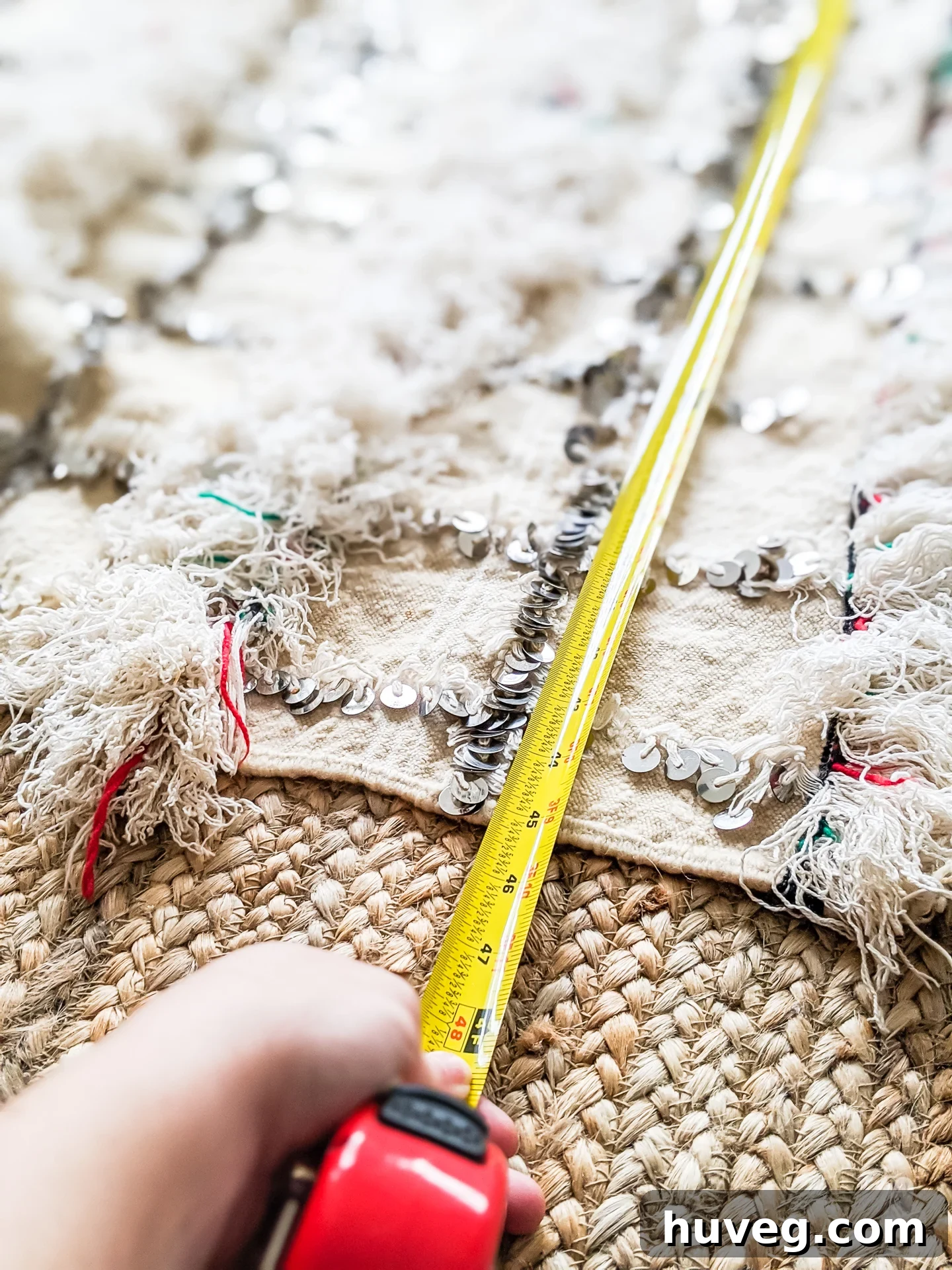
Begin by carefully measuring the width of the quilt, blanket, or tapestry you intend to hang. Precision here is key for a polished final look. While I chose to make my hanger exactly the same length as my blanket for a seamless edge, you could also add an inch to each end of your chosen textile’s width. This provides a slight overhang, creating a framed effect that can sometimes enhance the display, especially for blankets with decorative edges. Consider which aesthetic best suits your piece. For heavier textiles, matching the length provides maximum support across the entire top edge.

- Cut All Wooden Pieces to Your Measured Length
With your desired length determined, it’s time to cut your wood. For this project, I used an 8-foot 1×4 poplar board. Poplar is an excellent choice as it’s readily available, easy to work with, and takes stain beautifully. I cut this board into two identical 46-inch pieces, which will serve as the front and back components of your compression hanger. Always wear your safety glasses and hearing protection when operating power tools, and ensure your miter saw is set for perfectly square cuts to avoid gaps in your finished product.
- Precisely Drill Dowel Holes and Screw Placements
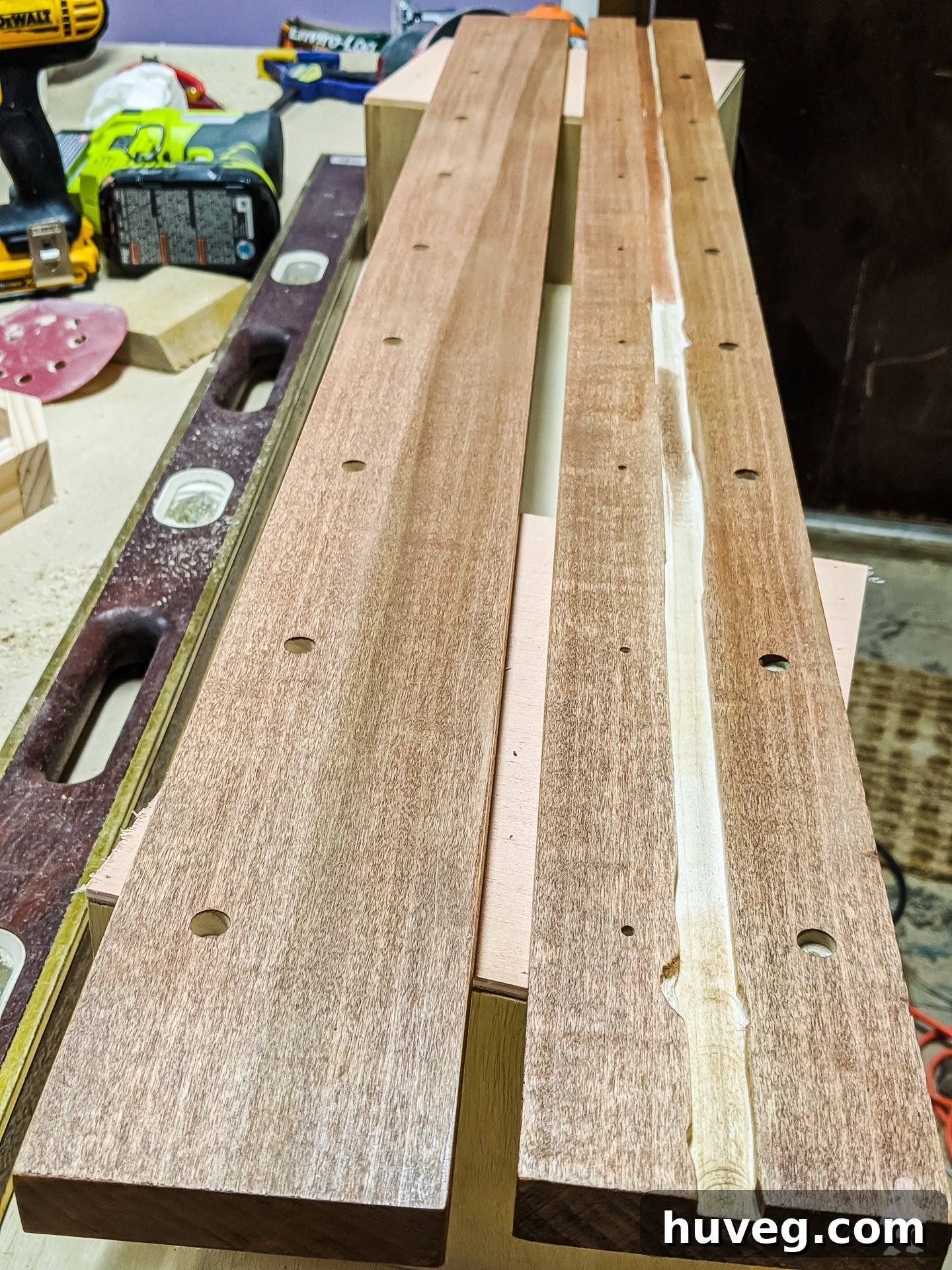
On the front board, measure down approximately 1/2 inch from the top edge. Along this line, mark nine equidistant spots where your screws will go. I chose to place the compression screws towards the top edge of the hanger. This strategic placement ensures that the screws exert pressure effectively without inadvertently piercing or damaging the blanket itself. After marking, use a standard drill bit to pre-drill pilot holes at each of these nine spots. Pre-drilling is essential to prevent the wood from splitting when you drive the screws. Immediately after, switch to a Forstner bit (sized appropriately for your screw heads) to countersink these holes. Countersinking creates a clean, shallow recess, allowing the screw heads to sit flush or slightly below the surface. This is vital because you’ll later cover these spots with dowels, creating a smooth and finished look.
- Route a Gripping Groove in the Back Piece
This step adds an extra layer of grip for your textile. Position your back piece firmly on your workbench. Now, this is where I learned a valuable lesson: use SO MANY MORE CLAMPS than you think you need! Secure a perfectly straight edge (like a reliable level or a known straight piece of wood) firmly to your workbench, parallel to and a consistent distance from the edge of your back piece. This straight edge will act as a guide for your palm router. Carefully run your palm router down the middle of the back piece, creating a shallow groove. While my board shifted slightly due to insufficient clamping (a mistake you can easily avoid!), the groove’s primary purpose is to provide a channel for any excess fabric to gather into and to enhance the compression’s grip. Since this groove will be hidden once the hanger is assembled, minor imperfections won’t be noticeable.
- Integrate Dowels into the Back Piece for Enhanced Grip
Using the same 3/8-inch Forstner bit, drill nine additional holes into the back piece, positioning them about 3/4 inch from the bottom edge. These holes should align vertically with the screw holes on your front piece. Cut several short sections (about 1/2 to 3/4 inch long) from your 3/8-inch wide wooden dowels. Apply a small amount of wood glue into each freshly drilled hole and insert a dowel piece securely. The purpose of these dowels is crucial: they provide additional texture and a tactile surface that the blanket can grip onto when the two wooden pieces are screwed together. This significantly increases the compression’s holding power, especially for heavy or slippery fabrics. As an alternative, you could also consider running a few beads of silicone caulk in the groove; once dry, it creates a rubbery, non-slip surface, offering even more grip. However, with the dowels, I found this extra step wasn’t necessary.
- Apply Stain and Protective Finish
Before finishing, thoroughly sand both wooden pieces with fine-grit sandpaper until they are perfectly smooth to the touch. This prepares the wood to absorb the stain evenly and ensures a professional-looking finish. Next, apply your chosen wood stain. I’ve recently fallen in love with a combination of one coat of Flagstone followed by one coat of American Walnut, which creates a rich, nuanced tone. Allow the stain to dry completely according to the manufacturer’s instructions. Finally, for durability and protection, apply two coats of wipe-on polyurethane. This protective layer will shield your hanger from moisture, wear, and tear, ensuring it remains beautiful for years to come. Apply thin, even coats, allowing each to dry fully and lightly sanding between coats if recommended by the product instructions.
- Install Heavy-Duty Wall Hangers
For a secure and stable display, especially with heavy textiles, investing in quality hanging hardware is essential. I highly recommend these 6-inch heavy-duty hangers. They are designed for substantial weight and often come with small integrated levels, which are incredibly helpful for ensuring a perfectly straight installation on your wall. Attach one half of these hangers to the back of your finished wooden compression piece, making sure they are securely fastened. The other half of the hanging hardware should then be screwed directly into wall studs for maximum support. If studs aren’t available where you want to hang your textile, use appropriate heavy-duty wall anchors to ensure the hanger can safely bear the weight of both the wood and the blanket.
- The Grand Reveal: Hang Your Textile!
This is the moment of truth! Carefully drape the top edge of your blanket or textile over the dowel-studded back piece of the hanger. Align the front piece, ensuring the screw holes line up with the pre-drilled holes in the back piece. Now, using appropriate screws, secure both pieces together over the edge of your blanket, applying even pressure across all nine points. As I tightened the screws, I held my breath, eagerly anticipating the result. To my immense satisfaction, it worked perfectly, securely mounting the blanket to the wall! While I was thrilled with the result, I did notice that the bottom edge of the blanket could lay flatter against the wall. I plan to add some strategically placed velcro or similar method to the back of the blanket and wall to gently stretch it out and keep it perfectly taut.
- Conceal Screw Holes with Decorative Dowels
For a truly finished and professional look, it’s time to hide those exposed screw heads. Take your remaining 3/8-inch dowels and cut them into small plugs that fit snugly into the countersunk holes on the front piece. Apply a small dab of wood glue to each dowel plug and carefully tap them into place until they are flush with the surface. Once the glue dries, you can lightly sand any protruding edges and touch up with a bit of stain or finish to perfectly blend them. This final touch dramatically enhances the aesthetic appeal of your hanger, making it look like a seamless, custom-built piece of furniture rather than a functional tool.
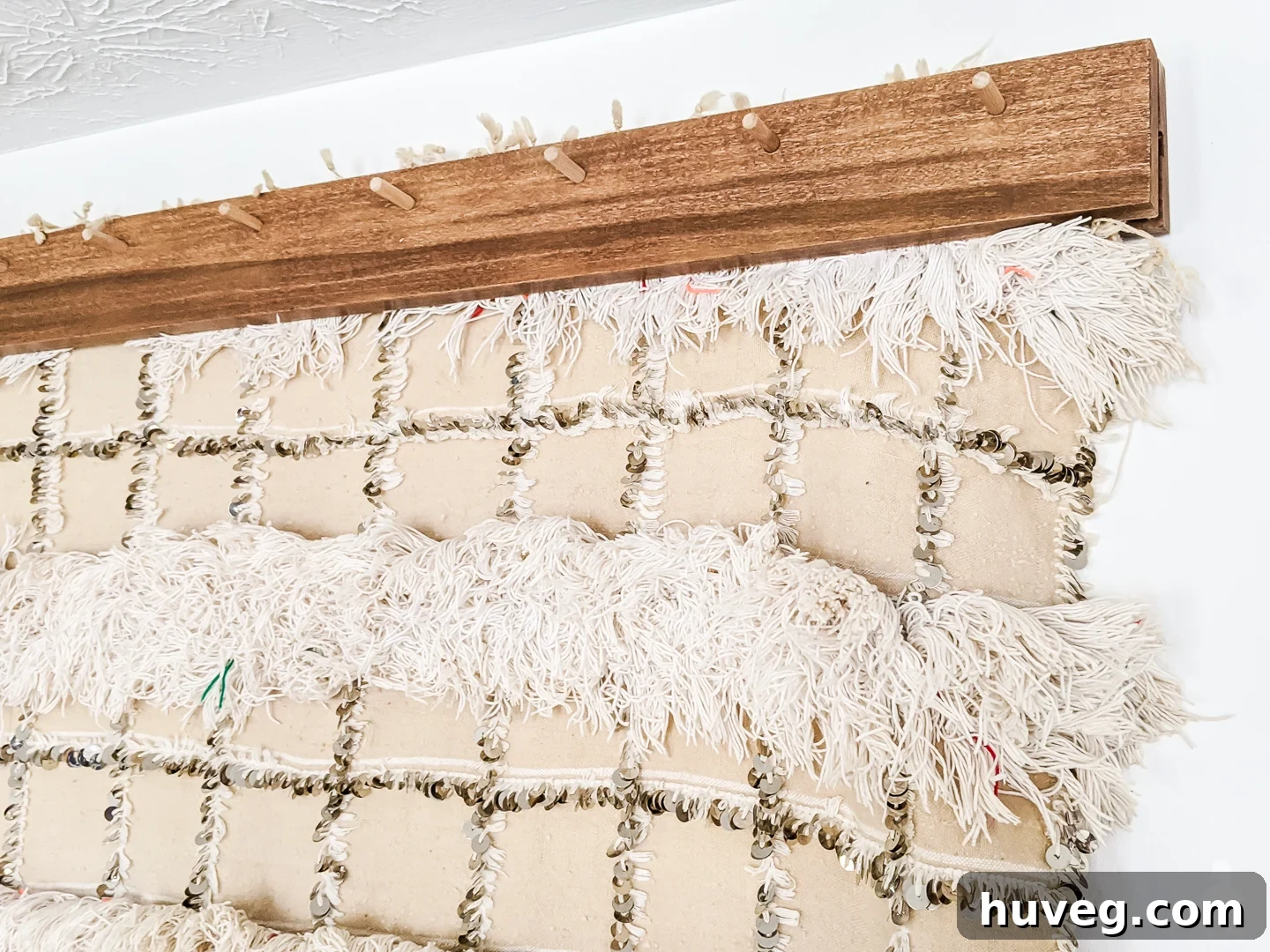
During the entire process of crafting this wooden quilt hanger, I admit I harbored significant worries. My primary concern was that, despite my efforts, the sheer weight of my Moroccan blanket would prove too much for the design, and my gamble wouldn’t pay off. However, I’m delighted to report that all the elements – the strategic compression of the two wooden pieces, the subtle groove routed into the back, and the strategically placed dowels – collectively created more than enough pressure and friction to firmly grip the blanket and hold it flawlessly in place. It was a huge relief and a testament to the effectiveness of the compression method!
Should you find that your textile is particularly heavy or slippery, and the initial setup isn’t providing quite enough grip, there’s a simple enhancement you can try. As I considered during my own build, you can easily add a strip of industrial-strength velcro into the routed groove on the back piece. This would provide an additional layer of non-slip texture, ensuring even the most challenging textiles stay perfectly secure. It’s a fantastic contingency plan that ensures success for any project!
I’m thrilled to be linking this project today with a fantastic group of fellow creators who have also developed some truly incredible wall art projects. Their creativity and craftsmanship are inspiring, and I highly encourage you to explore their work (links below) and let them know I sent you!
- Abstract Wooden Wall Art — Addicted to DIY
- Modern Quilt, Blanket, & Textile Hanger — Ugly Duckling House (you are here!)
- DIY Wood Letter Board — My Repurposed Life
- Creative Wood & Wire Wall Art — Anika’s DIY Life
- Unique DIY Tiki Wall Art — The Awesome Orange
- Beginner’s Guide to Painting Wall Art — At Charlotte’s House
- Custom Hand-Routed Sign — Ellison Made
Truthfully, I have another exciting wall art project in the works for this very same wall, which I’ve been tackling simultaneously. I wasn’t entirely sure if I’d manage to complete it in time for this roundup, largely because it involves an absolutely obnoxious amount of sanding! While I had to postpone revealing both pieces in the same week, trust me, you won’t want to miss the other creation. It’s directly inspired by a mid-century wall sculpture that I simply couldn’t find available for purchase anywhere, so naturally, I’m building my own version instead. Here’s a little sneak peek to whet your appetite:
Adding to our busy schedule, K and I are also in the final stages of completing a much larger feature wall in the bedroom, which has been consuming most of our free time. You might even catch a glimpse of it peeking out on the left side of some of these project pictures. Due to this extensive renovation, we temporarily had to move the bed against this very wall where I’m currently experimenting with wall hangings. It’s not the ideal arrangement for the moment, but I’m optimistic that things will be back to normal, and our bedroom will be perfectly styled very soon!
As for this fantastic project, don’t forget to pin it for future reference and share it with your DIY-loving friends! And for even more creative inspiration, be sure to explore some of our other captivating DIY wall art ideas linked below.