Drywall Finishing at Mom and Dad’s

The journey of transforming a house into a dream home is often filled with small victories that culminate in significant achievements. This past weekend marked a significant stride in our ongoing home improvement projects, bringing us closer to realizing some exciting visions. One such victory was the successful completion of the grout work in the kitchen, a task that, while seemingly minor, lays the foundation for a polished and functional space. Detailed photographs and insights from this particular endeavor will be shared in our next “Dueling DIY” update this coming Wednesday, so be sure to check back for a comprehensive look at that progress!
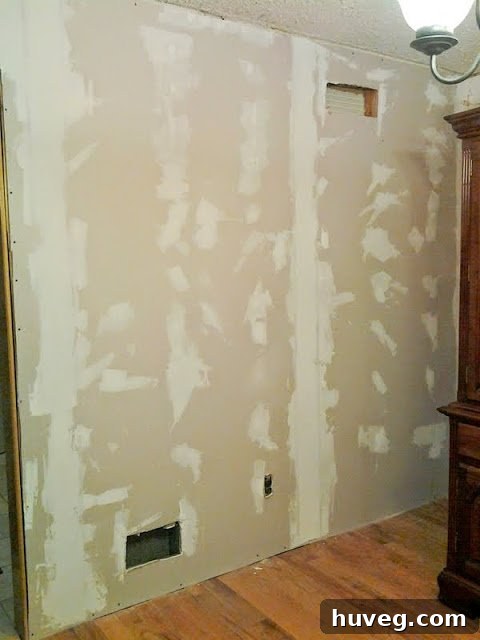
Beyond the kitchen, our focus shifted to a more ambitious undertaking: the complete renovation of my father’s dining room. This weekend, Dad and I made substantial headway, applying the first coat of mud to all the walls. This crucial step in drywall finishing is foundational for achieving smooth, seamless surfaces ready for painting and decorative elements. The process, while messy, is incredibly rewarding as you watch the imperfections of the drywall seams disappear beneath a uniform layer. It requires patience, precision, and often, an extra set of hands, making it a perfect father-daughter bonding project.
As the sun began to set on day two of our diligent work, we paused to capture a few images of our progress. By then, much of the freshly applied mud was already starting to dry, a testament to our efforts and the efficiency of modern drywall compounds. These snapshots offer a glimpse into the initial transformation of the dining room walls, moving them from raw drywall to a primed canvas awaiting their final decorative touches. You can see the initial even coating that smooths out the taped seams and fastener depressions, preparing the surface for subsequent layers and a flawless finish.
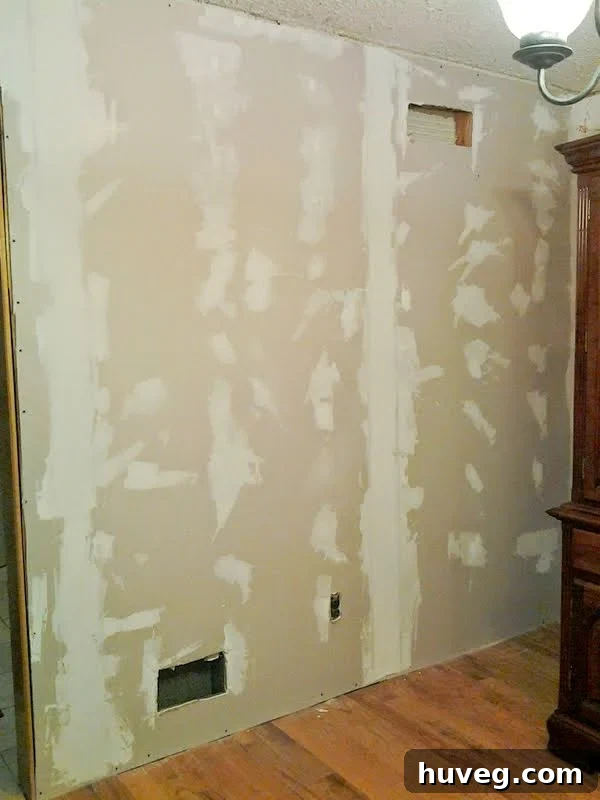
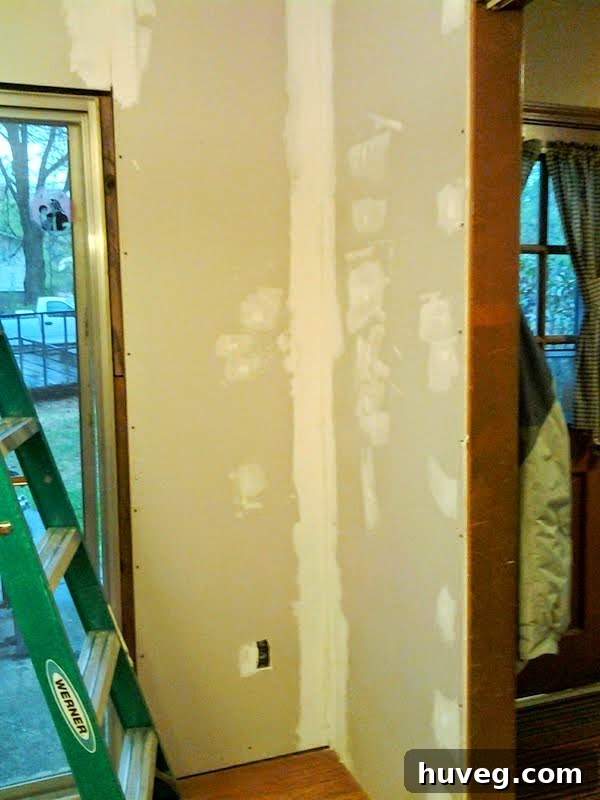
This phase of drywall finishing, often referred to as taping and mudding, is perhaps the most critical for the aesthetic outcome of a room. It’s about creating a perfectly flat and smooth surface that will make the subsequent painting look professional and impeccable. Our goal is to eliminate any visual imperfections, ensuring that when the light hits the walls, there are no visible seams or bumps. This first coat sets the stage, and we’re already looking forward to the next steps to bring this vision to life.
Embarking on a comprehensive home renovation project, especially one as detailed as transforming a dining room, requires meticulous planning and a phased approach. After our initial drywall installation (Weekend 1) and the successful application of the first mud coat (Weekend 2), we’ve mapped out a clear schedule for the coming weeks. This detailed plan helps us manage expectations, allocate tasks efficiently, and ensure a steady progression towards our goal. If all goes according to our carefully crafted timeline, our upcoming weekends will be packed with exciting advancements, moving us closer to a beautifully finished dining room.
Weekend 3: Perfecting the Foundation
The third weekend of our dining room transformation focuses on refining the drywall surface and preparing foundational elements. This stage is crucial for ensuring a perfectly smooth canvas before any paint is applied.
- Sand First Coat of Mud: This is a dusty but incredibly important step. After the initial layer of drywall mud has completely dried, it needs to be carefully sanded to remove any ridges, bumps, or imperfections. We’ll use a pole sander for large areas and a hand sander for corners and edges, aiming for a perfectly smooth, level surface. Proper dust masks and ventilation are absolutely essential during this process to protect respiratory health. This meticulous sanding ensures that each subsequent layer of mud adheres smoothly and contributes to a flawless finish.
- Apply Second Coat of Mud: Once the first coat is sanded smooth, we’ll apply a second, thinner coat of mud. This layer is often used to feather out the edges of the taped seams even further, filling in any remaining subtle depressions and creating an almost invisible transition between the drywall sheets. It’s applied with a wider trowel or knife to ensure a broad, even spread, paying close attention to consistency and smoothness.
- (If We Get the First Coat Finished on Day 1, to Allow It Time to Dry) Sand Second Coat: Should we be efficient enough to complete the second coat on the first day, we’ll allow it ample time to dry overnight. The following day, this second coat will also undergo a lighter sanding. This final sanding before priming is incredibly important, as it’s the last chance to address any minor flaws. The goal is to achieve a surface that is not just smooth to the touch but also visually perfect under various lighting conditions, ensuring that paint will glide on without highlighting any underlying imperfections.
- Prime Crown Molding: Simultaneously, we’ll tackle the crown molding that was carefully removed before the drywall work began. Pre-priming the molding before re-installation is a highly efficient practice. It allows for easier application without the risk of drips or splatters on freshly finished walls. We’ll use a high-quality primer to ensure excellent paint adhesion and a uniform base for the final white paint coat. This step saves time and effort during the final painting phase.
Weekend 4: Priming, Painting, and Wainscoting Beginnings
With the walls meticulously prepped and smoothed, Weekend 4 transitions into the exciting stages of priming, applying the initial paint colors, and commencing the installation of the dining room’s elegant wainscoting.
- Prime Entire Wall: Priming is a non-negotiable step for any successful paint job. We will apply a high-quality primer to the entire wall surface. Primer serves several critical functions: it seals the drywall mud, provides a uniform surface for the topcoat, prevents flashing (uneven sheen), and ensures better adhesion of the final paint. For walls that have undergone extensive mudding, a good quality PVA (polyvinyl acetate) primer or a dedicated drywall primer is essential to achieve a professional-grade finish, ensuring our chosen paint colors will look true and vibrant.
- Paint Bottom Half White: Our design plan includes a distinct two-tone wall, with the bottom half serving as the backdrop for the wainscoting. After the primer has dried, we will carefully measure and tape off a crisp line to define the upper boundary of the wainscoting. The bottom half of the walls will then receive its first coat of a durable, bright white paint. This meticulous application sets the foundation for the wainscoting, ensuring that the base color is flawless.
- Paint Crown White: The pre-primed crown molding will now receive its final coat of bright white paint. Painting trim before installation, particularly if it’s going to be a contrasting color to the walls, significantly reduces the effort and mess involved. We’ll ensure even coverage, aiming for a smooth, streak-free finish that will beautifully frame the room once re-attached.
- Add Baseboard and Top Railing for Wainscoting: This is where the structural elements of the wainscoting begin to take shape. We will install the baseboard along the bottom of the walls and then, after careful measurement, attach the top railing that defines the upper edge of the wainscoting paneling. Precision in leveling and squaring these pieces is paramount, as they form the framework for all subsequent wainscoting components. Using a laser level and stud finder will be key to ensuring a perfect installation, creating a stunning visual impact that adds character and elegance to the dining room.
- Take Care of the Outlet Extension: Installing wainscoting means adding depth to the wall, which often leaves electrical outlets recessed. To maintain safety and functionality, we will extend the electrical outlets so they are flush with the new surface of the wainscoting. This involves using outlet extenders (or “box extenders”) that bring the receptacle forward. This task requires careful handling of electrical components and adherence to safety guidelines, ensuring all power is off at the breaker before any work begins. This detail is crucial for a professional and safe finish.
Weekend 5: Wainscoting Details and First Top Coats
Weekend 5 is dedicated to the intricate detailing of the wainscoting and applying the initial paint coats to the upper walls, truly bringing the dining room’s design vision to life.
- Add Stiles Between Top Railing & Baseboard: With the baseboard and top railing in place, we will now add the vertical elements, known as stiles, which create the paneling effect of the wainscoting. These pieces need to be precisely cut to fit snugly between the baseboard and the top railing, creating a symmetrical and visually appealing design. Careful measurement and accurate cuts are vital for a professional look. We’ll use a nail gun for efficient and secure attachment, ensuring each stile is perfectly plumb.
- Add Shoe Molding (If Dad Chooses): Shoe molding is a small, decorative trim piece that is typically installed at the very bottom of the baseboard, where it meets the floor. It serves both an aesthetic purpose, by softening the transition from baseboard to floor, and a practical one, by concealing any minor gaps that may exist due to uneven flooring. If Dad decides on this detail, we’ll cut and install it carefully for a refined finish.
- Re-attach Crown: The pre-painted crown molding is now ready to be re-attached to the top of the walls. This involves precise miter cuts for corners and careful alignment to ensure a seamless fit around the room. We’ll use finishing nails and wood glue for a secure installation, paying close attention to joining seams for a flawless appearance. The crown molding truly adds a touch of architectural elegance and completes the room’s upper perimeter.
- Add Cap to Top Railing: To finish the wainscoting, a decorative cap will be added to the top railing. This piece sits horizontally along the upper edge of the top railing, providing a finished look and often a subtle shelf-like surface. It helps define the transition from the wainscoting to the upper wall, adding another layer of architectural detail.
- Caulk the Whole Damn Thing: This seemingly minor step is perhaps one of the most impactful for a truly professional finish. Caulking involves applying a flexible sealant to fill all gaps, cracks, and seams where different architectural elements meet (e.g., where wainscoting meets the wall, where trim meets the wall, internal corners, nail holes). This step covers any imperfections from installation, seals against drafts, and creates incredibly clean, crisp lines, making all the trim look seamlessly integrated. We will use a paintable acrylic latex caulk and apply it meticulously, smoothing each bead with a wet finger or tool for a flawless finish. This extensive caulking process transforms a good DIY job into an exceptional one, making all the hard work shine.
- First Coat of Paint on the Top Walls: With the wainscoting complete and all trim caulked, the upper walls are ready for their primary color. We’ll apply the first coat of paint to the area above the wainscoting. This will be a carefully chosen color that complements the white wainscoting, creating depth and character in the dining room. Careful cutting in along the wainscoting cap and crown molding will ensure crisp, clean lines, bringing us closer to the final aesthetic.
Weekend 6: The Finishing Touches and Contingency
The final scheduled weekend acts as a buffer and a dedicated period for addressing any remaining tasks and ensuring every detail is perfect before declaring the dining room renovation complete.
- Whatever We Didn’t Finish Already: This weekend is primarily reserved for any tasks that might have been delayed or required more time than anticipated in Weekends 3, 4, or 5. Renovation projects often encounter unexpected challenges, and having a dedicated contingency weekend is crucial for managing these without stress. This might include a second coat of paint for the upper walls, minor touch-ups on trim, or addressing any small imperfections identified during the final inspection. The success of this weekend largely depends on whether we hit any speed bumps on Weekend 5, ensuring a flexible approach to perfection.
- Final Inspection and Clean-up: Beyond any unfinished tasks, Weekend 6 will also involve a thorough final inspection of all work, ensuring every surface is smooth, every line is crisp, and every detail is impeccable. This is also the time for a deep clean of the dining room, removing all construction dust, paint drips, and debris, leaving behind a pristine, newly renovated space.
I am genuinely pleased with the significant progress we’ve achieved so far on this dining room renovation. It’s incredibly rewarding to see the space transform weekend after weekend, moving closer to the beautiful vision we have for it. The planning and execution are proving to be effective, and I’m confident that we’ll be able to accomplish a substantial portion of these detailed steps in the coming weeks. The collaborative effort with my dad makes the process even more enjoyable and productive. To further streamline our work, I’m hopeful that my parents can assist with a few smaller, preparatory tasks between our weekend visits. (Cough cough, Mom, if you could get the crown molding propped onto some sawhorses for easier painting, that would be a huge help! Cough cough.) Let’s all keep our fingers crossed that this exciting project continues to progress smoothly and without any major hitches. Stay tuned for more updates as we bring this dining room vision to life!