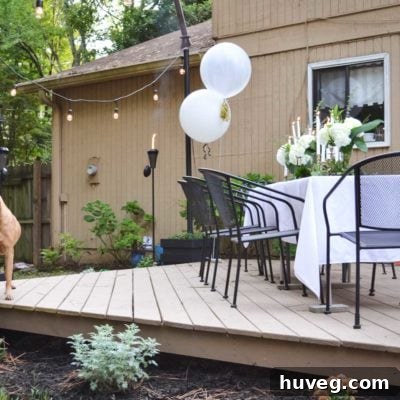
DIY Deck Light Planters Free Build Plans

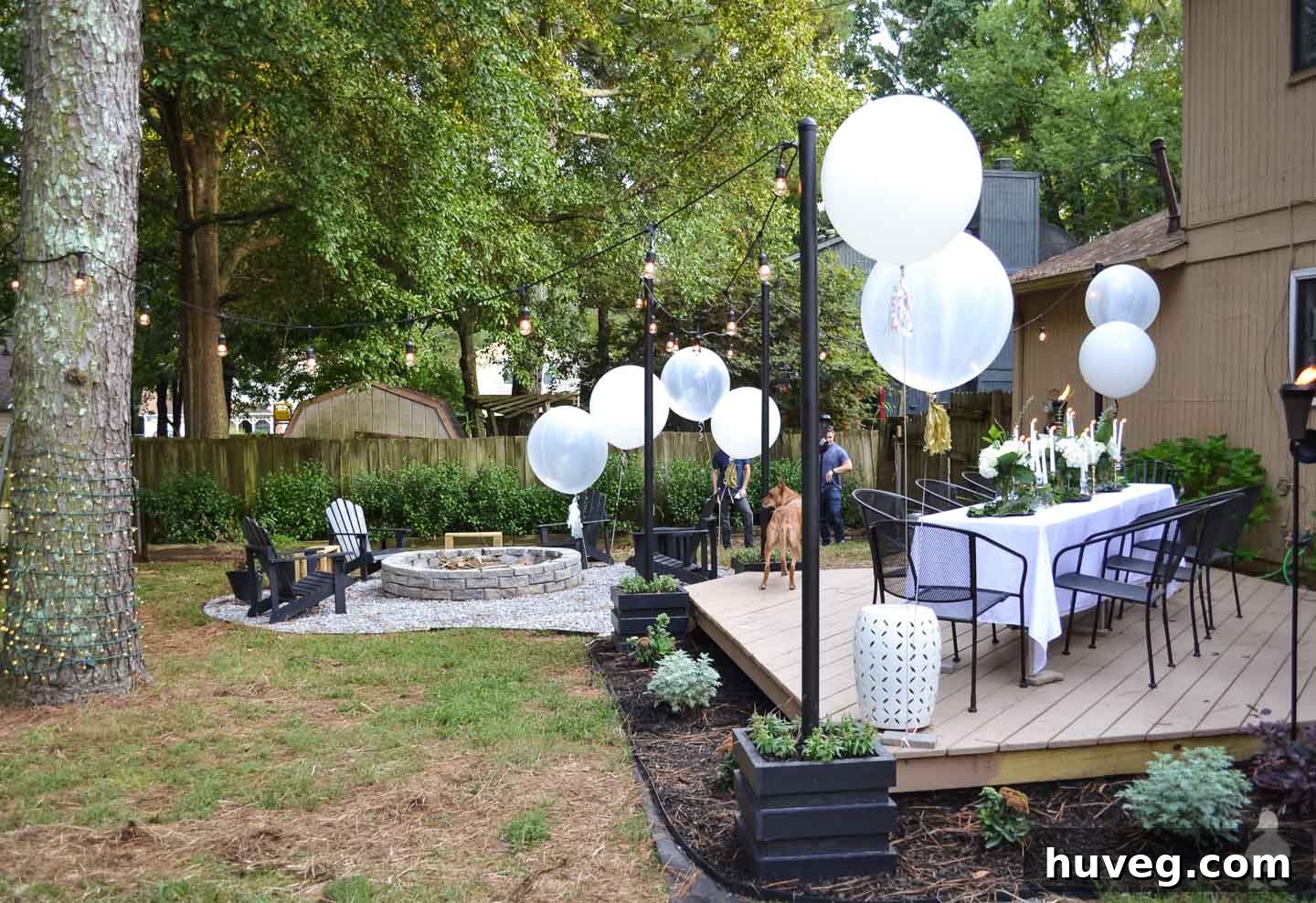
After the exciting retirement party for Mom and the detailed landscaping project around the new deck, it’s finally time to unveil the captivating outdoor light pole planters that truly brought the entire deck project to life! This DIY endeavor transformed our outdoor space, adding both functionality and a touch of sophisticated charm. If you’ve been following our journey, you know how much work has gone into creating our dream floating deck, and these custom-built light pole planters were the crucial final step that made it feel complete and ready for endless outdoor enjoyment.
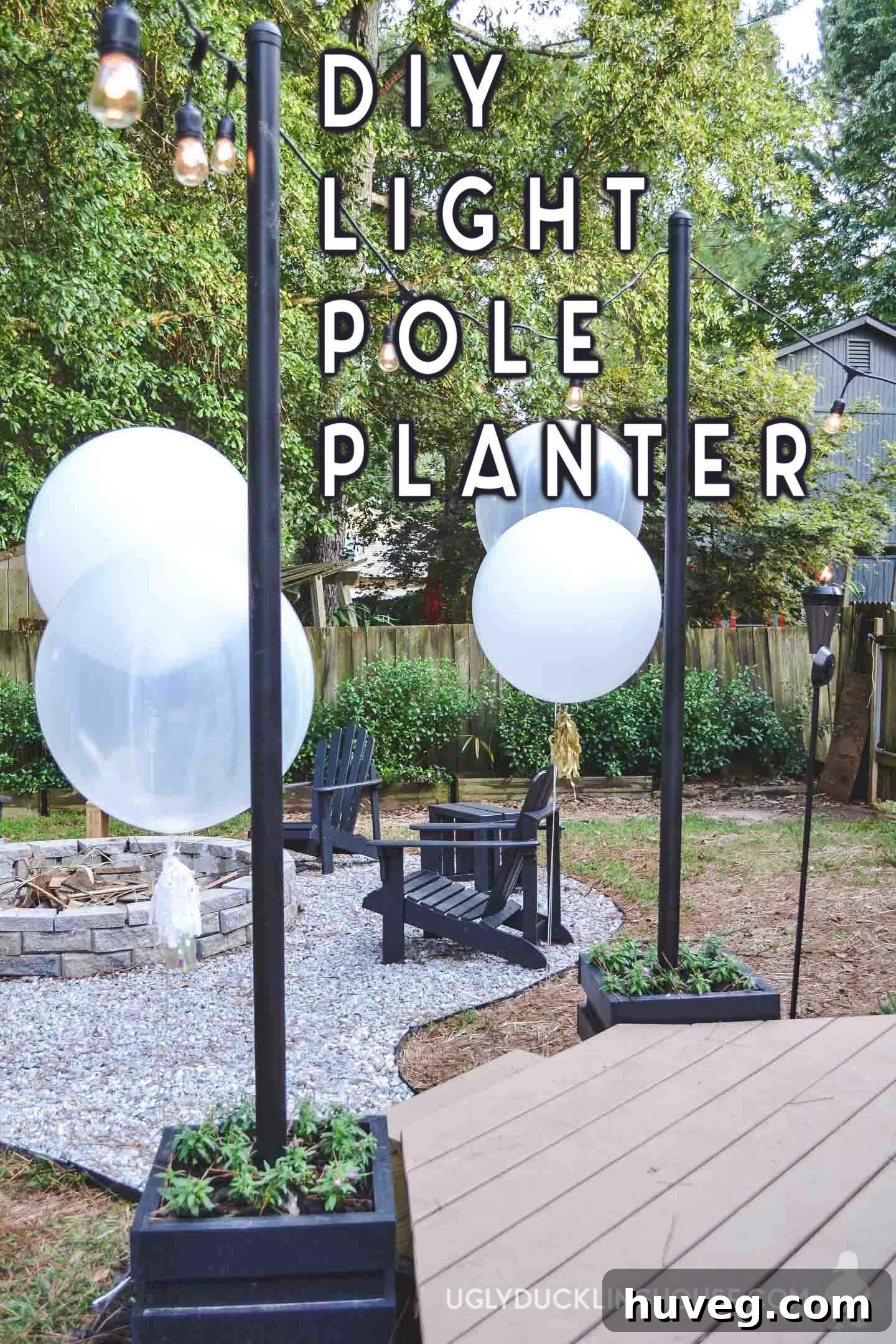
For me, this wasn’t just another DIY project; it was the moment the new deck truly became a tangible reality. After weeks of planning, building, and staining, these elegant light pole planters symbolized crossing the finish line on our summer-long outdoor transformation. They weren’t merely functional; they added the aesthetic anchor and ambient lighting that completed the vision. The process, while involving careful steps, was incredibly rewarding, proving that even ambitious outdoor decor can be achieved with a DIY spirit and a bit of ingenuity.
Embarking on a floating deck project? Don’t miss any essential details! Explore our comprehensive DIY Floating Deck Series:
Part 1: Planning & Layout for Your Dream Deck
Part 2: Robust Frame Construction & Waterproofing Techniques
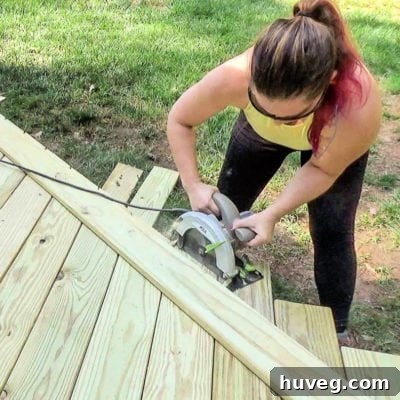
Part 3: Installing Stylish Diagonal Decking
Part 4: Precision Trimming & Edge Finishing
Part 5: Essential Landscaping for a Cohesive Outdoor Space
Part 6: Building Your Own Outdoor Light Pole Planters
Part 7: The Grand Reveal – Mom’s Surprise Party!
DIY Outdoor Light Poles with Planter Base: Free Plans & Design Insights
We’re thrilled to offer free plans for these DIY outdoor light pole planters! While my build was influenced by the specific dimensions of my scrap wood (primarily 5/8″ plywood and 1/4″ lumber left over from our shed and deck projects), these plans provide a versatile foundation for your own custom build. The beauty of DIY lies in adaptation, and these plans can be easily modified to fit your available materials or desired scale. For those seeking different design options or construction methods, I’ve also linked some fantastic tutorials from fellow bloggers below, offering varied approaches such as using 2x4s or incorporating stained finishes.
- Discover Charlotte’s innovative 2×4 planter version for a more rustic aesthetic.
- Explore Wendi’s beautifully stained light pole design for a natural wood look.
One distinct feature that sets my approach apart from many other tutorials is the deliberate choice of metal poles instead of traditional wooden dowels or pressure-treated 4x4s. My primary motivation for this was durability and stability. Metal poles offer superior resistance to warping, a common issue with wood, especially when exposed to varying outdoor conditions. This decision ensured that our outdoor string lights would remain perfectly straight and secure for years to come, without the need for constant maintenance or concern about wood drying out and twisting.
The inspiration for these custom planters stemmed from a desire for sophisticated, sleek outdoor decor. I envisioned the deck adorned with elegant planters that seamlessly integrated ambient lighting. However, every pre-made planter I encountered online or in stores seemed to fall short. They were either the wrong size, an unsuitable color, featured unnecessary decorative trim that didn’t align with my minimalist style, or simply lacked the stability required for outdoor light poles. Unsurprisingly, the few options that did meet all my criteria came with a hefty price tag, well beyond my project budget. So, as any dedicated DIYer would, I rolled up my sleeves and crafted these bespoke light pole planters myself, turning a challenge into an opportunity for custom creativity and significant savings.
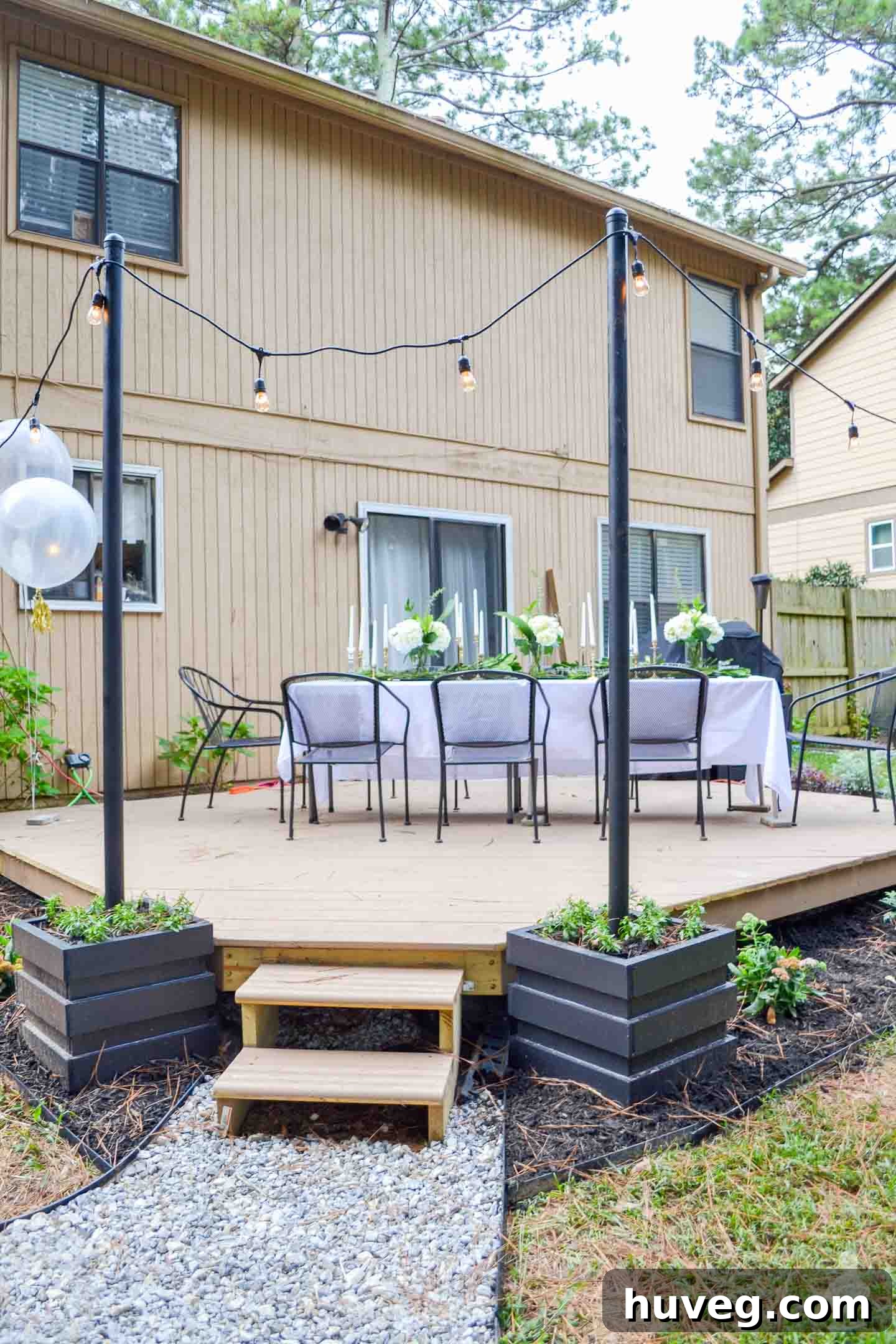
Essential Supplies and Tools for Your DIY Light Pole Planters
Before diving into the construction, gather all your materials and tools. Having everything organized will streamline the building process and ensure a smooth, efficient workflow. Many of these items are common workshop staples, but pay attention to the exterior-grade specifications for long-lasting outdoor performance.
- Wood: 5/8″ plywood (perfect for using up scrap pieces) & 1x4s (also ideal for scrap utilization).
- Adhesives & Fasteners: Exterior-grade wood glue for weather resistance & finishing nails.
- Cutting Tools: Circular saw for larger cuts & miter saw for precise angles and lengths.
- Assembly Tools: Nail gun + air compressor for quick and secure fastening.
- Stabilization & Leveling: A reliable level or post level to ensure your poles stand perfectly straight.
- Anchoring System: Quick-set concrete for a robust base & Sturdy buckets (dollar store finds are perfect for this!).
- The Poles: Metal fence post (2 7/8″ diameter recommended) for superior durability and warp resistance.
- Sealing & Finishing: Exterior caulk to seal joints & Fence post caps (matching pole diameter) for a finished look and protection.
- Paint & Application: High-quality exterior latex paint for the planter boxes, paint sprayer for an even finish (optional, but highly recommended), and flat black spray paint for the metal poles and caps.
- Planter Essentials: Landscaping fabric for drainage and soil retention, soil, and your choice of plants.
- Lighting Hardware: Robust cup hooks to hang lights, strong exterior adhesive for added security, and your preferred exterior string lights.
- Drilling: A reliable drill and a drill bit that matches the cup hook screw diameter.
Step-by-Step: Anchoring the Metal Poles with Quick-Set Concrete
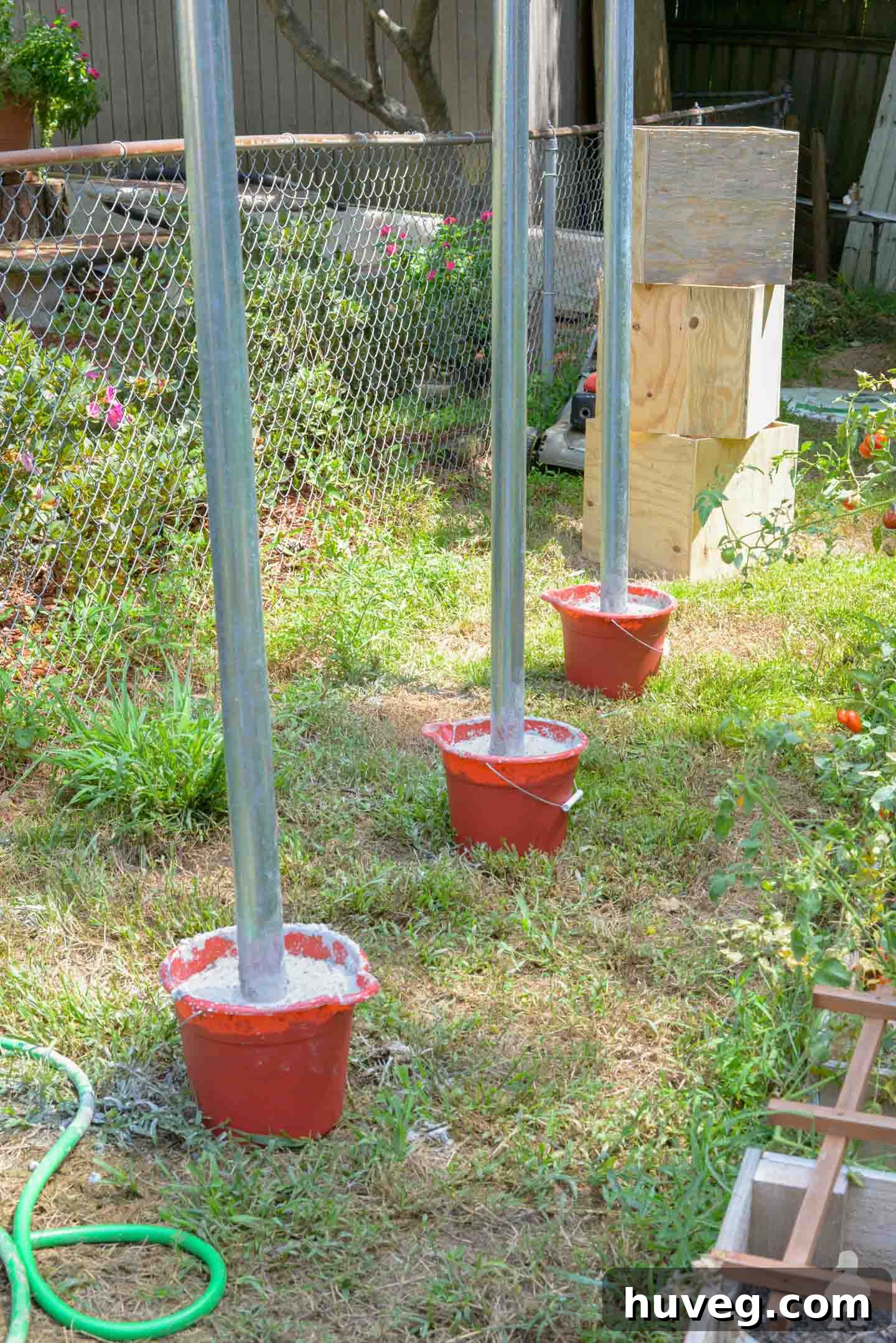
The foundation of a stable light pole planter is a securely anchored pole. This initial step is critical for ensuring your poles stand tall and withstand the elements. Begin by placing one metal fence post precisely in the center of a sturdy bucket. This bucket, which will eventually be hidden within your planter box, provides the mold for the concrete base. Use braces, scrap wood, or even sandbags to stabilize the pole, ensuring it remains perfectly upright. Employ a level or, even better, a post level, to confirm it is plumb (vertically straight) from all angles. Once stabilized, carefully fill the bucket with quick-set concrete, following the manufacturer’s instructions regarding water addition and mixing. Allow the concrete to fully cure according to the package directions. This curing process is essential for maximum strength and stability, creating a heavy, immovable base that will prevent your light poles from tipping over, even in strong winds.
Step-by-Step: Assembling the Robust Planter Boxes
The planter boxes not only provide a decorative facade but also offer additional weight and a housing for your plants. Careful assembly here ensures a visually appealing and structurally sound planter.
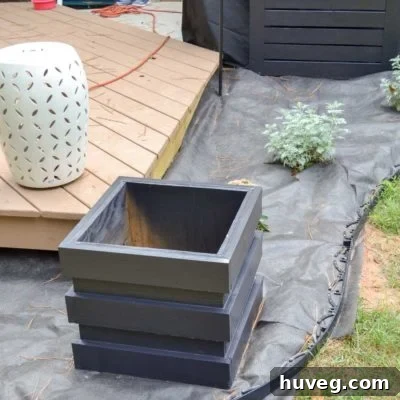
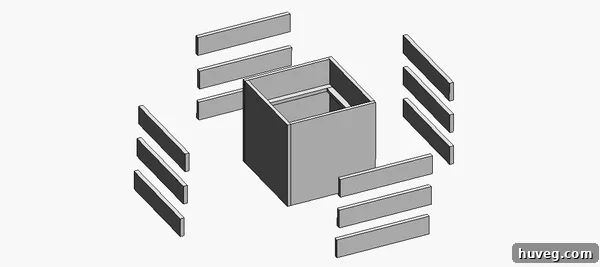
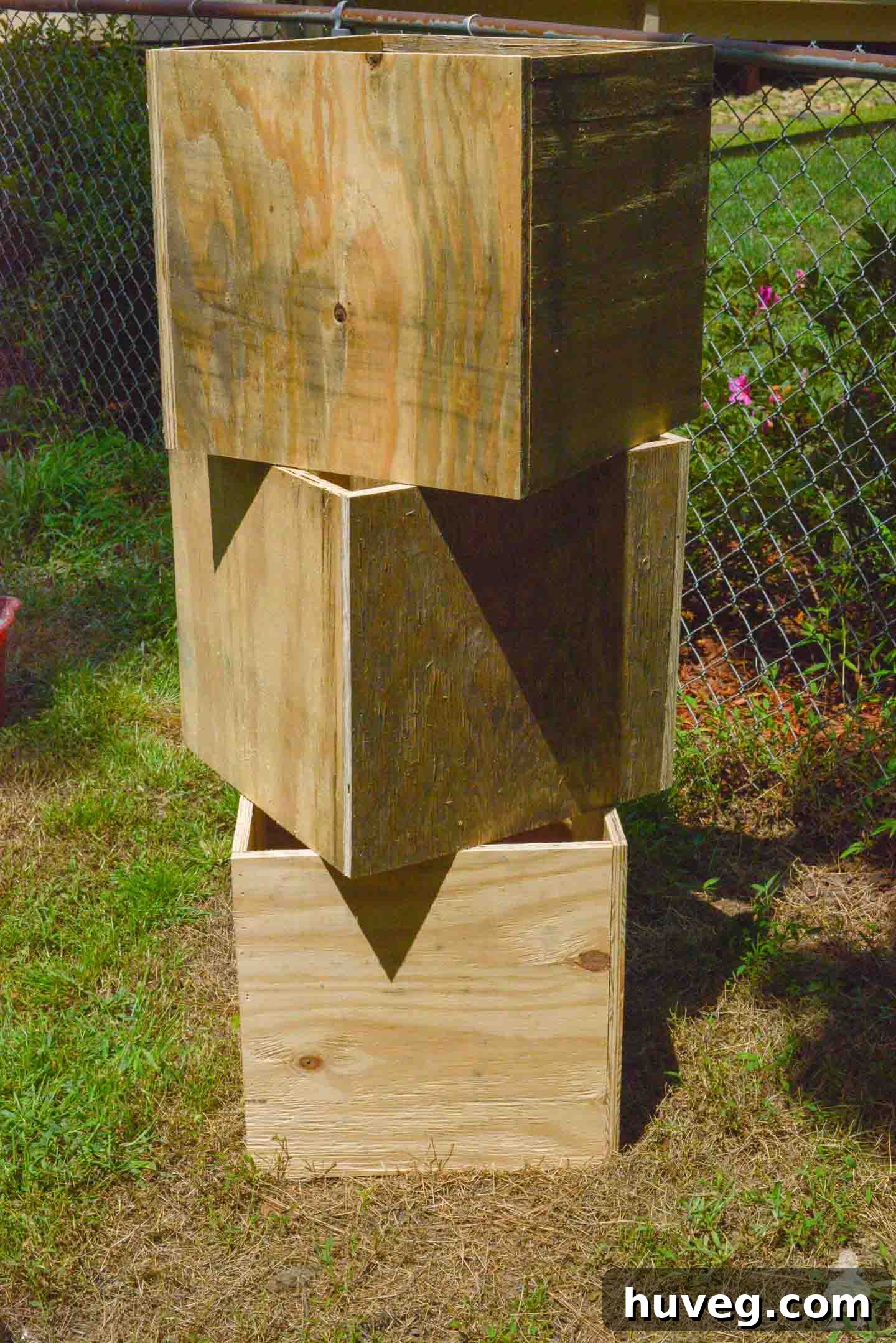
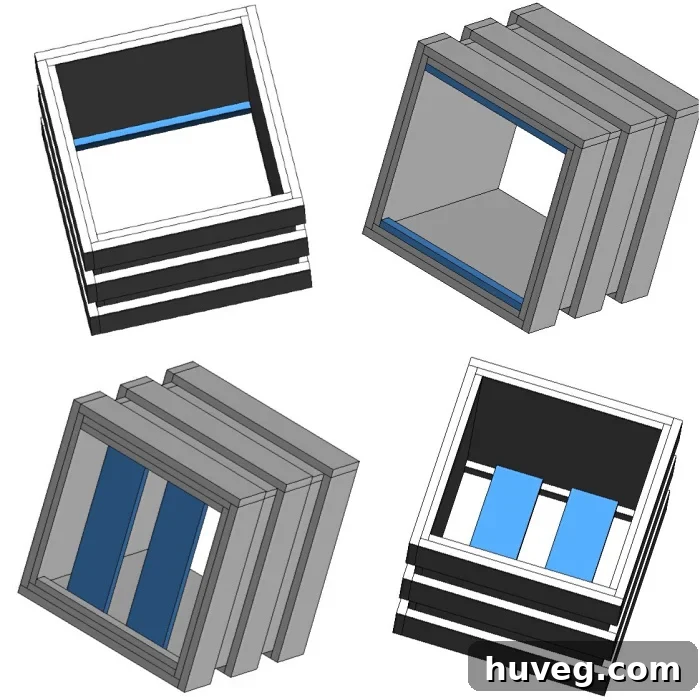
1. Construct the Plywood Cube: Start by cutting four identical panels of 5/8″ plywood, each measuring 16″ x 16″, for every planter you plan to build. These will form the core structural frame of your planter box. Apply exterior wood glue along the edges and meticulously nail the panels together, creating a perfect cube. Work systematically, wrapping one panel around the edge of the previous one. To ensure perfect squareness, measure diagonally from corner to corner. The measurements should be identical; make any necessary adjustments before the glue fully sets to achieve a true cube.
2. Add Decorative Horizontal Slats: Enhance the aesthetic and rigidity of your planter boxes by cutting twelve 1×4 pieces to a length of 17 3/8″ for EACH planter. These pieces will serve as decorative horizontal slats, wrapping around all four sides of the plywood cube. Before attaching them, double-check that your plywood cube is still perfectly square, as these slats will further lock in its shape. Apply exterior wood glue to the back of each slat and secure them with finishing nails, ensuring even spacing for a clean, professional look.
3. Install Interior Supports (Lower Level): To create a sturdy base for the bucket containing the concrete-anchored pole, cut two strips of 5/8″ plywood, each 15 3/8″ long. These supports will run parallel to each other along the bottom interior of the planter box. The exact length is flexible, as long as they provide sufficient support across the bottom. Glue and nail them firmly into place, ensuring they are level and parallel.
4. Install Interior Supports (Upper Level): Now, cut two additional pieces of 5/8″ plywood, also 15 3/8″ long. If your plywood has slight warping, you might need to make minor length adjustments to ensure a snug fit. These pieces will be attached on top of the supports installed in step 3, creating a robust platform to bear the weight of the concrete-filled bucket and prevent it from shifting downwards.
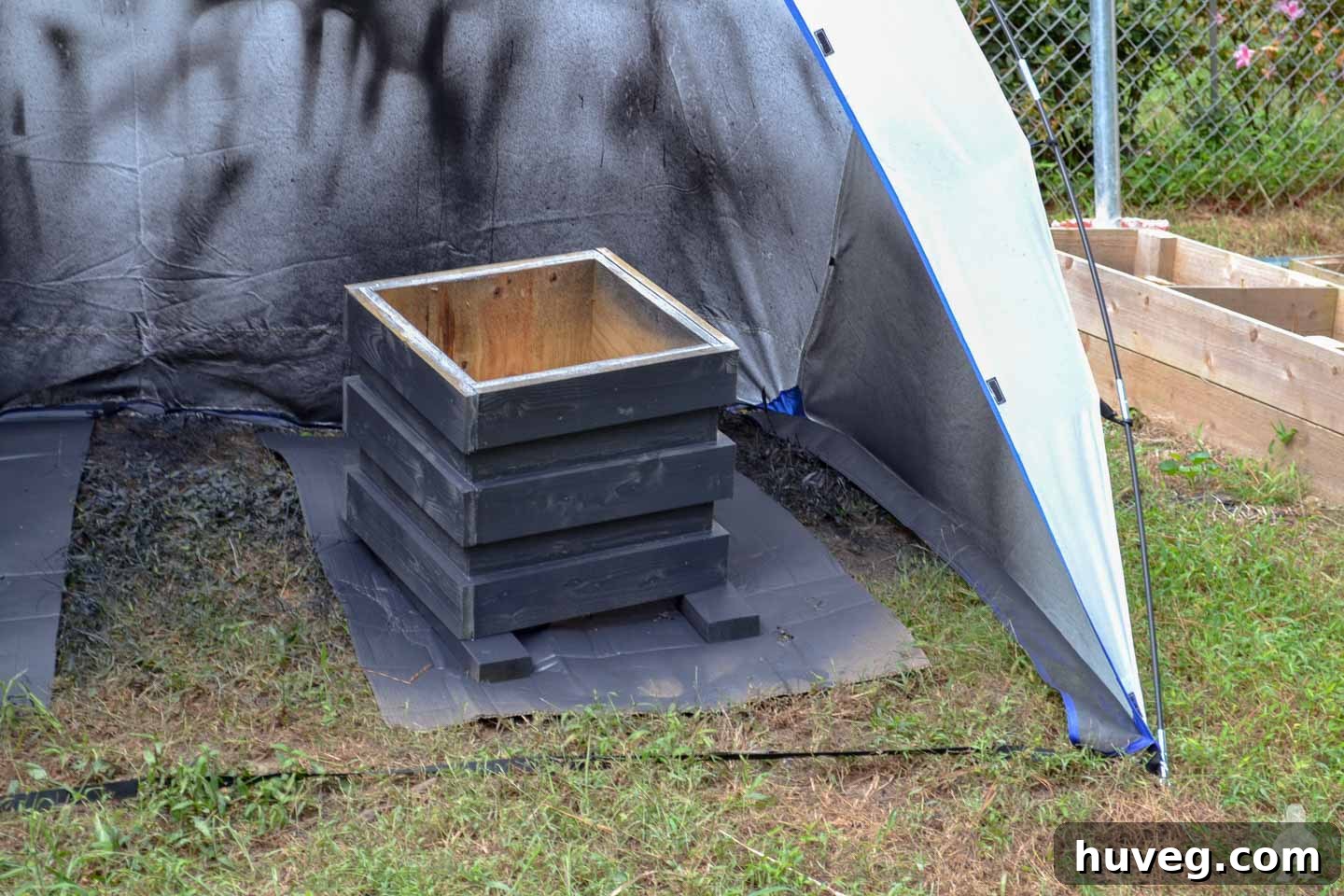
5. Paint and Finish for Exterior Durability: This is where your planters truly begin to take on their final appearance. Carefully paint or finish both the planter boxes and the metal light poles according to your desired aesthetic. For my planters, I opted for an elegant, almost-black exterior paint (Sherwin-Williams Tricorn Black, color-matched to a durable Behr outdoor application paint). This choice created a cohesive look with my existing outdoor furniture, such as the Adirondack chairs and fire pit benches. For the metal poles, a simple application of flat black spray paint provided a sleek, weather-resistant finish. Using a paint sprayer for the planter boxes can achieve a remarkably smooth and professional result, minimizing brush strokes and ensuring even coverage.
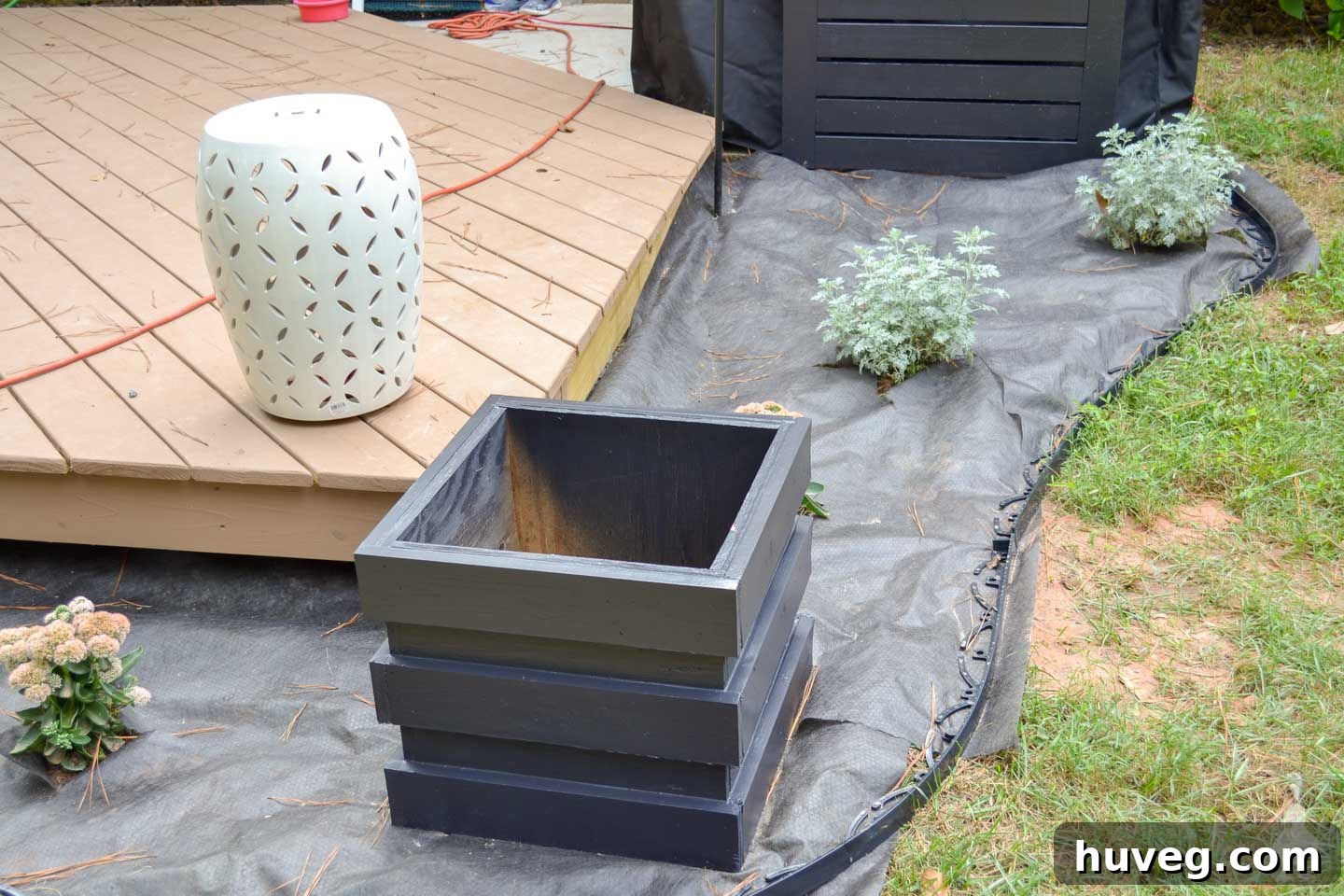
6. Strategic Placement and Leveling: Carefully move your painted planter boxes to their final desired locations around your deck or patio. Ideally, these spots should be perfectly level. However, as many DIYers know, reality often differs! My yard, for instance, presented no truly level spots. Don’t fret if yours is similar. This is where creative problem-solving comes into play. I compensated by making numerous tiny adjustments: creating custom wedges with scrap wood placed strategically under the planter, or adding varying amounts of gravel beneath each side until the planter box appeared perfectly level. Take your time with this step, as a level planter contributes significantly to the overall stability and aesthetic appeal of the light pole.
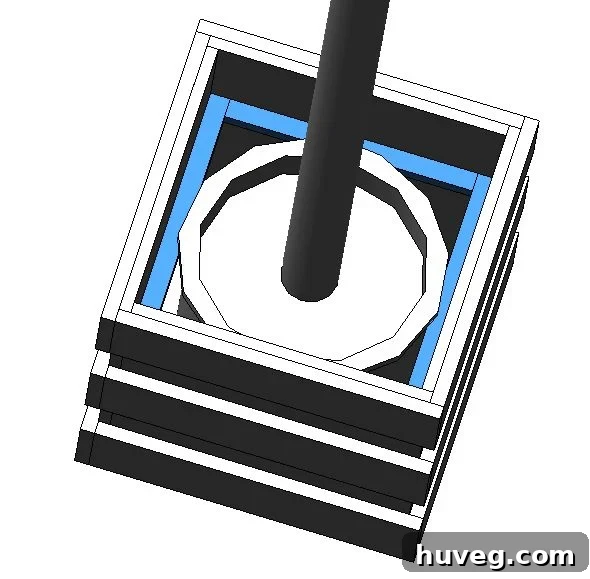
7. Securing the Pole and Bucket within the Planter: Now, carefully insert the concrete-anchored pole (still inside its bucket) into the center of the planter box, resting it firmly on the internal plywood supports you built in steps 3 and 4. This step requires a bit of finesse. Use additional pieces of scrap wood to create stabilizing wedges around the lip of the bucket on all four sides. The goal is to make the bucket snug and prevent any movement. As you secure each side, continuously check the pole with your level to ensure it remains perfectly plumb. This can be a trial-and-error process, and it’s perfectly fine if it doesn’t look pretty at this stage – all these internal supports will be covered by dirt and plants, making their appearance irrelevant. The key is structural integrity and a perfectly straight pole.
Achieving Perfect Stability: Stabilizing Planters and Straightening Poles
This phase was arguably the most challenging and time-consuming aspect of the entire project, yet absolutely critical for a successful outcome. The primary difficulty stemmed from the uneven terrain of my yard, requiring significant adjustments to ensure the poles stood perfectly straight, even if the planter box itself was slightly tilted on the ground. My method involved a nuanced approach: first, I would position the planter, then slightly tilt the bucket (containing the concrete-anchored pole) in the necessary direction until the pole was plumb. Once the pole was perfectly straight, I meticulously wedged scrap wood underneath the bucket’s lip on all sides. These wedges locked the bucket into its adjusted position, preventing any future movement or tilting. This process transformed a potentially wobbly setup into a rock-solid foundation, even though the bucket was smaller than the interior of the planter cube. It was a complex spatial puzzle, much harder to execute in real life than envisioning it in a 3D model!
To further enhance stability and counteract any potential top-heaviness from the string lights, I decided to fill the planter about halfway with landscaping gravel. This additional weight significantly lowered the center of gravity, creating an even more solid base for the poles. I had heard cautionary tales of outdoor light poles toppling over, especially with heavier string lights, so I prioritized maximizing stability. Working largely by myself, I found an unexpected ally in discarded plastic containers (the kind plants come in). Filling these with gravel and strategically placing them around the main concrete-filled bucket provided temporary stability, allowing me to carefully wedge in the final scrap wood supports with greater ease. This multi-layered approach to weighting and bracing ensures that your light pole planters will remain steadfast and upright, regardless of weather conditions.
The Grand Finale: Finishing Details with Plants and Lights
With the structural work complete and poles firmly in place, it’s time to add the living elements and the magical glow of the lights.
8. Layering for Healthy Plants: Once the gravel base is established for extra weight and drainage, add a layer of landscaping fabric directly over the gravel. This crucial step prevents your potting soil from washing down into the gravel layer over time, maintaining proper drainage and preventing compaction. After laying the fabric, fill the remainder of the planter with high-quality potting soil and carefully plant your chosen greenery. Select plants that thrive in your climate and complement your outdoor aesthetic, adding vibrant life to your light pole planters.
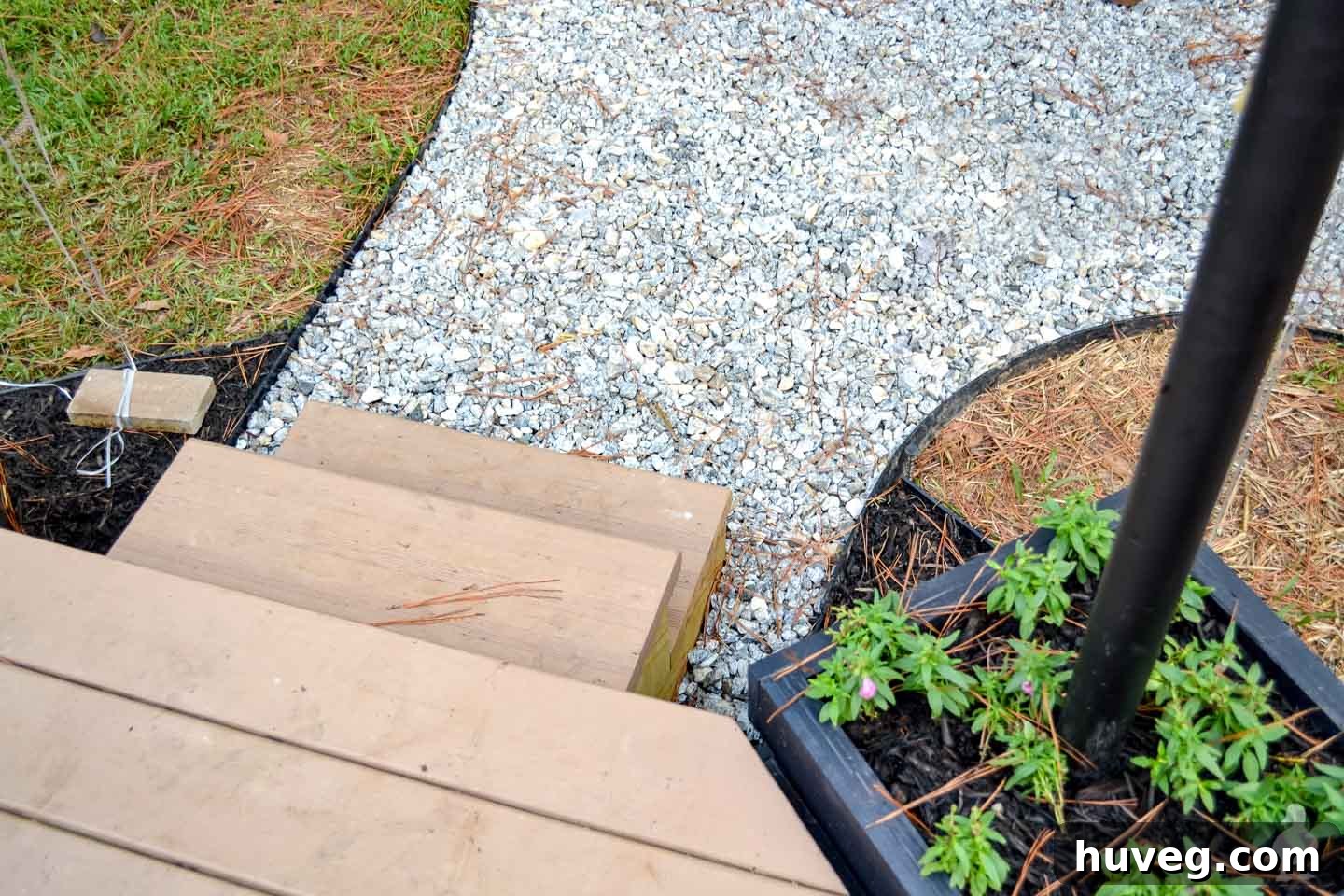
9. Installing Secure Light Hooks: Near the top of each metal pole, carefully drill a pilot hole through one side. The drill bit you use should be slightly smaller than the threaded end of your cup hook (minus the threads) to ensure a snug fit. Insert a robust cup hook into this hole. For added security, especially if your exterior lights are heavier than typical string lights, consider an extra step: secure the cup hook with a nut on the inside of the pole, and apply a dab of exterior adhesive around the base of the hook where it meets the pole. This prevents any rotation or loosening over time. Finally, place the fence post cap securely over the top of the pole and finish by spray-painting the cup hook and cap to perfectly match the color of the pole, creating a seamless and polished look.
10. String Up the Lights and Enjoy: The moment you’ve been waiting for! Carefully string your chosen exterior lights from pole to pole, ensuring they are evenly distributed and securely attached to the cup hooks. Step back, switch them on, and bask in the warm, inviting glow that transforms your deck into an enchanting outdoor oasis. This final touch brings together all your hard work, creating the perfect ambiance for evening gatherings, quiet relaxation, or lively celebrations.
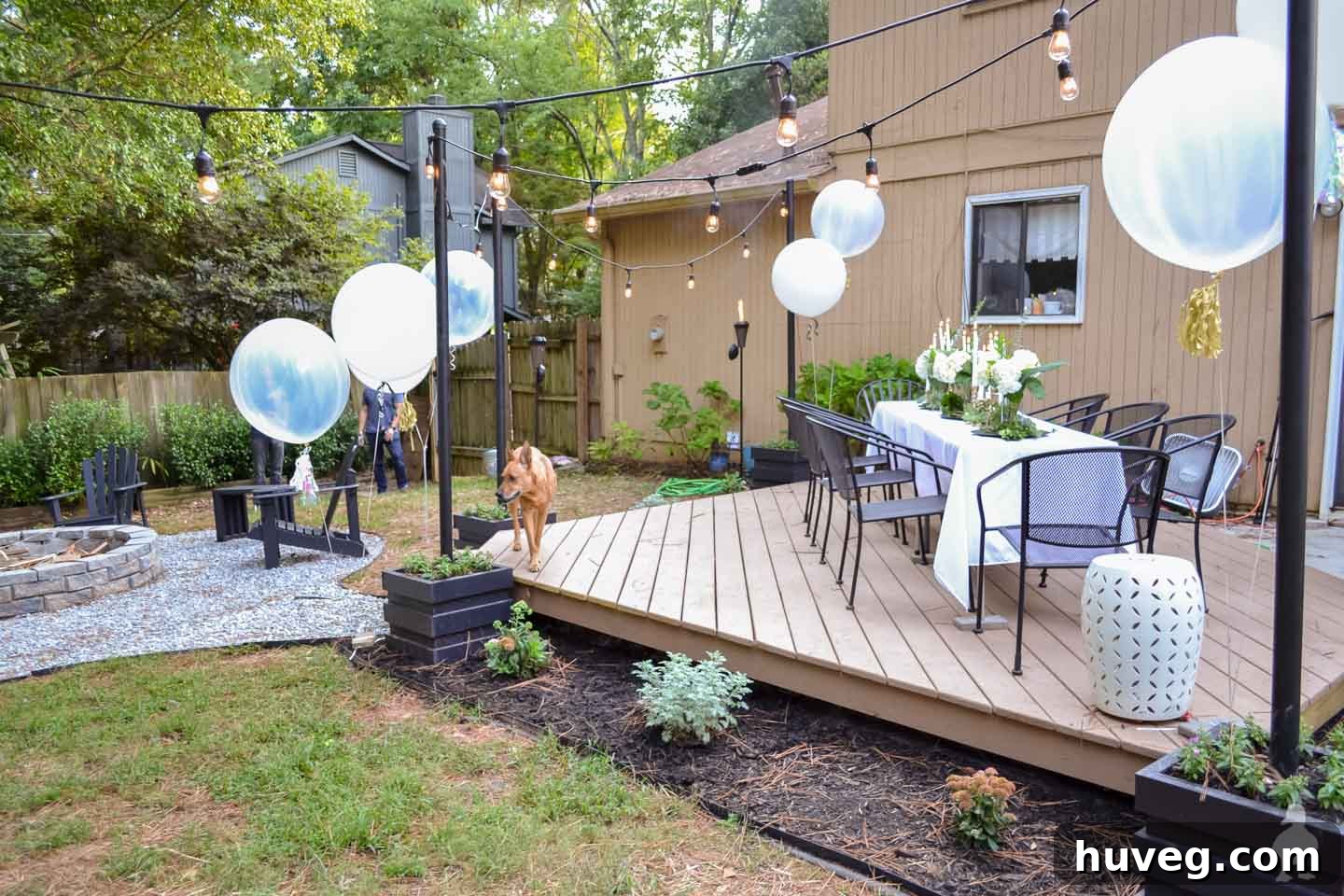
These light pole planters have now proudly stood their ground for over a month, enduring the harsh test of Georgia’s unpredictable weather. During this period, our neighboring states experienced the brunt of two hurricanes, which, while not a direct hit, still brought their fair share of intense storms and heavy winds to our area. The fact that these planters remained perfectly stable and upright through such conditions is a testament to their robust construction and the careful attention paid to anchoring and weighting. This real-world test gives me immense confidence that they will continue to serve us well for many seasons to come, providing the perfect setting for countless outdoor entertaining opportunities and moments of serene enjoyment.
Remember to pin this project for later inspiration and to share with fellow DIY enthusiasts!
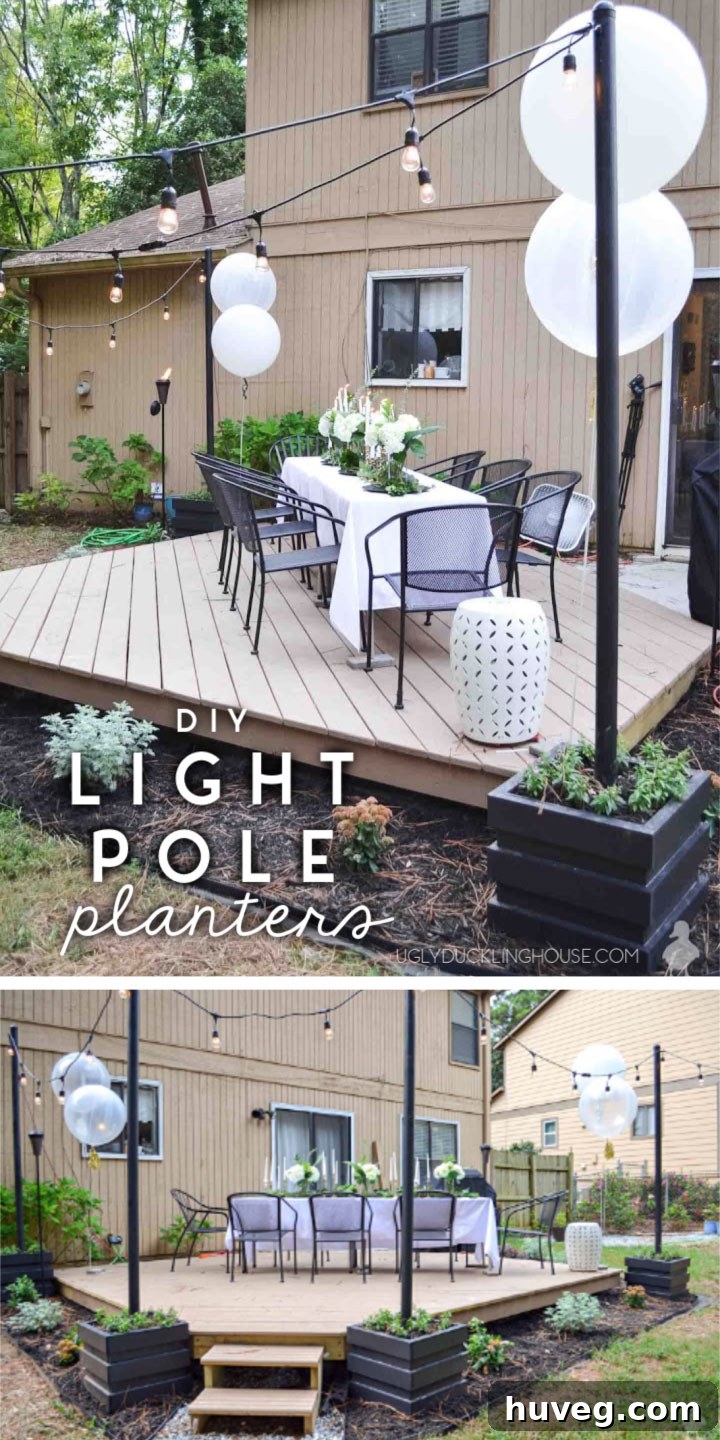
I genuinely can’t wait to complete the deck with a luxurious sectional sofa, creating the ultimate cozy corner to sip coffee on crisp autumn mornings. While that’s still a few months away, we’ve already had the pleasure of hosting numerous guests, sharing the joy of our newly transformed outdoor space and showing off all the handcrafted additions. These light pole planters, with their combination of practical lighting and integrated greenery, are truly the crowning jewel of our deck, enhancing every gathering and quiet moment alike. They stand as a proud symbol of what can be achieved with a vision, some scrap wood, and a passion for DIY. Get ready to illuminate your own backyard!
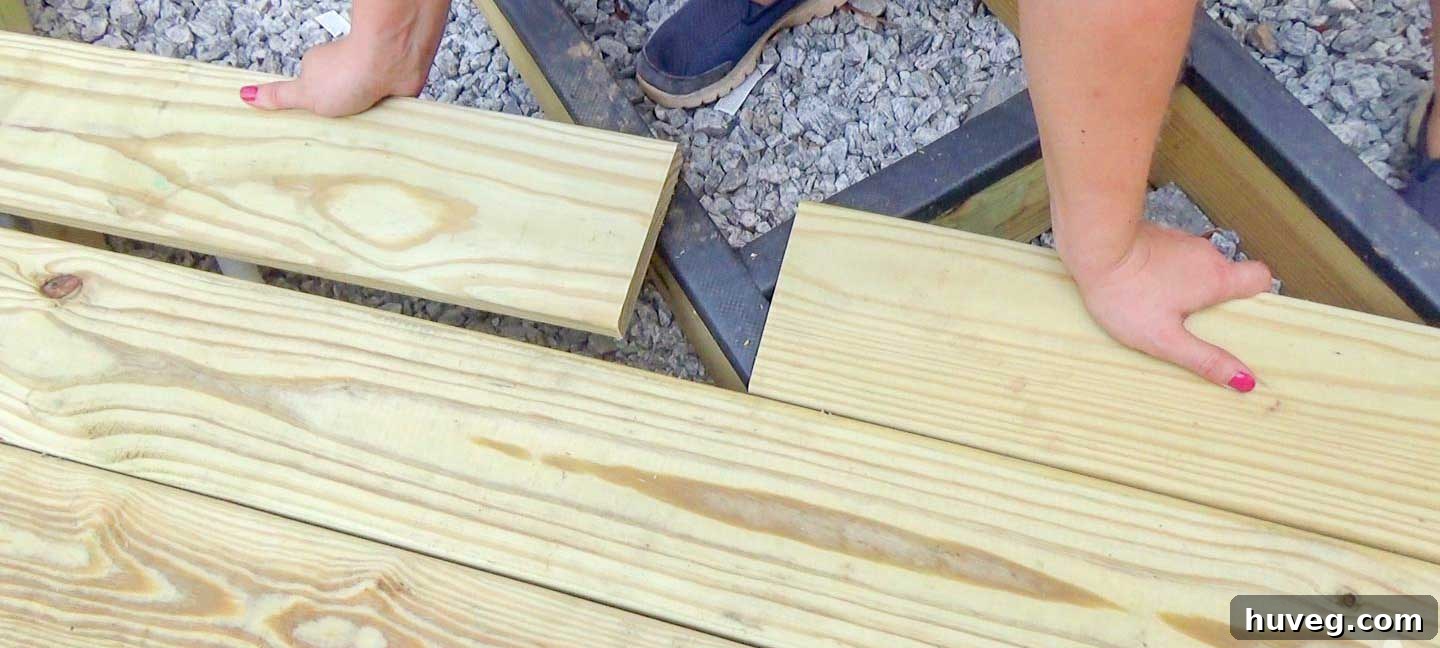
Explore More from Our DIY Floating Deck Series