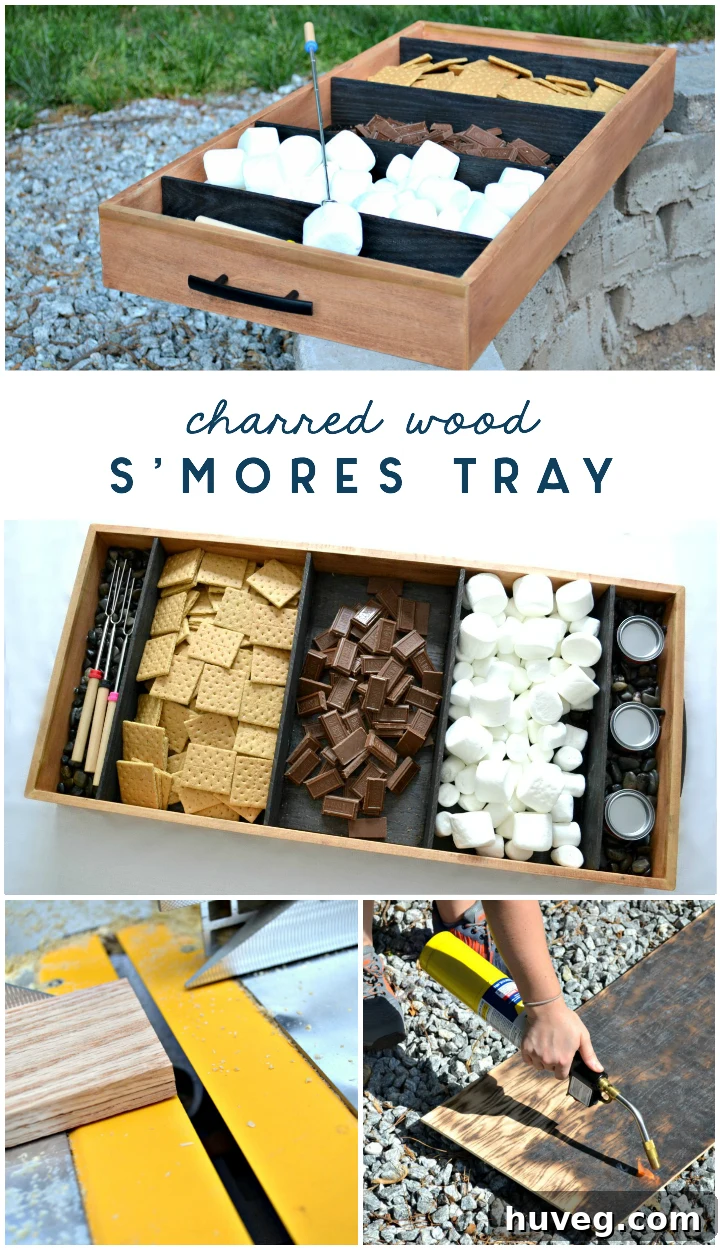
Flame Kissed Wood For Your Summer S’mores Tray

Summer is here, and with it comes the joy of outdoor gatherings, crackling bonfires, and the irresistible allure of s’mores! Elevate your summer entertaining experience with a truly unique, handcrafted piece that combines ancient Japanese artistry with modern functionality: the **DIY Charred Wood S’mores Tray**. This comprehensive guide will walk you through creating a stunning serving tray using the captivating technique of **Shou Sugi Ban**, also known as **Yakisugi**, a wood charring method that transforms ordinary wood into a masterpiece of texture and durability.
Whether you’re hosting a backyard barbecue, a cozy evening by the fire pit, or simply seeking a distinctive way to serve treats, this custom s’mores board will undoubtedly become a conversation starter. Its rustic charm, enhanced by the deep, rich tones of charred wood, perfectly complements the warmth of a summer night. Beyond s’mores, this versatile tray can also double as a stylish server for appetizers, a unique charcuterie board, or even a decorative centerpiece.
For those eager to dive deeper into creative woodworking projects, after mastering this shou sugi ban technique, consider exploring our backyard drink station tutorial or browse a collection of easy woodworking ideas for beginners. Each project offers a chance to hone your skills and add personalized touches to your home and garden.
Discovering the Art of Shou Sugi Ban: Japanese Wood Charring
If you’ve been scrolling through design feeds or exploring unique home improvement trends, chances are you’ve come across the mesmerizing aesthetic of Shou Sugi Ban. This traditional Japanese method, also known as Yakisugi, translates literally to “burnt cedar board.” It’s an age-old technique, practiced by Japanese carpenters since the 18th century, primarily to preserve wood. While traditionally applied to cedar siding for its weatherproofing and fire-resistant properties, its stunning visual appeal has made it a favorite among modern designers and DIY enthusiasts for various applications, from furniture to decorative accents.
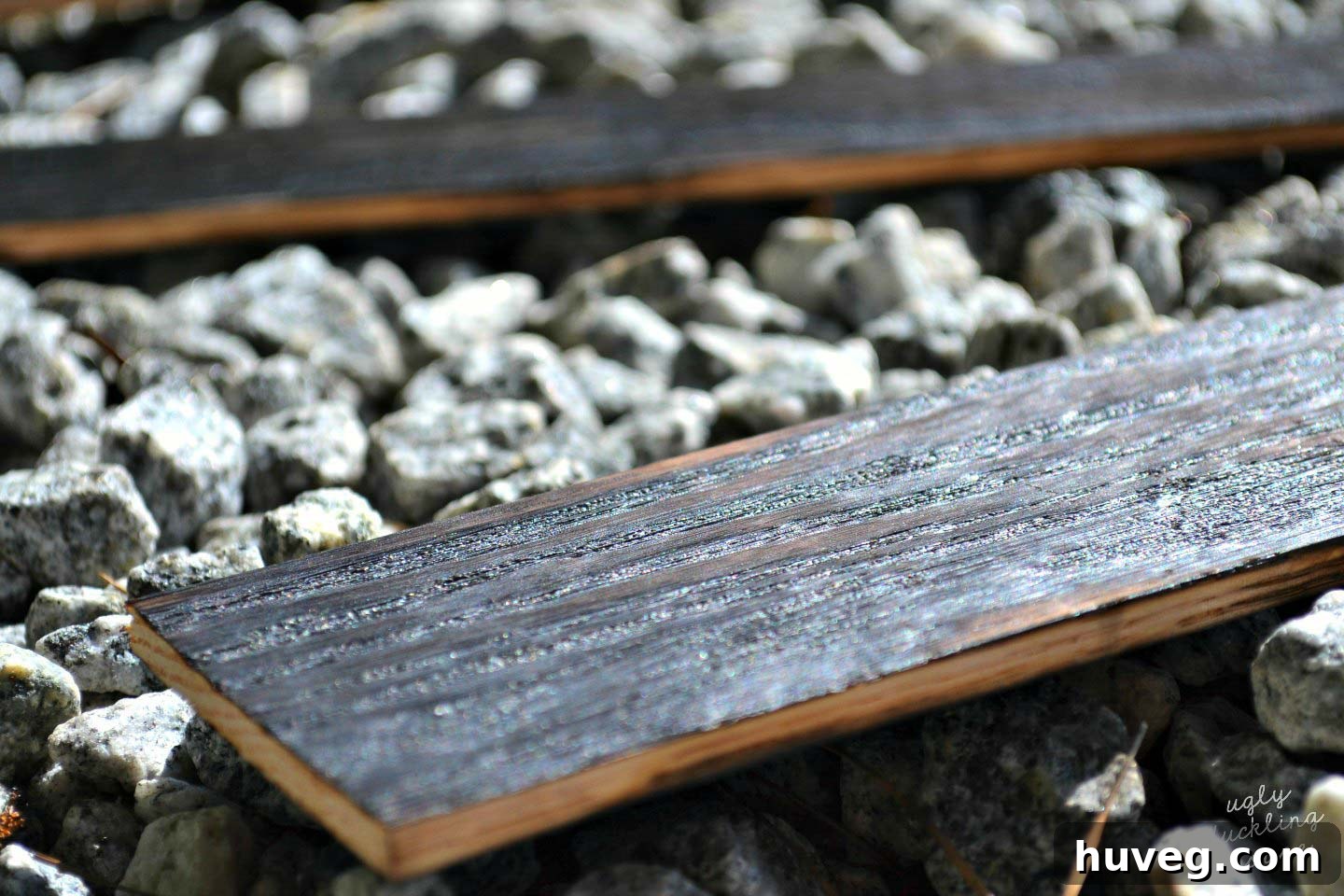
The process involves charring the surface of wood with a flame, cooling it, cleaning it, and then finishing it with an oil. This controlled burning not only darkens the wood, enhancing its natural grain in breathtaking ways, but also creates a carbonized layer that makes the wood more durable, resistant to insects, rot, and even adds a degree of fire resistance. It’s a truly transformative process that brings out the inherent beauty and resilience of wood.
For a deeper dive into this fascinating craft, a quick online search for “shou sugi ban inspiration” will open up a rabbit hole of incredible projects. You’ll find everything from architectural siding to intricate art pieces. Watching skilled artisans, like Jonny Builds on YouTube, execute this technique can be incredibly inspiring, showcasing the versatility and profound aesthetic impact of charred wood.
Crafting Your DIY Charred Wood S’mores Tray: A Unique Project
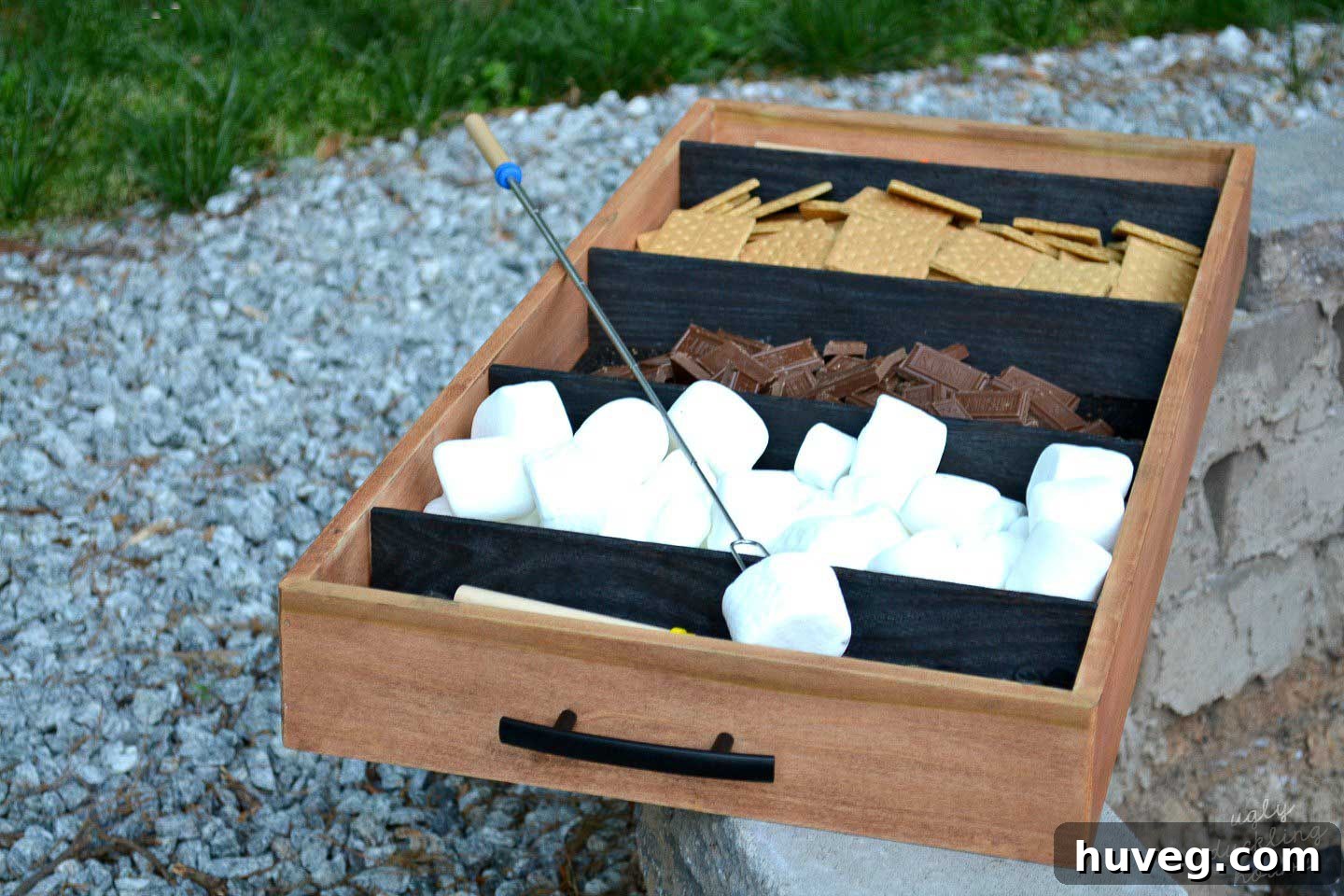
The idea for this particular project sparked from the pure joy of campfire evenings. What better way to celebrate the essence of fire and wood than with a **shou sugi ban s’mores tray**? The rich, dark interior achieved through wood charring instantly gives the tray a wonderfully inviting, rustic campfire vibe, making it perfect for holding all your s’mores essentials.
This project is proudly brought to you in collaboration with Bernzomatic, whose high-heat torch made achieving the authentic shou sugi ban look incredibly easy and satisfying. Their reliable tools are essential for any project involving controlled flame, reigniting that inner pioneer spirit! This homemade s’mores station is not just a functional item; it’s a statement piece that will impress your guests during any outdoor gathering around your backyard fire pit.
How to Make a DIY Shou Sugi Ban Wooden S’Mores Tray: Step-by-Step Guide
This tutorial is designed to be approachable, even if you prefer a less rigid approach to woodworking. While specific measurements are provided for accuracy and to replicate the featured tray, feel free to customize the dimensions to suit your specific needs or material availability. The key is to enjoy the process of creating something beautiful and functional with your own hands.
Finished s’mores tray size: 32” x 15 7/8”
Essential Tools for Your S’mores Tray Project:
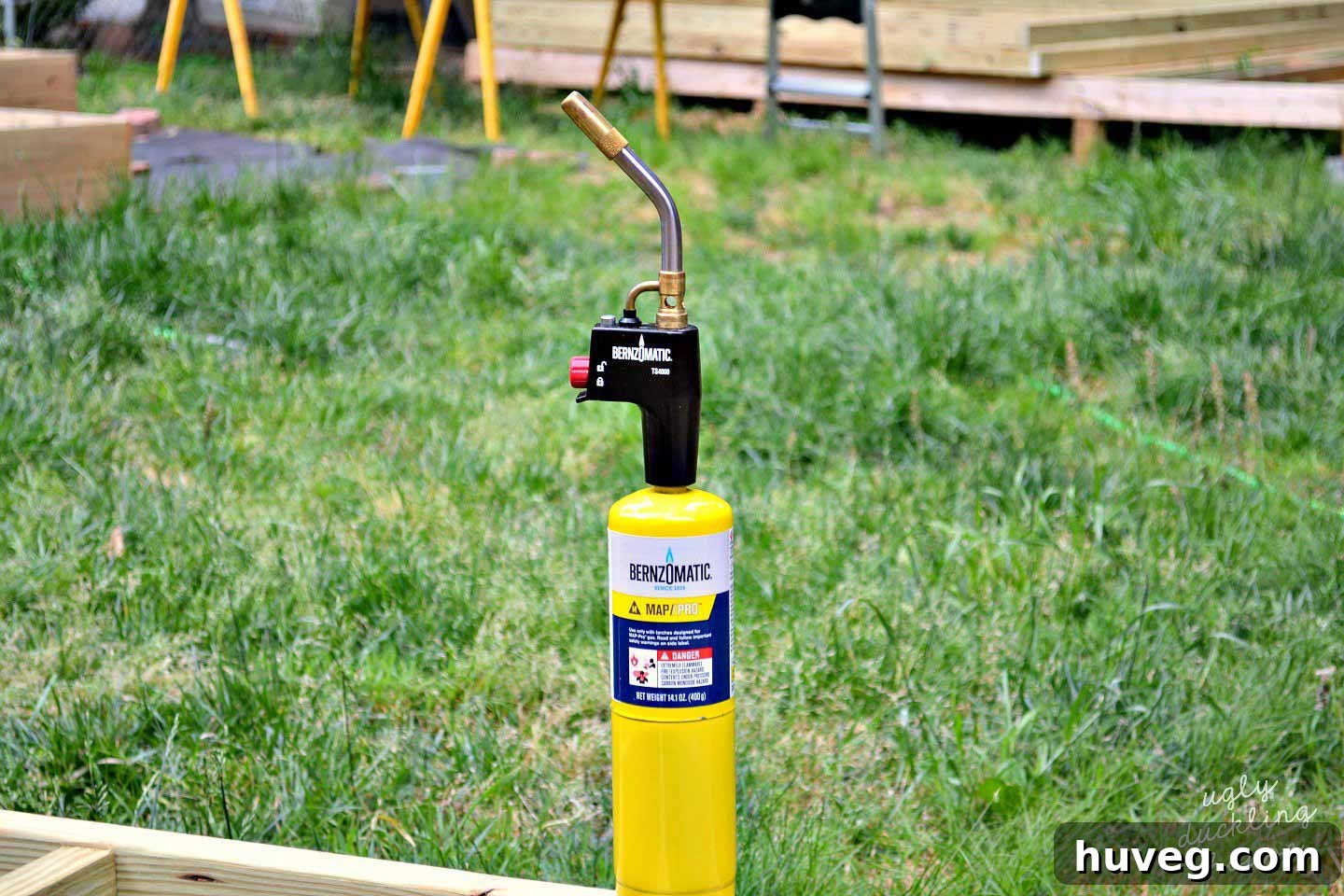
- Bernzomatic TS4000 Torch and Map Pro gas cylinder: The heart of your shou sugi ban process, providing the necessary heat for charring. Safety is paramount, so ensure you’re comfortable operating it.
- Miter saw: Crucial for making precise, angled cuts, especially for the tray’s mitered corners.
- Angle grinder with 80-grit flap disk: Used for creating smooth chamfered edges, giving your tray a professional, finished look.
- Brad nailer: Speeds up assembly by holding pieces together while glue dries, providing strong, almost invisible fasteners.
- Clamps: Indispensable for securing glued wood pieces, ensuring tight, strong joints.
- Tape measure: For accurate dimensioning, although some steps encourage direct marking for precision.
- **Safety Gear**: Always wear appropriate personal protective equipment (PPE) including safety glasses, gloves, and a respirator when sanding or working with torches. Have a fire extinguisher or water source nearby when charring.
Materials You’ll Need for Your Homemade S’mores Station:
- 1 – 1” x 8” x 8ft Poplar Board (actual dimensions ¾” x 7 ½” x 8ft, for the tray bottom): Poplar is a great choice for its smooth grain and workability, offering a beautiful contrast to the charred interior.
- 3 – ½” x 4” x 4ft Poplar Boards (for tray sides): These thinner boards are ideal for creating the tray’s perimeter.
- 1 – ¼” x 2ft x 4ft Oak Plywood (for tray liner): Oak plywood is selected for its attractive grain pattern and stability under heat, preventing warping during charring.
- 2 – ¼” x 3” x 4ft Oak Boards (for tray dividers): Matching oak will create a cohesive look for the charred compartments.
- Sandpaper: Various grits for smooth finishing.
- Wood Stain: To enhance the exterior of your tray.
- Food-safe Finish: Crucial for any surface that will come into contact with food, ensuring hygiene and safety.
- Wood Glue: For strong, lasting joints.
- All-purpose glue (gel formula type): Useful for smaller, more precise applications, especially for dividers.
- Stainable Wood Filler: To conceal nail holes and imperfections, creating a seamless finish.
- ⅝” Brad Nails: For use with the brad nailer to reinforce glued joints.
- 2 – Kitchen Cabinet Pulls: Optional but highly recommended for easy transport and an elegant touch.
Step 1: Prepare and Cut the Base Boards
Begin your DIY charred wood s’mores tray by gathering your materials. Select a quality 1” x 8” x 8ft board (actual ¾” x 7 ½” x 8ft). Poplar is an excellent choice for this part of the tray due to its relatively low cost, smooth grain, and ease of working. It will also provide a striking visual contrast with the dark, charred oak interior. If you prefer a different size for your finished tray, you can adjust the width of this base board, or even opt for a custom-cut piece of plywood for the bottom.
Carefully cut this board into two pieces, each roughly 36 inches in length. Don’t stress over achieving perfectly square ends at this stage; these will be trimmed to precision later in the assembly process. The goal here is to get manageable lengths that will form the foundation of your s’mores board.
Step 2: Glue the Bottom Panels for a Sturdy Base
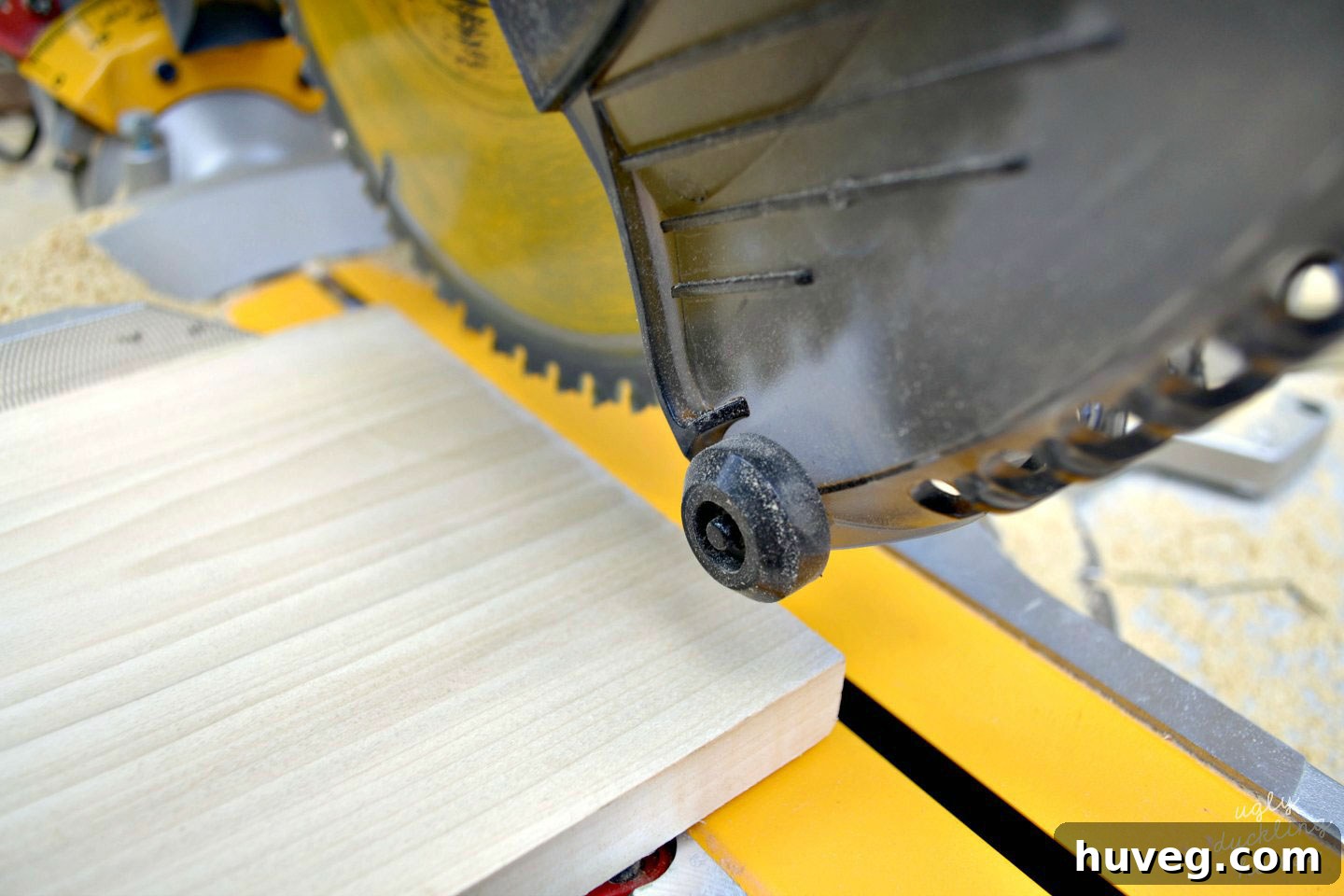
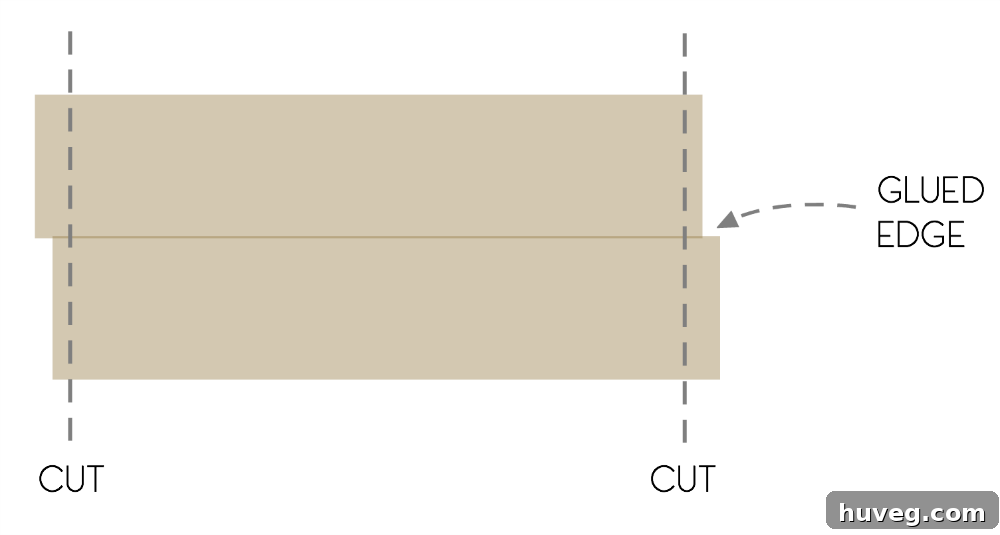
Once your two base pieces are cut, it’s time to join them to form the wider bottom of your s’mores tray. Apply a generous, even layer of wood glue along one edge of each board. Press the two glued edges together firmly, ensuring good contact across the entire length. Even with seemingly straight boards, clamping is crucial for a strong, invisible joint. Use several clamps to apply consistent pressure across the joint, wiping away any excess glue that squeezes out with a damp cloth. Allow the glue to cure completely, ideally for a full 24 hours, for maximum strength. After the glue has fully set, use your miter saw to trim both ends of the now-joined board, ensuring your tray’s base is a perfectly square and rectangular foundation. This step is vital for the overall structural integrity and aesthetic of your DIY s’mores tray.
Step 3: Crafting the Tray Sides with Precision Miter Cuts
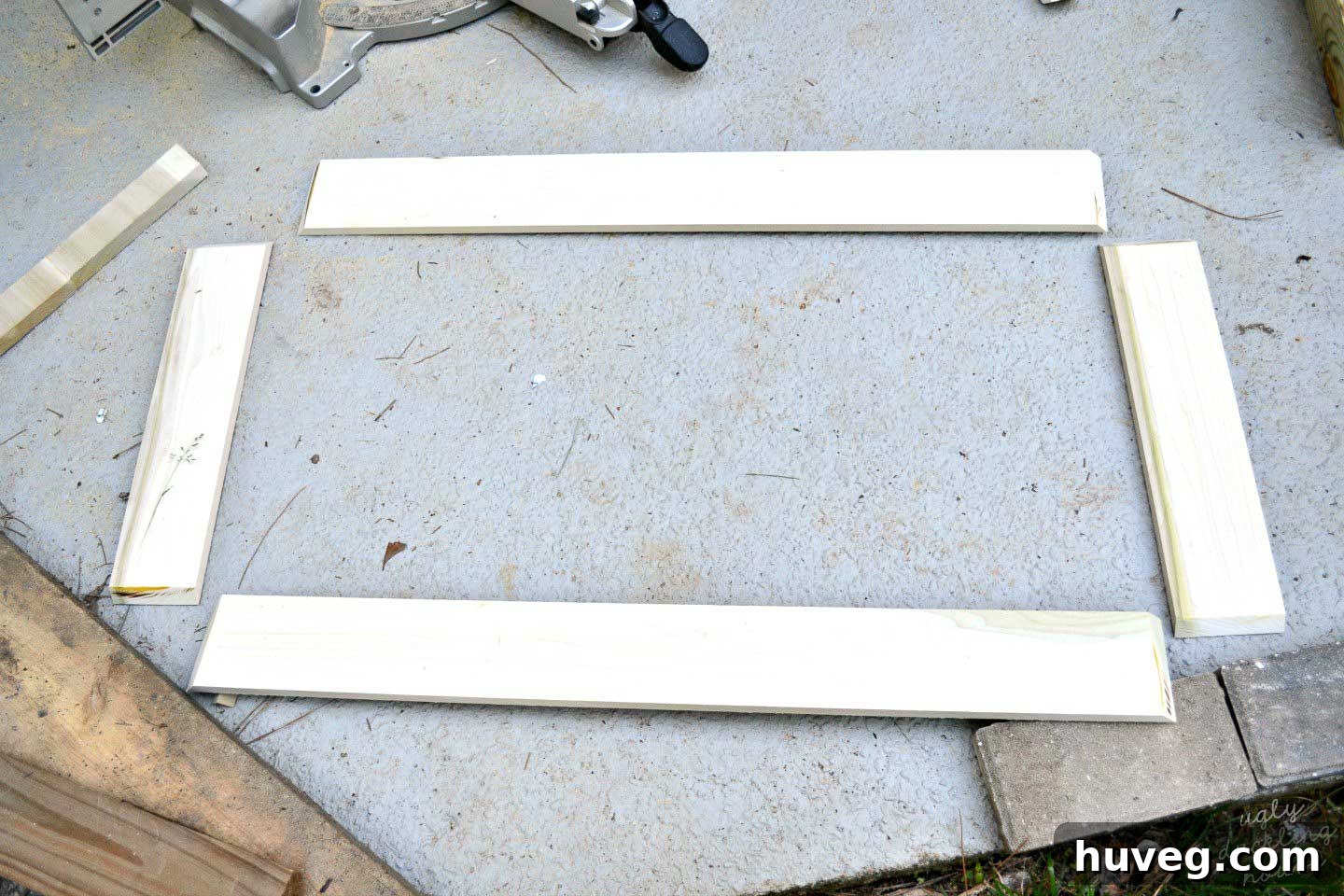
Now, focus on creating the four sides of your s’mores tray using the three ½” x 4” x 4ft poplar boards. Precision is key here to achieve seamless mitered corners. Set your miter saw to a 45-degree bevel (or tilt) for all cuts. For the most accurate results, rather than relying solely on a tape measure, place the already assembled bottom of your tray directly on the saw’s fence. Then, mark the ½” poplar boards where the tray’s edges meet. This “cut-to-fit” method often leads to fewer mistakes and tighter joints, especially with mitered corners. Carefully cut all four pieces, ensuring the angles are consistent. You will need two longer pieces for the front and back, and two shorter pieces for the sides.
Step 4: Assembling the Tray Frame and Adding a Professional Chamfer
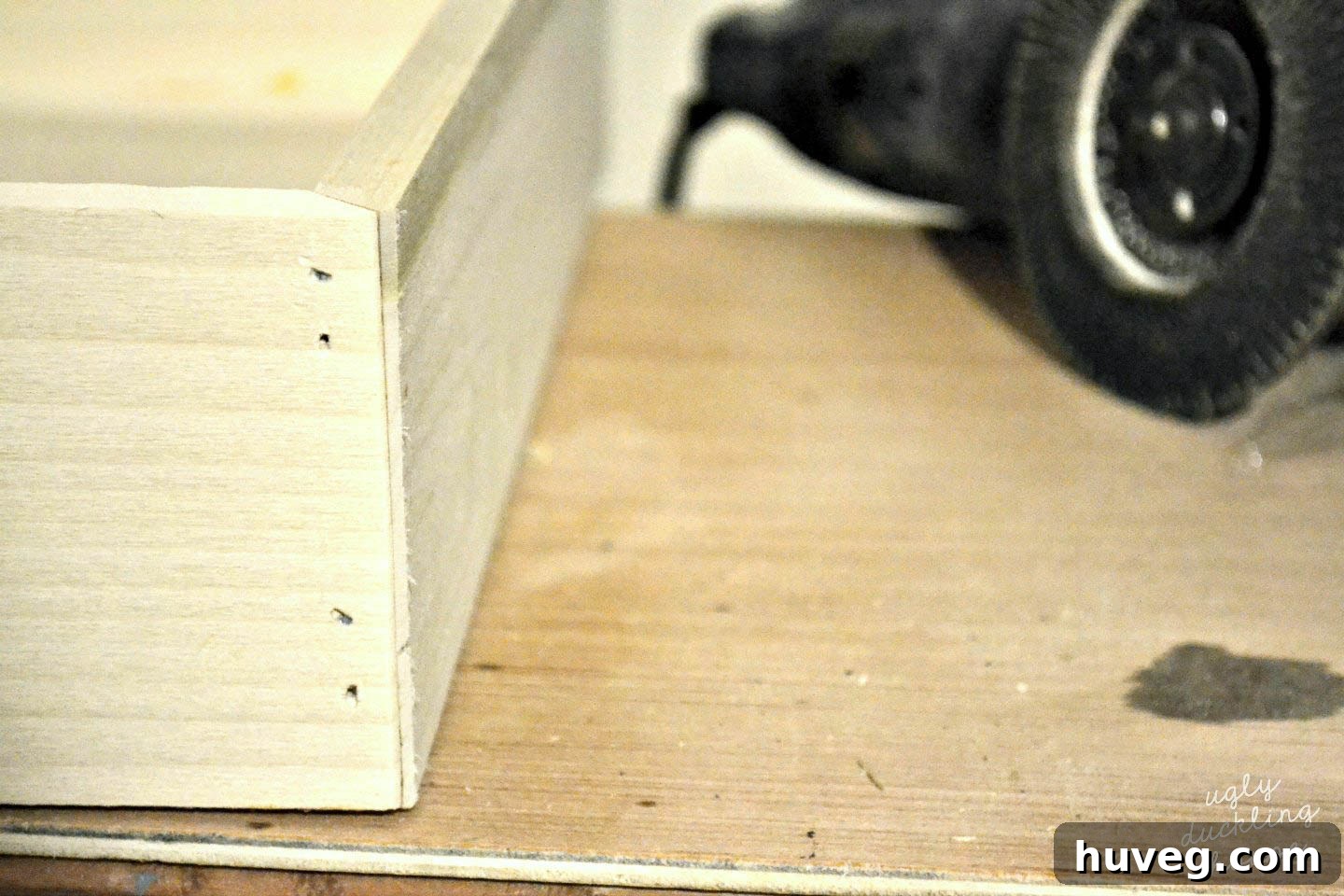
With all four side pieces cut, it’s time to assemble the tray frame. Apply wood glue generously along the bottom edges of each side piece and along the mitered ends where they will join. Carefully align each side piece with the bottom base and press them together. A brad nailer is incredibly useful here; use ⅝” brad nails to temporarily hold the sides in place while the glue sets, driving nails through the sides into the base, and also through the mitered corners for added stability. Once the glue has cured, you can enhance the tray’s appearance with a professional touch: add a slight chamfer to all four top corners using an angle grinder fitted with an 80-grit flap disk. A chamfer is a subtle, shaved-off angle that not only looks refined but also makes the tray more comfortable to handle and less prone to splintering, giving your homemade s’mores tray a polished finish.
Step 5: Finishing the Tray Exterior – Putty, Sand, and Stain
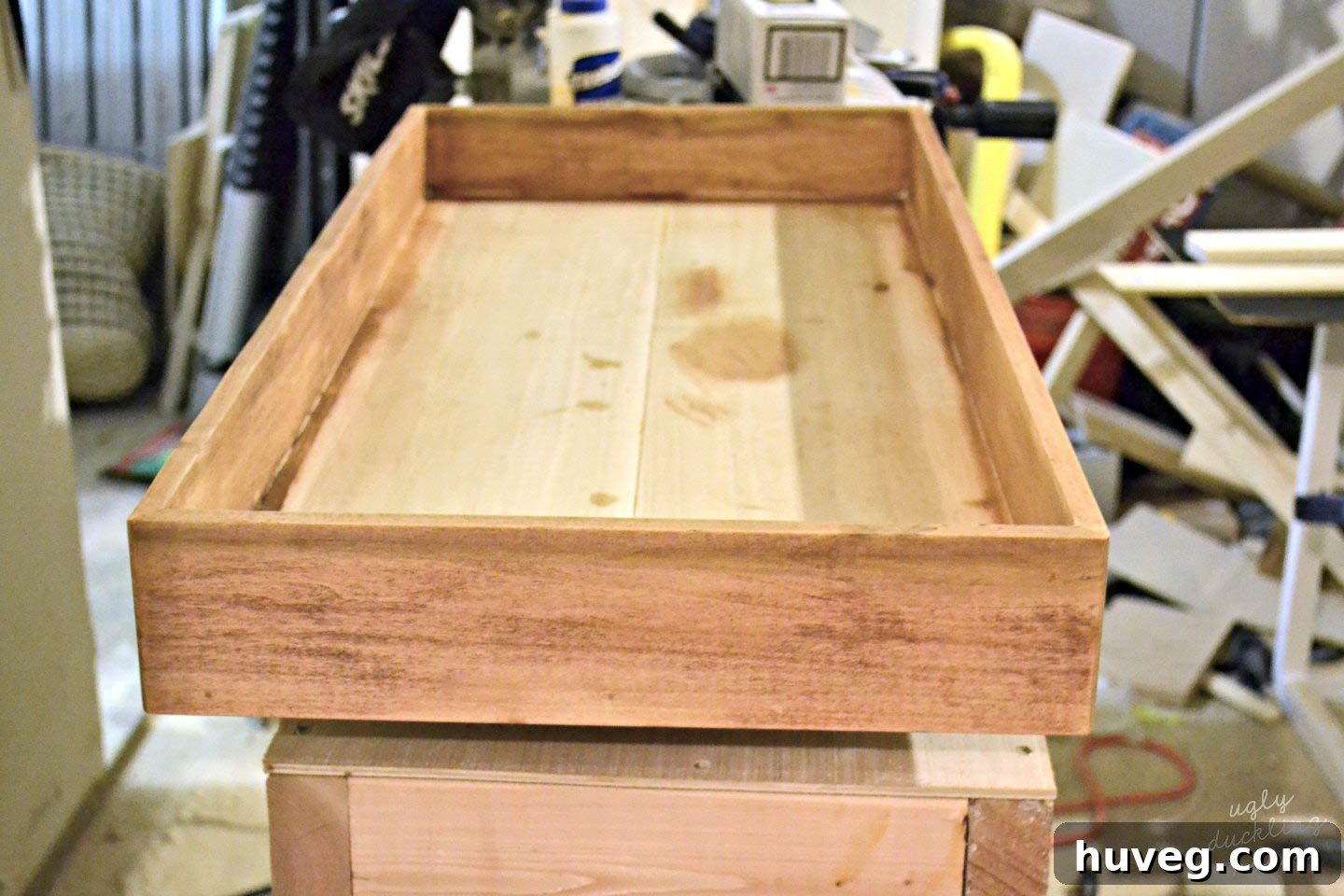
At this stage, your s’mores tray should be taking its complete form. The next step is to prepare the exterior for a beautiful finish. Apply stainable wood filler to any nail holes, gaps, or imperfections. Allow the filler to dry completely according to the manufacturer’s instructions. Once dry, sand the entire exterior of the tray until it’s perfectly smooth. Start with a coarser grit sandpaper (e.g., 120-grit) to remove any major inconsistencies, then move to finer grits (e.g., 180 or 220-grit) for a silky-smooth finish. Ensure all rough edges are smoothed to prevent splinters – especially important for a serving tray! After sanding, wipe away all dust with a tack cloth and apply your chosen wood stain to the exterior. This will protect the wood and provide a beautiful contrast to the charred interior that’s coming next.
Step 6: Mastering the Shou Sugi Ban Technique – Practice Makes Perfect
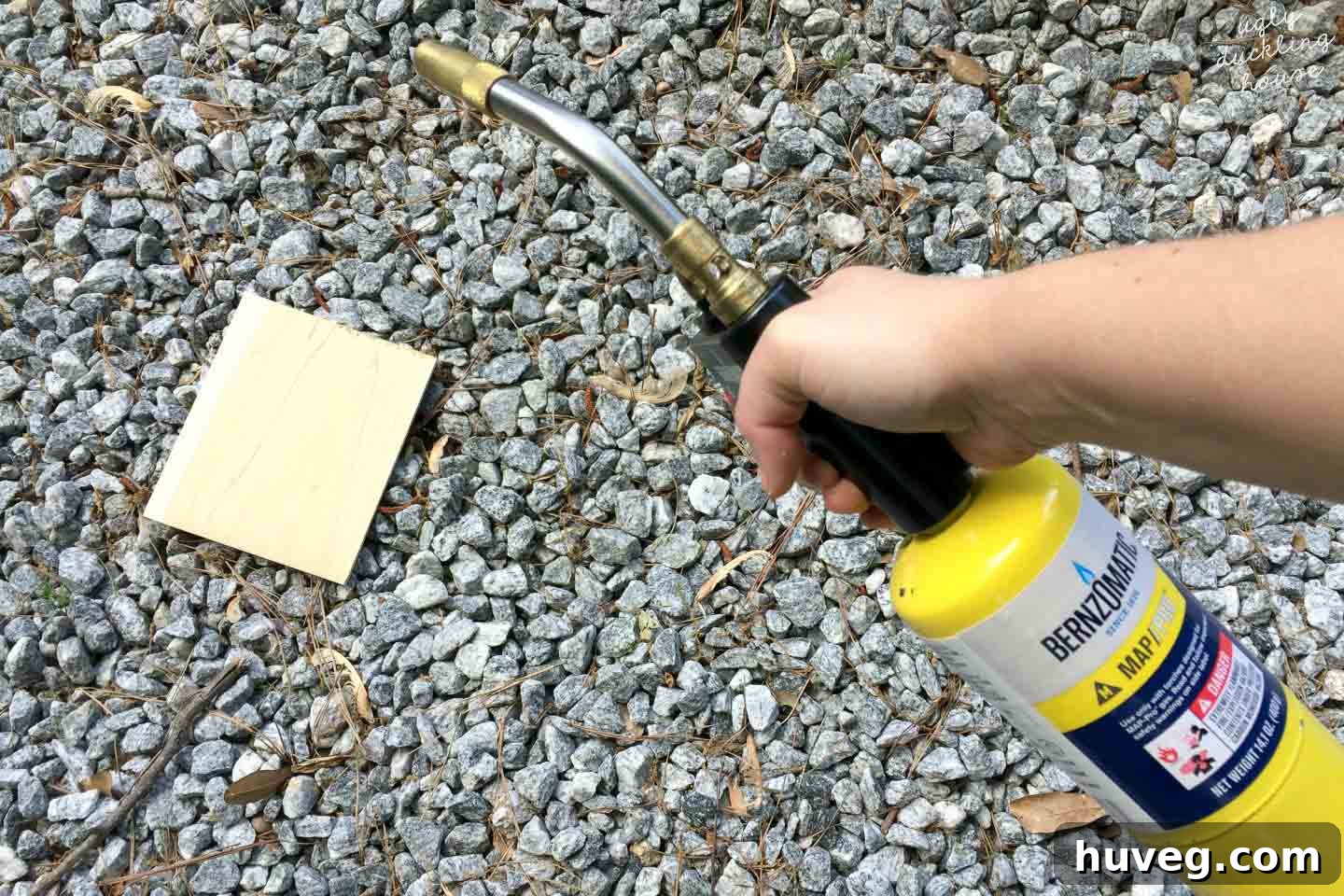
Now for the exciting part: the shou sugi ban wood charring process! Before you torch your main tray liner, it’s highly recommended to practice on a scrap piece of poplar or similar wood. This allows you to get a feel for your Bernzomatic TS4000 torch and understand how different levels of heat and speed affect the charring. You’ll quickly learn the importance of even charring on both sides to prevent the wood from curling or warping excessively. A medium char, often described as having an “alligator skin” texture, is usually desired, but experiment to find your preferred finish. Remember, safety first! Always perform wood charring outdoors in a well-ventilated area, away from flammable materials. Place your wood on a non-combustible surface like bricks, cinder blocks, or a gravel area. Keep a fire extinguisher or a bucket of water nearby, just in case.
Step 7: Charring the Oak Plywood Liner for the S’mores Tray Interior
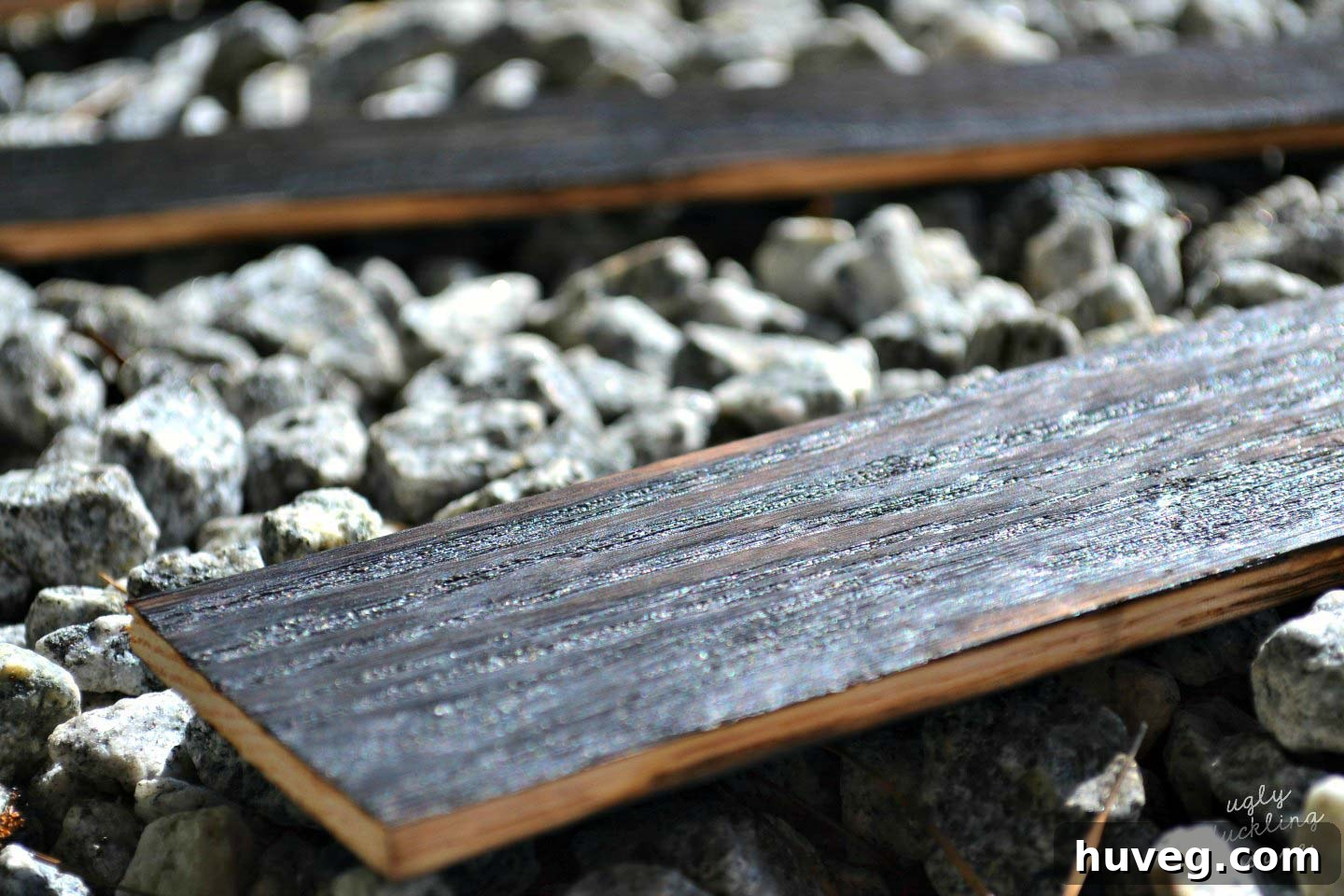
Once confident with your charring technique, cut a piece of ¼” oak plywood to precisely fit the inside bottom of your tray. Oak plywood is an excellent choice for its beautiful grain that truly comes alive with charring, and its stability helps resist warping. It’s crucial to use solid plywood rather than glued-together boards for this step. As an earlier experiment showed, glued seams can fail under the intense heat of the torch, causing the wood to split and fall apart. With your Bernzomatic high-heat torch, apply a steady, even flame across the entire surface of the oak plywood. Maintain a consistent speed and distance from the wood to achieve a uniform char. Flip the plywood regularly to distribute heat evenly and minimize curling. The goal is a deep, rich char that highlights the wood’s natural patterns, creating that signature shou sugi ban look.
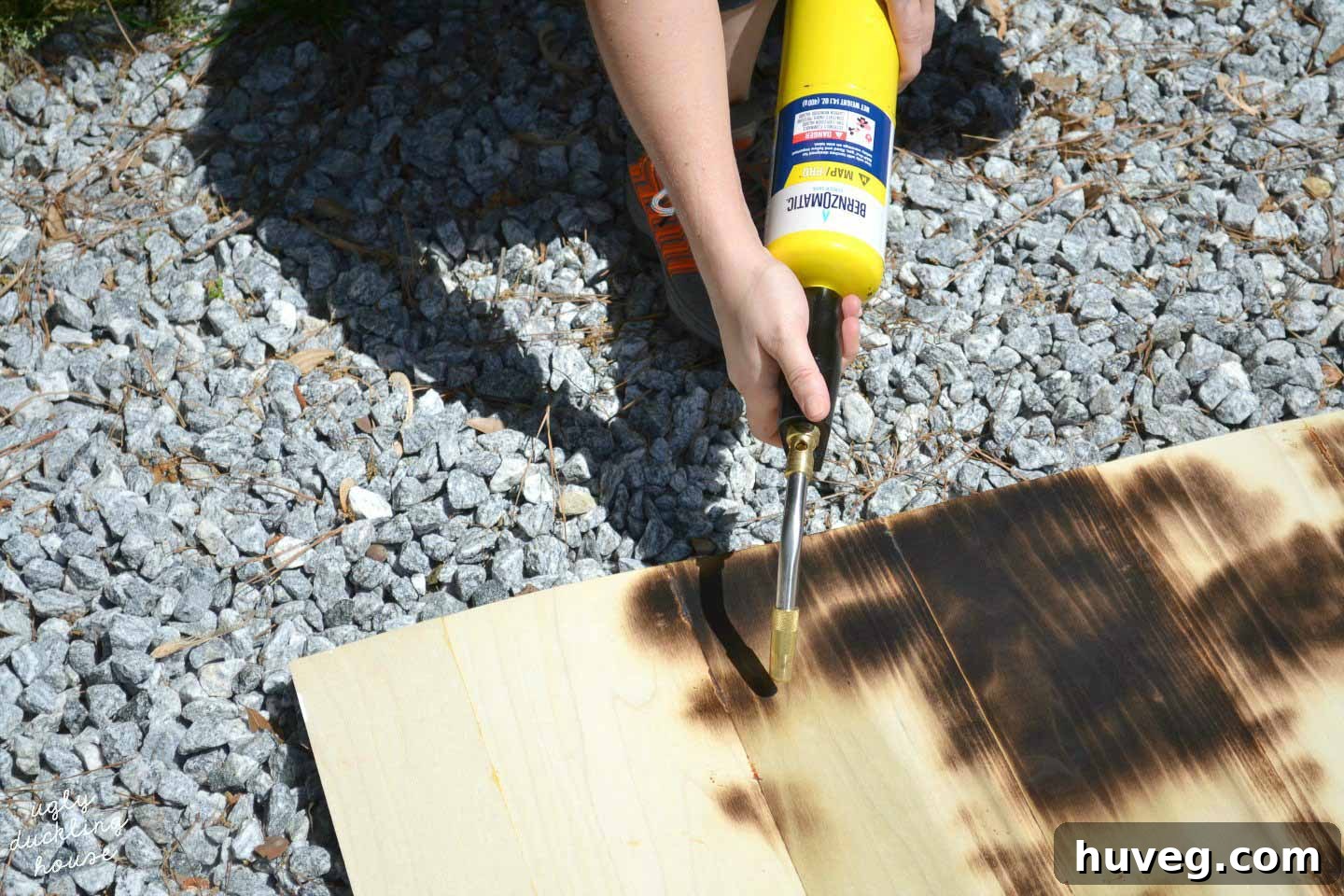
Practice and patience are key for an even char.
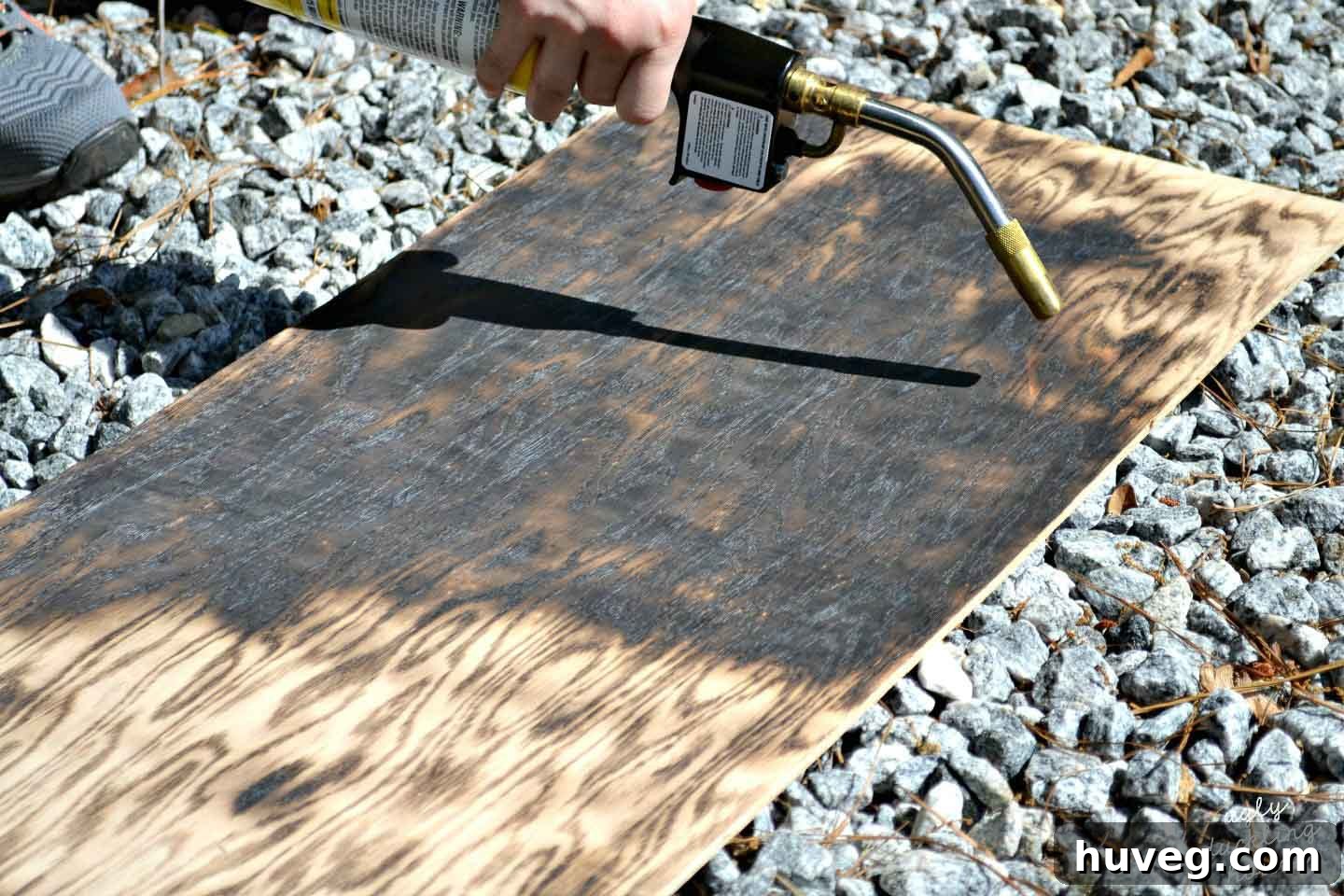
Maintaining an even char is essential for both aesthetics and stability.
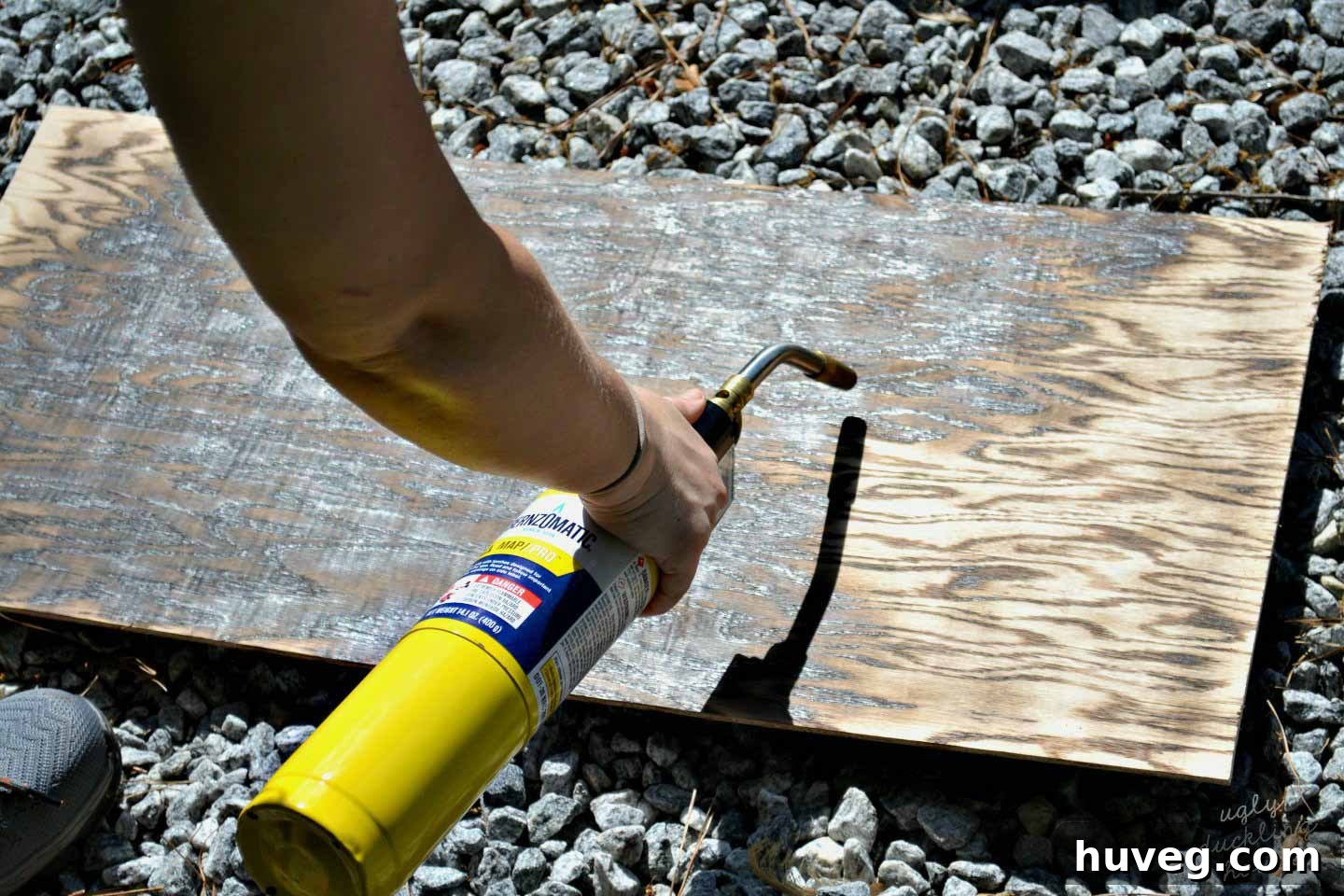
Step 8: Cool, Clean, and Install the Charred Liner
Once you’ve achieved your desired, even char on the oak plywood liner, set it aside in a safe, non-combustible area to cool completely. This cooling process is essential for safety and to allow the wood to stabilize. Once the charred wood is cool enough to handle, it’s time for the crucial cleaning step. Using a wire brush, gently scrub the surface of the charred wood to remove loose soot and carbonized particles. You’ll be surprised how much comes off! After the initial scrub, wipe the wood thoroughly with a tack cloth or a damp rag (if allowed by the wood type and char level) to remove any remaining residue. This meticulous cleaning prevents soot from transferring onto your delicious s’mores or your guests. Finally, apply wood glue to the back of the cleaned, charred plywood liner and carefully place it into the bottom of your assembled tray. Secure it with a few brad nails to ensure it stays firmly in place as the glue dries.
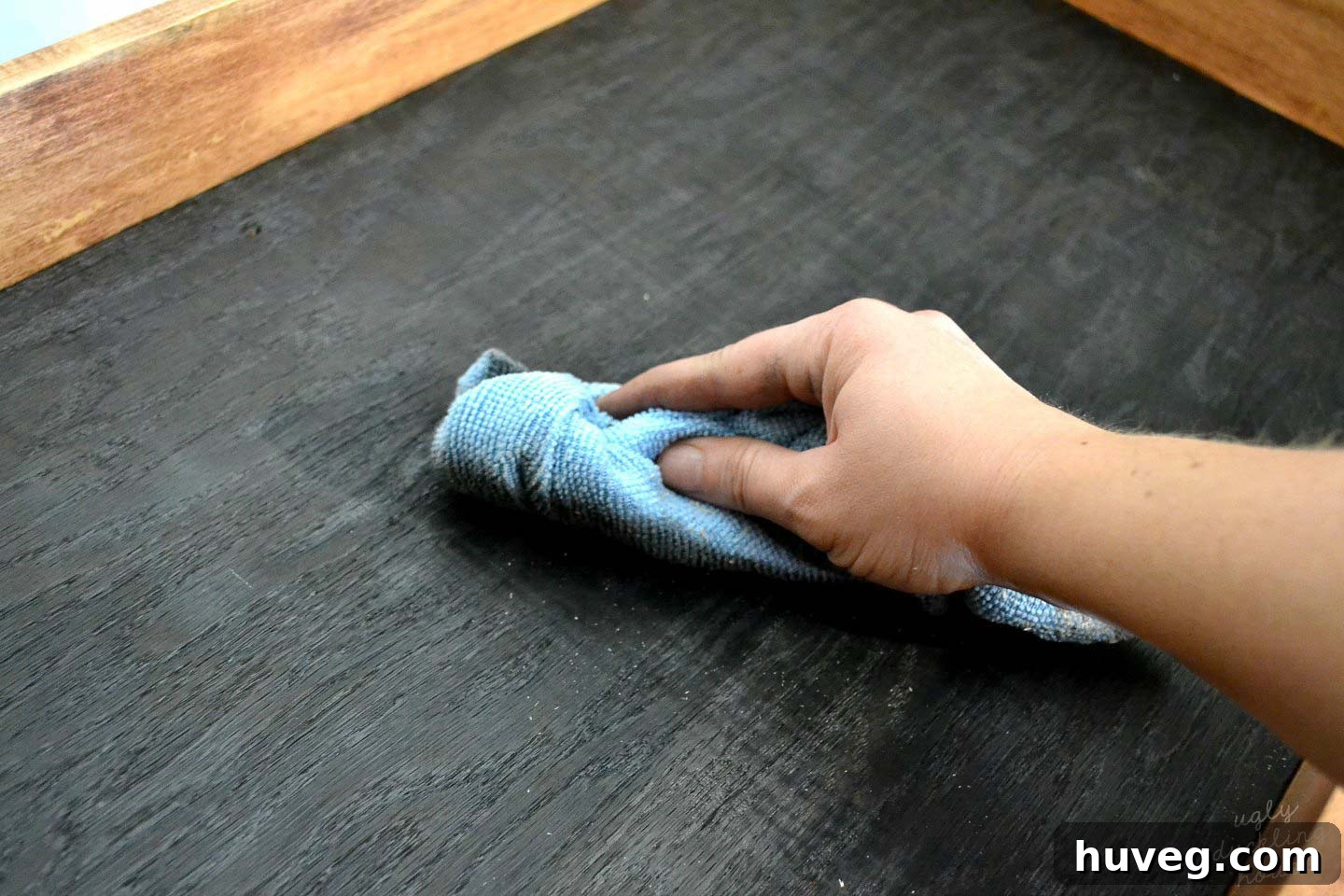
Step 9: Cutting the Wooden Tray Dividers for Organization
With the main structure and charred bottom in place, it’s time to add the functionality that makes this a true s’mores tray: compartments! Take your ¼” x 3” oak boards and cut them to serve as dividers. For this particular design, four dividers were cut to create five distinct compartments, perfect for separating marshmallows, graham crackers, and various chocolate bars. Similar to cutting the tray sides, you might find it more accurate to mark the divider lengths directly against the inside of your tray rather than relying solely on a tape measure (though for a 14 ½” long cut, it can be precise). A helpful tip for cutting thin pieces of wood like these without splintering is to stack several pieces together and cut them simultaneously. This provides more material for the saw to cut through, resulting in cleaner edges.
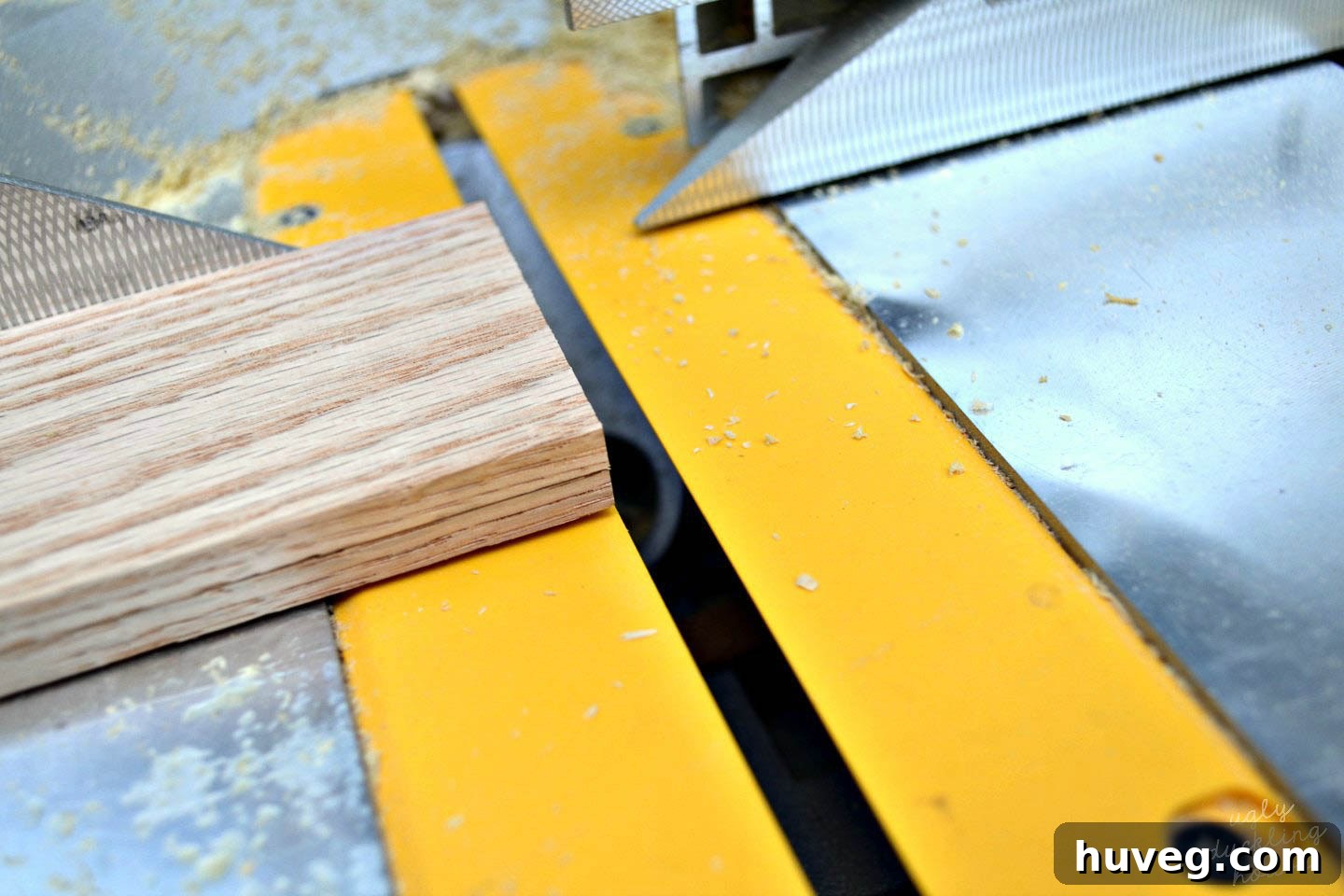
Step 10: Charring the S’mores Tray Dividers with Shou Sugi Ban
Just like the main tray liner, the dividers deserve the elegant touch of shou sugi ban. Take each of your cut oak dividers and carefully apply the wood charring treatment with your Bernzomatic torch. Remember that thinner pieces of wood will char and curl much more quickly than thicker boards. This means you’ll need to move your torch swiftly and consistently to achieve an even char without over-burning or warping the delicate pieces. The goal is to bring out the beautiful oak grain and create a cohesive charred aesthetic throughout the interior of your s’mores tray. Work in a well-ventilated area and continue to prioritize safety throughout this step, just as you did with the larger piece of plywood.
Step 11: Final Assembly, Food-Safe Finishing, and Handles
Allow your charred dividers to cool completely before proceeding. Once cool, thoroughly wipe down each divider with a tack cloth to remove any loose soot or residue, just as you did with the liner. Then, carefully position and glue them into place within your tray, creating the distinct compartments for your s’mores ingredients. For this step, a gel-formula all-purpose glue can provide better control for precise placement. The most critical final step is to apply a food-safe finish to the entire interior of the tray – any surface where food might come into contact. Products like salad bowl finish are excellent choices. While s’mores supplies are considered “light” food use, it’s paramount to ensure the finish is fully cured and hardened before the tray is used. This can take anywhere from a few days to a month, depending on the product, so always consult the manufacturer’s instructions. Finally, for enhanced portability and a stylish touch, attach two kitchen cabinet pulls to the ends of your tray. These handles make carrying your delicious s’mores station a breeze, especially when moving it from kitchen to campfire!
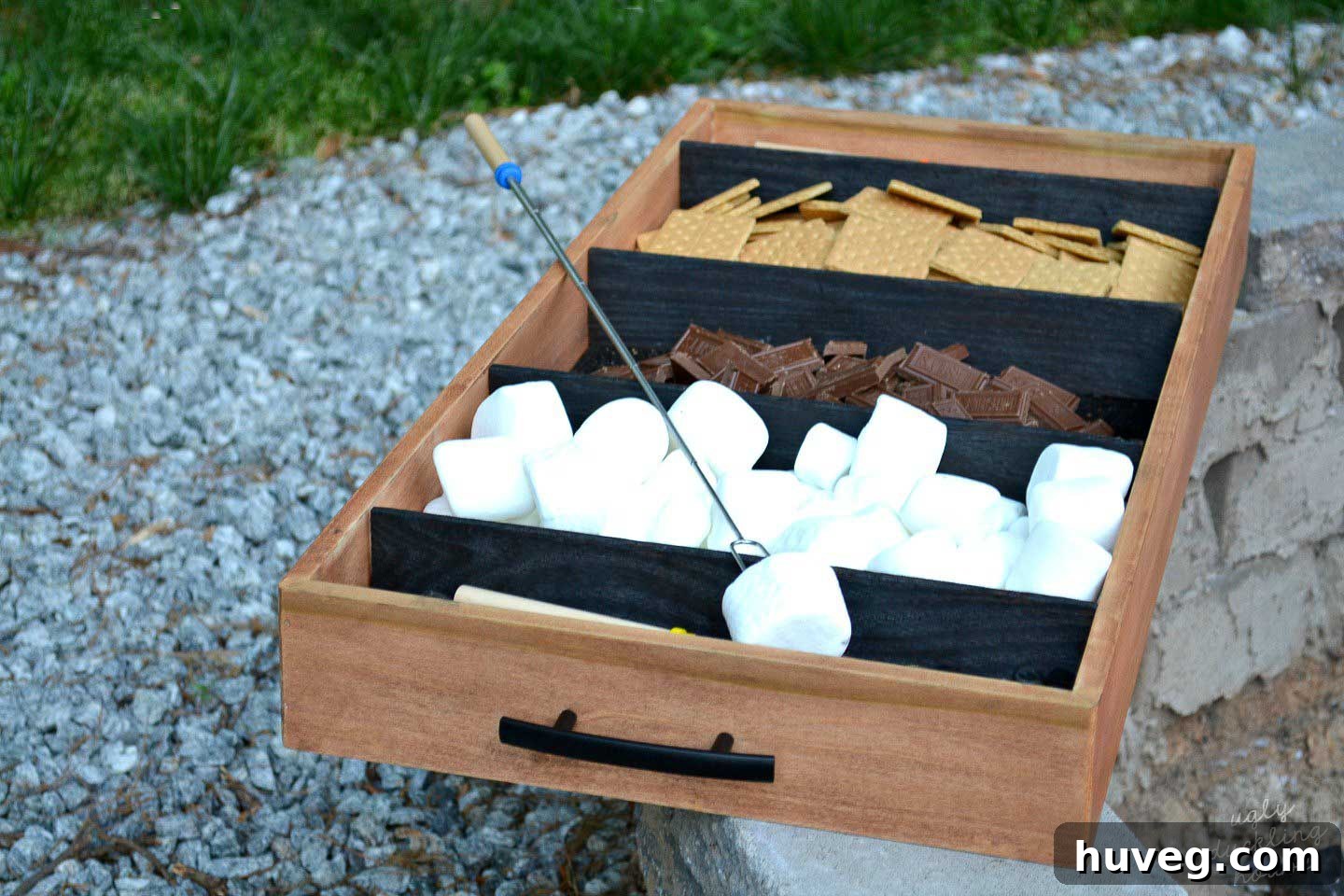
Enjoying Your Handcrafted Shou Sugi Ban S’mores Tray
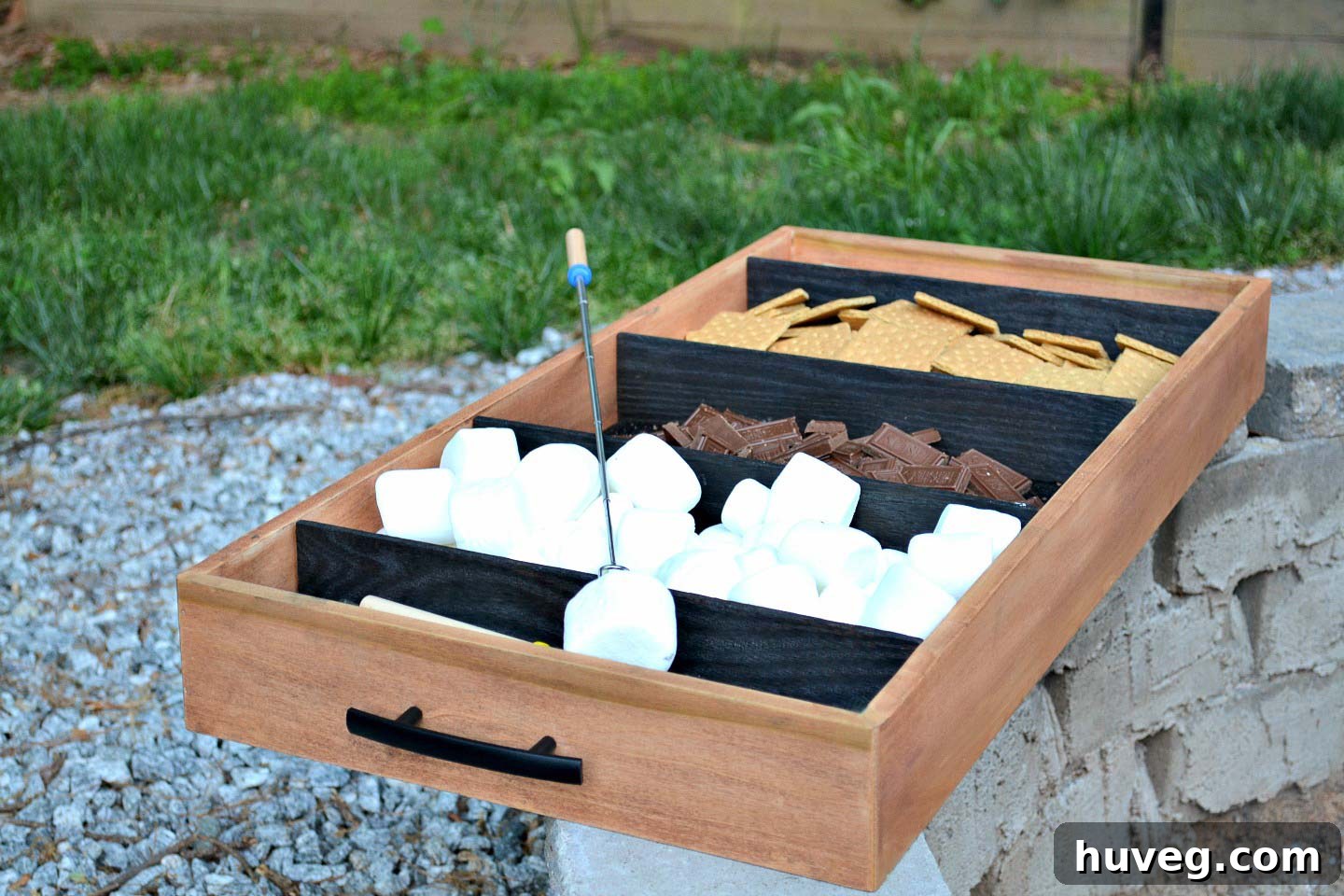
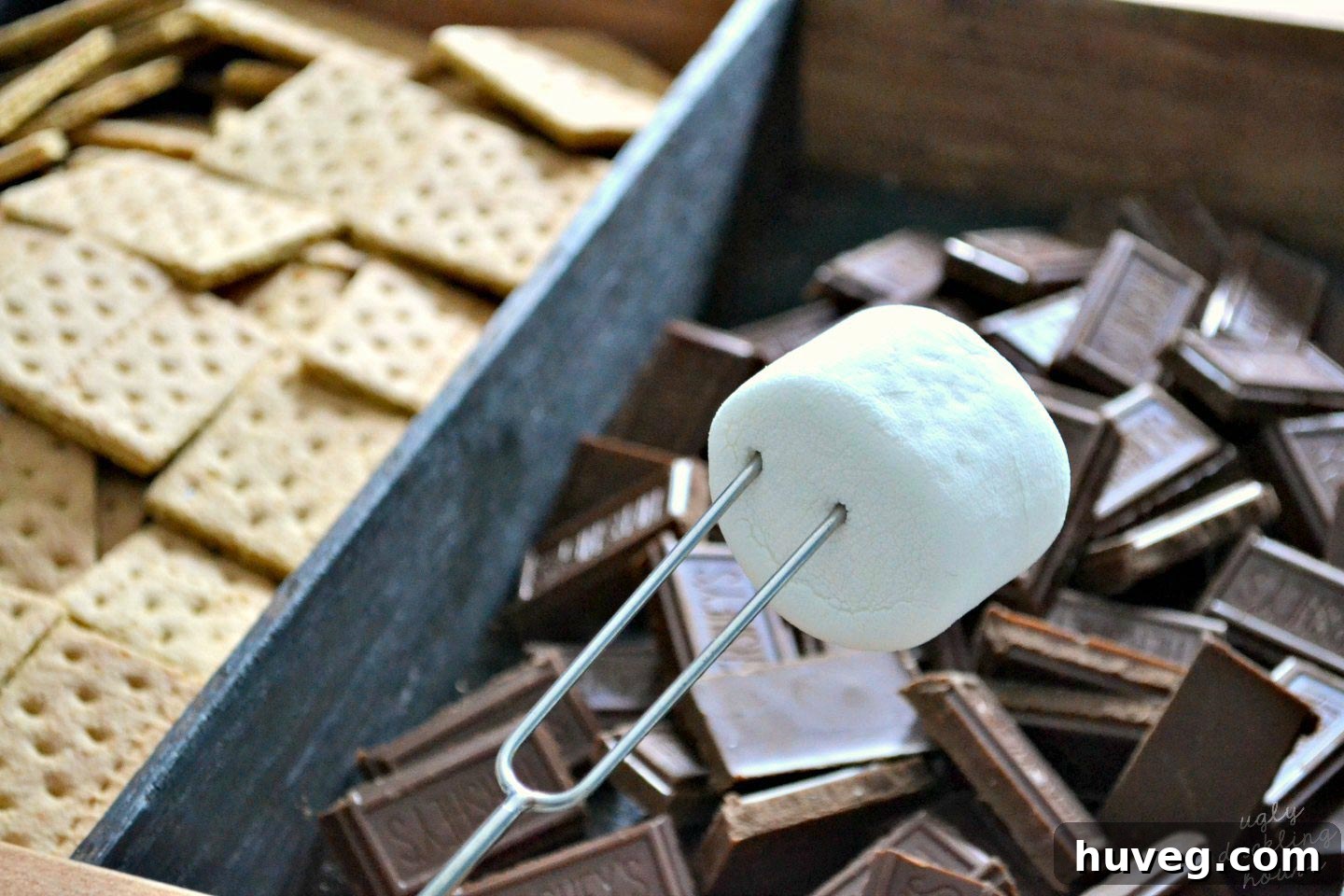
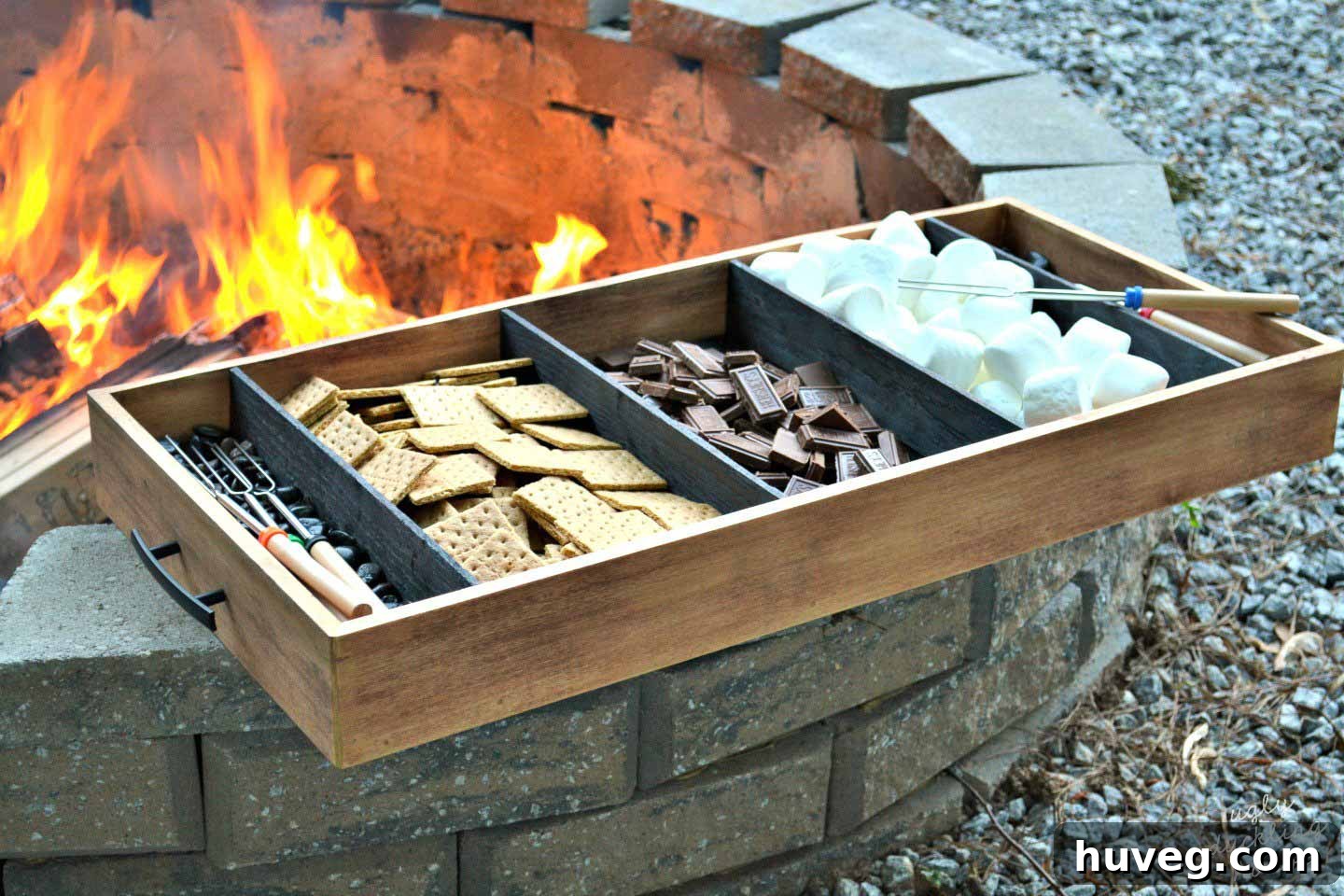
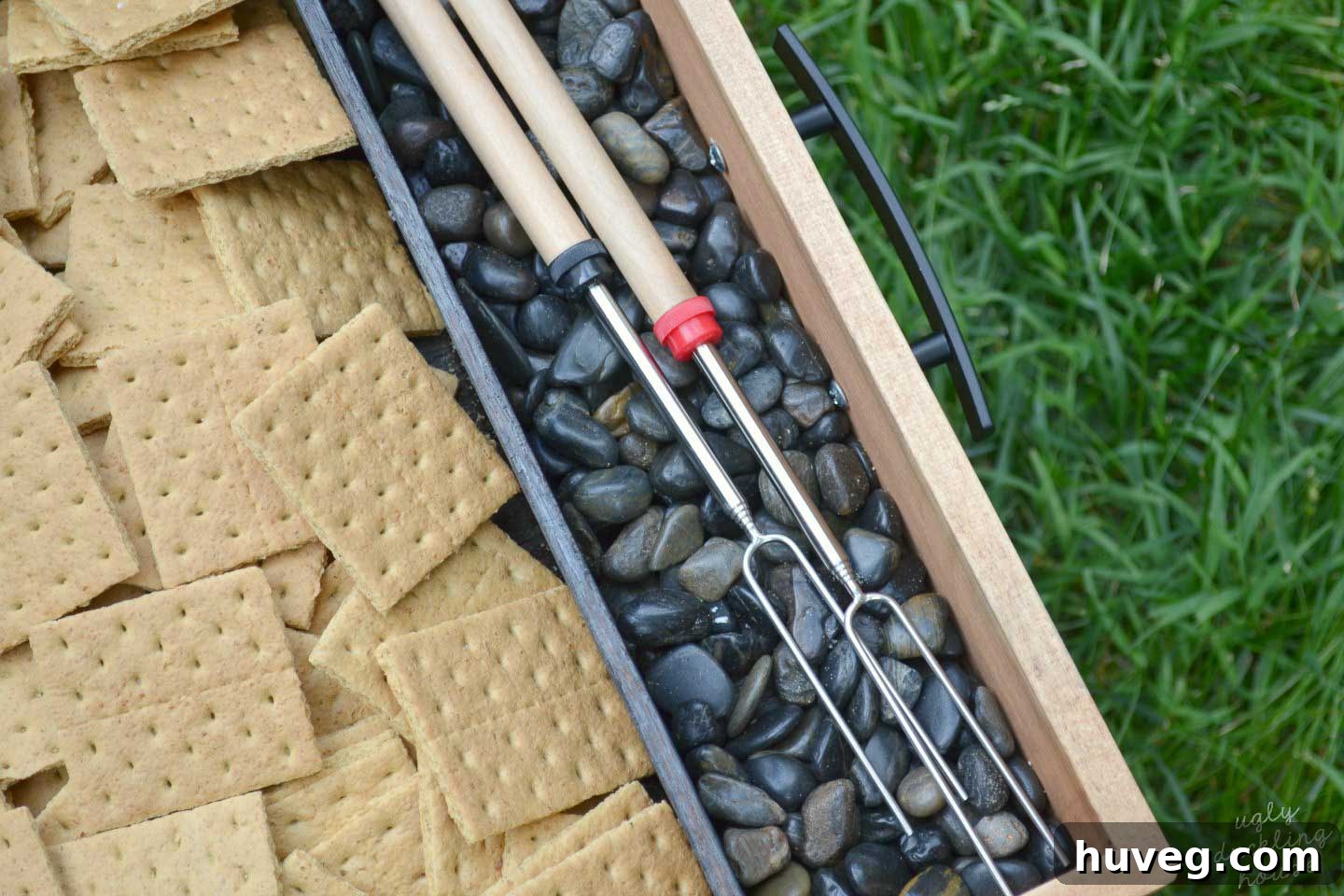
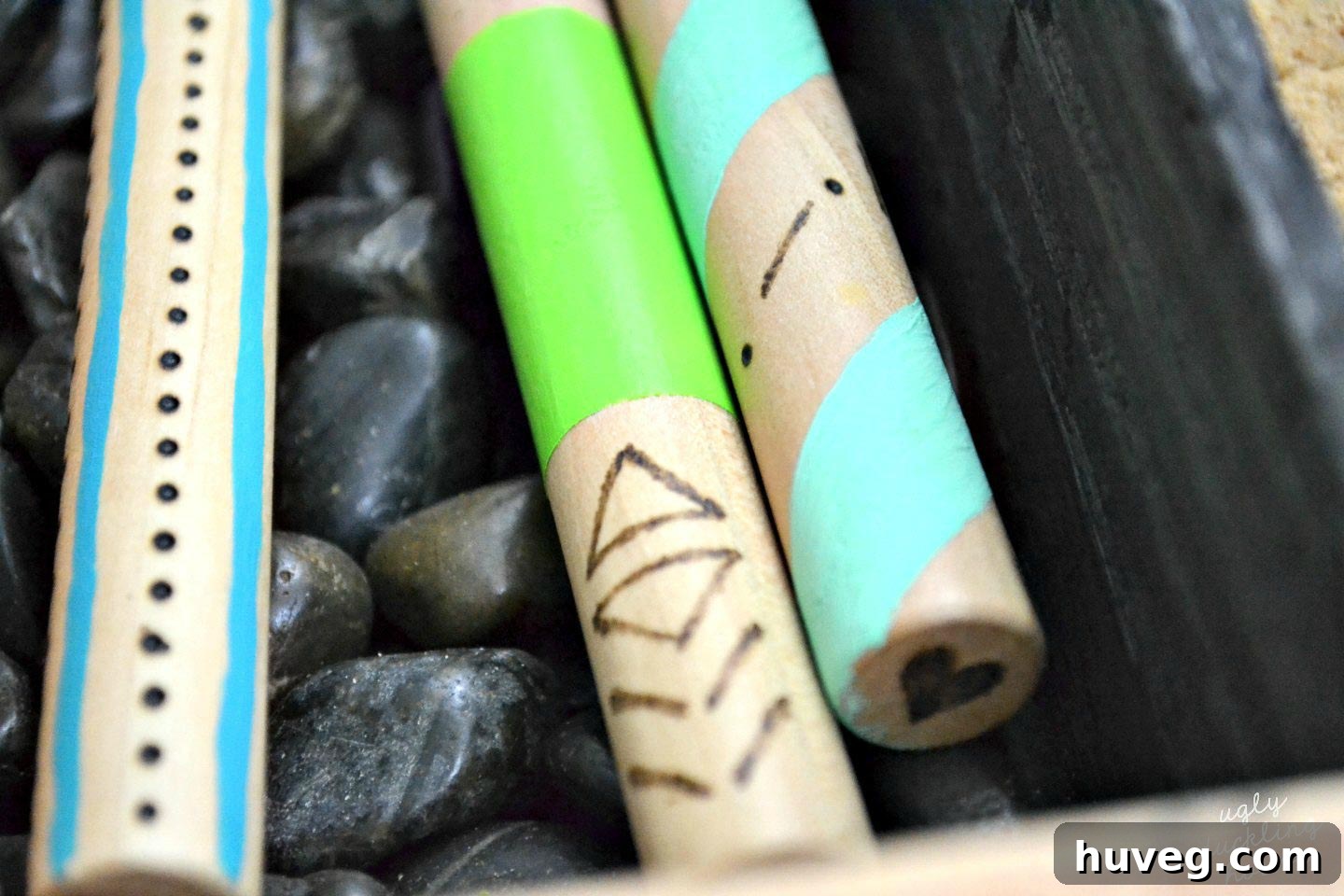
Your beautifully crafted **charred wood s’mores tray** is now ready to be the star of your next gathering! Its versatility allows for various configurations. When enjoying s’mores outdoors around the fire pit, fill the three middle compartments with classic marshmallows, graham crackers, and a variety of chocolates. The two narrower end compartments are perfect for holding decorative rocks, which in turn can securely support your extendable roasting sticks. These personalized, wood-burned roasting sticks make a great companion project, adding another layer of charm to your s’mores experience.
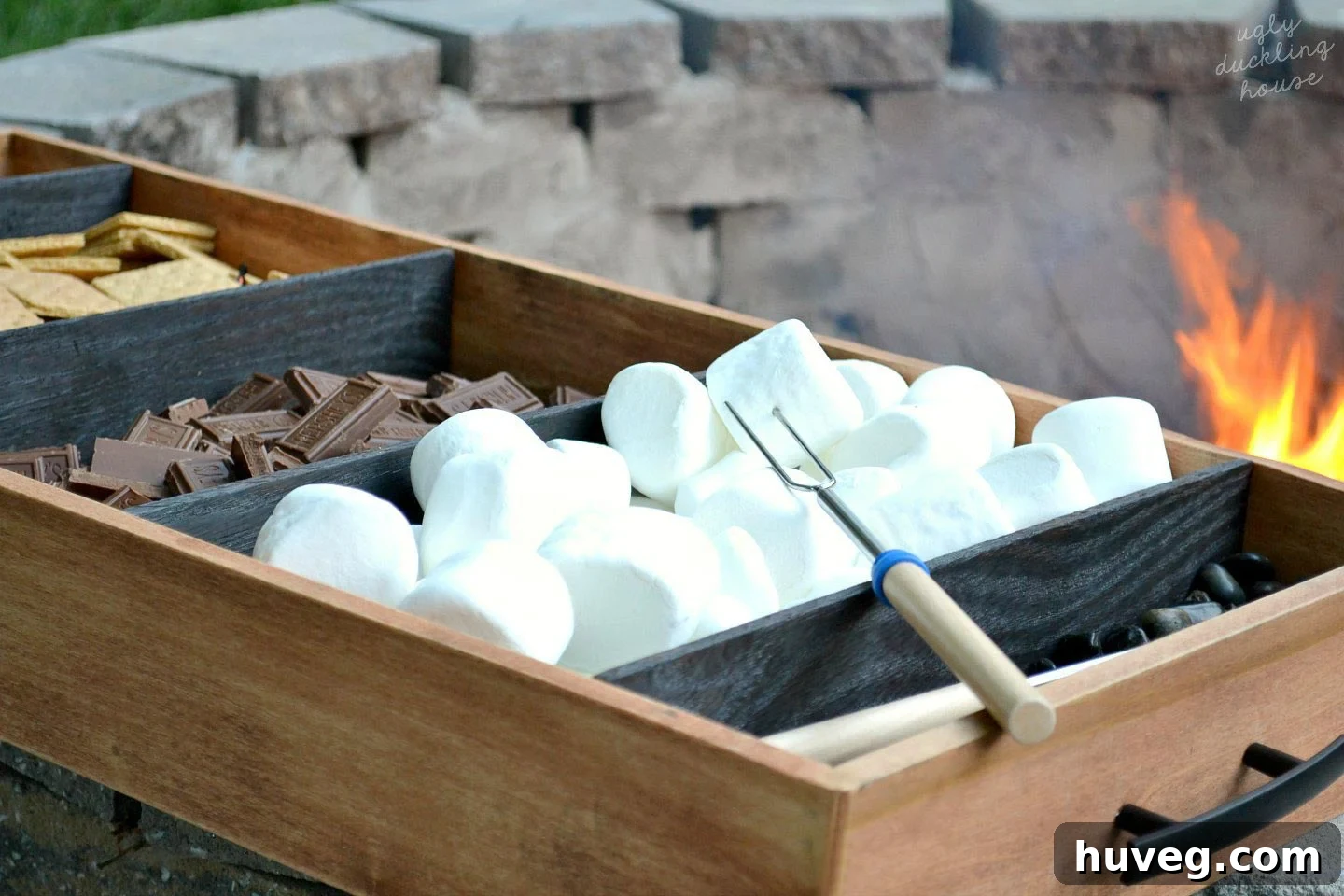
Don’t let the fun stop when summer ends! This unique s’mores station is also perfectly suited for indoor use. Simply swap out the decorative rocks for small Sterno containers in the end compartments. This allows you to recreate that delightful campfire experience right in your living room, ensuring you can indulge in gooey, delicious s’mores all year long. Just remember to always exercise caution and supervise any open flames, whether indoors or out.
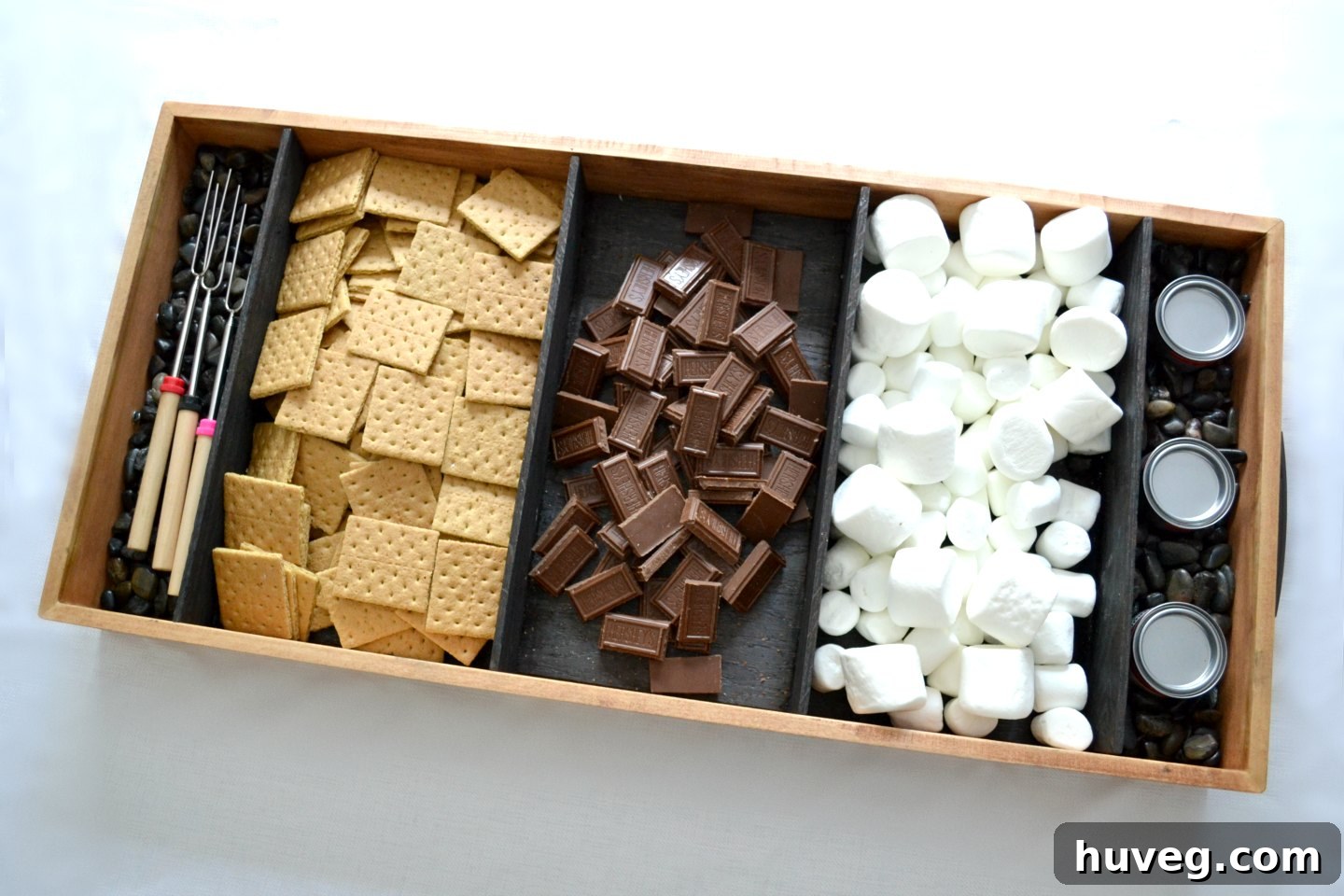
Imagine the smiles as friends and family gather around, selecting their favorite treats from this beautifully presented tray. It’s more than just a serving piece; it’s a centerpiece for memorable moments.
A Stunning Addition to Your Outdoor Entertaining Space
This shou sugi ban s’mores tray seamlessly integrates into any outdoor entertaining setup. While it looks fantastic staged next to a fire pit, remember that it’s designed for serving, not for direct exposure to open flames. Its robust construction and unique charred finish will make it a standout piece once your outdoor spaces are fully set up. Think of how this elegant and rustic tray will complement your new deck or patio, adding a touch of sophisticated charm to every summer party.
Don’t forget to pair your new s’mores tray with a set of delightful, custom wood-burned roasting sticks. These bright and colorful sticks are an easy and fun DIY project that adds even more personality to your s’mores experience. They’re perfect for roasting marshmallows or even hotdogs, making them a fantastic complement to your charred wood s’mores board.
Ready for a Summer of S’mores?
We hope this guide has inspired you to embark on your own woodworking adventure and create a custom shou sugi ban s’mores tray. It’s a rewarding project that combines craftsmanship with the joy of entertaining. Are you excited for summer? What big entertaining plans do you have in the works? Share your creations and ideas with us!
This unique shou sugi ban s’mores tray was even featured in Bernzomatic’s summer project guide, which is packed with more amazing DIY ideas, including recipes and furniture builds. Be sure to check it out here for more inspiration!