DIY Floating U-Shaped Wall Shelves

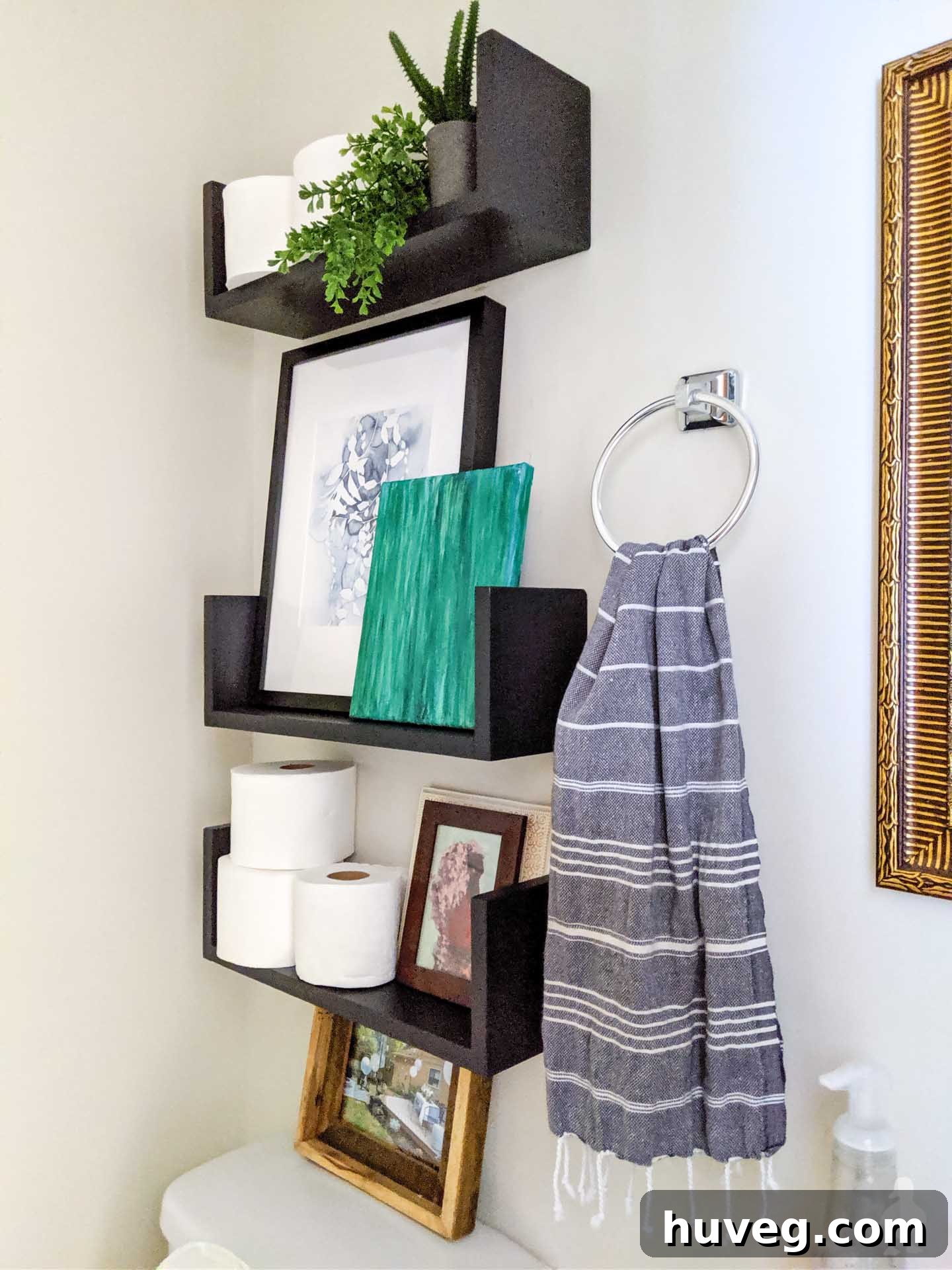
Transforming a small space can feel like a monumental task, but sometimes, the simplest DIY projects can make the biggest impact. Today, I’m thrilled to share a recent enhancement to my downstairs half bath – a room that hasn’t seen much of the blog spotlight until now. This often-overlooked area, just off the main hallway, has finally received a much-needed organizational and aesthetic upgrade with the addition of these stylish U-shaped floating shelves.

For far too long, this crucial little bathroom suffered from a severe lack of functional storage. A tiny, unimpressive cabinet clung to the wall, doing little to complement the space or meet its storage demands. Given the presence of a pedestal sink, generously installed by my uncle shortly after I moved in (a feature that, while elegant, limits under-sink storage), creative vertical solutions were always going to be key. The cabinet was a placeholder, a mere acknowledgment of need, but never a true solution. It took some time, but eventually, the urge to elevate this space from merely functional to truly fabulous became irresistible.

The solution, I realized, didn’t require an entire room overhaul. In fact, these sleek, black wall shelves came together in a remarkably short amount of time – a single afternoon for construction, with a few extra days for paint drying. The inspiration? A captivating image I spotted at West Elm, which immediately sparked the thought, “I can absolutely make that using my scrap wood!” And that’s precisely what happened. These shelves now elegantly hold bathroom essentials and double as a chic display for art, instantly upgrading the room’s feel. They’ve been a staple for months now, and I couldn’t be happier with the immediate impact they’ve had on both organization and aesthetics.

While this half bath is still slated for a larger, more comprehensive makeover – think bold new colors, intricate patterns, a statement mirror, and other exciting upgrades – these DIY floating U-shelves have provided an invaluable interim solution. They’ve single-handedly resolved my organizational woes, creating order and visual interest while the grander renovation plans patiently await their turn on my project list. It’s amazing how a relatively simple project can make such a significant difference in daily functionality and overall contentment with a space.
How to Craft Your Own Stylish U-Shaped Floating Shelves
Creating these U-shaped floating shelves is a rewarding project that’s more straightforward than you might imagine. Despite their elegant appearance, the construction process is quite simple, making it an ideal weekend DIY. I’ve broken down each step to guide you through the process, ensuring a smooth and successful build. For those who prefer visual learning, a comprehensive video tutorial is also available, alongside detailed plans to assist you every step of the way.
A video tutorial showcasing the step-by-step process of building these U-shaped floating shelves is available. These shelves are surprisingly quick to make, with the majority of the construction completed in a single day, allowing ample time for paint or stain to dry before installation.
Essential Materials & Tools (for 3 shelves)
Before diving into the construction, gathering the right materials and tools is crucial for a smooth and efficient building process. Here’s what you’ll need to create three elegant U-shaped floating shelves:
- Wood Stock:
- 1 – 1x6x8ft board (This will form the main body of your shelves.)
- 1 – 1x2x8ft board (Used for the back support and potentially the front lip.)
- 1 – 1/2″ square dowel (Optional, but included in my detailed plans for a refined finish.)
- Marking & Measuring:
- Pencil (For accurate marking of cuts.)
- Measuring tape (Precision is key for perfectly sized shelves.)
- Cutting Tools:
- Miter saw (Ideal for precise cross-cuts. A circular saw with a guide can also work.)
- Sanding & Finishing:
- Orbital sander (For smooth, paint-ready surfaces.)
- Sandpaper (Various grits, from coarse to fine, for optimal finish.)
- Wood filler (To seamlessly hide knots, seams, and nail holes.)
- Interior paint or spray paint (Your choice of color and application method for the final look.)
- Assembly & Fastening:
- Wood glue (For strong, durable joints.)
- Pin nails (For quick and secure assembly with a nail gun.)
- Nail gun (Significantly speeds up the assembly process.)
- Clamps (Essential for holding pieces together while glue dries.)
- Installation:
- Drill (For pilot holes and driving screws.)
- Drill bits (Assorted sizes for different tasks.)
- Wall anchors or stud finder (For secure mounting, especially into drywall.)
- Safety Gear:
- Safety glasses (Protect your eyes from sawdust and debris.)
- Hearing protection (Crucial when using power tools.)
- Breathing mask (To avoid inhaling sawdust and paint fumes.)
Pro Tip for Cost Savings! If you own a table saw or a circular saw equipped with a track guide, you can significantly reduce material costs. Instead of buying three different sized wooden planks, consider purchasing one 1x8x8ft board. This single board can then be precisely ripped down into a 5-1/2″ wide piece for the main shelf body, a 1-1/2″ wide piece for the back support, and the remaining strip can be utilized for the front lip. This method is more economical but does require a bit more precision and woodworking experience.
Alternatively, these shelves can be constructed using 3/4″ thick plywood, cut to the exact dimensions specified in my plans. For those opting for a stained wood aesthetic with plywood, I highly recommend incorporating edge banding. This will conceal the exposed plywood layers, giving your shelves a cleaner, more finished look, mimicking solid wood.

Time needed: 45 minutes (per shelf, excluding drying time)
Crafting these U-shaped floating shelves is a remarkably quick and satisfying DIY project. The bulk of the construction can be accomplished within a single day, leaving sufficient time for paint or stain to dry before you proceed with hanging them securely on your wall. This makes them perfect for a weekend project!
-
1. Precisely Cut the Bottom, Sides, and Back Pieces
My miter saw is an indispensable tool for countless projects, and these shelves are no exception! The first step involves making simple, straight cross-cuts across your chosen wood boards. The beauty of this design is its adaptability: you can easily adjust the length of your shelves to perfectly fit your specific wall space. While the 6-inch side pieces remain consistent, the bottom piece, the back piece, and the optional front lip should all be cut to the exact same desired length. For my half bath, I opted for an 18-inch width for each shelf, creating a balanced and functional display. Measure carefully, mark clearly with your pencil, and always prioritize safety when operating power tools.
-
2. Assemble with Wood Glue and Secure with Clamps
There’s some flexibility in the assembly order, but I find the most efficient method is to attach the back piece first, followed by both side pieces. Apply a generous, even bead of high-quality wood glue along the edges where the pieces will meet. Wood glue, when properly applied and clamped, creates a bond stronger than the wood fibers themselves. After applying the glue, firmly press the pieces together. This is where your clamps become invaluable – use them to hold the pieces tightly in place while the glue sets and dries. If you have a pin nailer, as I do now, adding a few pin nails provides immediate mechanical fastening, holding everything securely while the glue cures. I’ve had these shelves installed for several months without any issues. However, if you anticipate holding heavier items or simply prefer maximum strength, consider incorporating additional fasteners like pocket holes with wood screws for reinforced joints. Always choose the method that gives you the most confidence in your project’s durability.
-
3. Incorporate the Front Lip (Optional)
For my bathroom shelves, I consciously decided against adding a front lip, aiming for a cleaner, more minimalist profile that allows art to sit flush. So far, none of my decorative items or artwork have shown any tendency to slip forward, validating this design choice. However, depending on the intended use and placement of your shelves, a front lip can be a valuable addition. For instance, if I were building these for a different area of the house where items might be more prone to sliding off, a front lip would be a practical necessity. My comprehensive plans include instructions for adding this feature, offering you the flexibility to customize your shelves to your specific needs and aesthetic preferences. If you choose to add it, simply glue and pin nail it to the front edge of the bottom piece, ensuring it aligns perfectly with the side pieces.
-
4. Flawless Finish: Fill Knots and Seams with Wood Filler
To achieve a truly seamless, professional-looking finish, especially when planning to paint, wood filler is your best friend. After the glue has fully dried and any optional nails are in place, meticulously apply wood filler to all knots, seams, and nail holes. Pay particular attention to the bottom edges and corners to ensure a perfectly smooth surface from every angle. Allow the wood filler to dry completely according to the manufacturer’s instructions. Once dry, sand all surfaces of the shelves thoroughly. Start with a medium-grit sandpaper (e.g., 120-grit) to smooth out the filler and any rough spots, then follow up with a finer grit (e.g., 220-grit) to achieve a silken, paint-ready surface. A smooth, well-prepped surface is the secret to a professional-looking paint job.
-
5. Paint for a Striking Finish
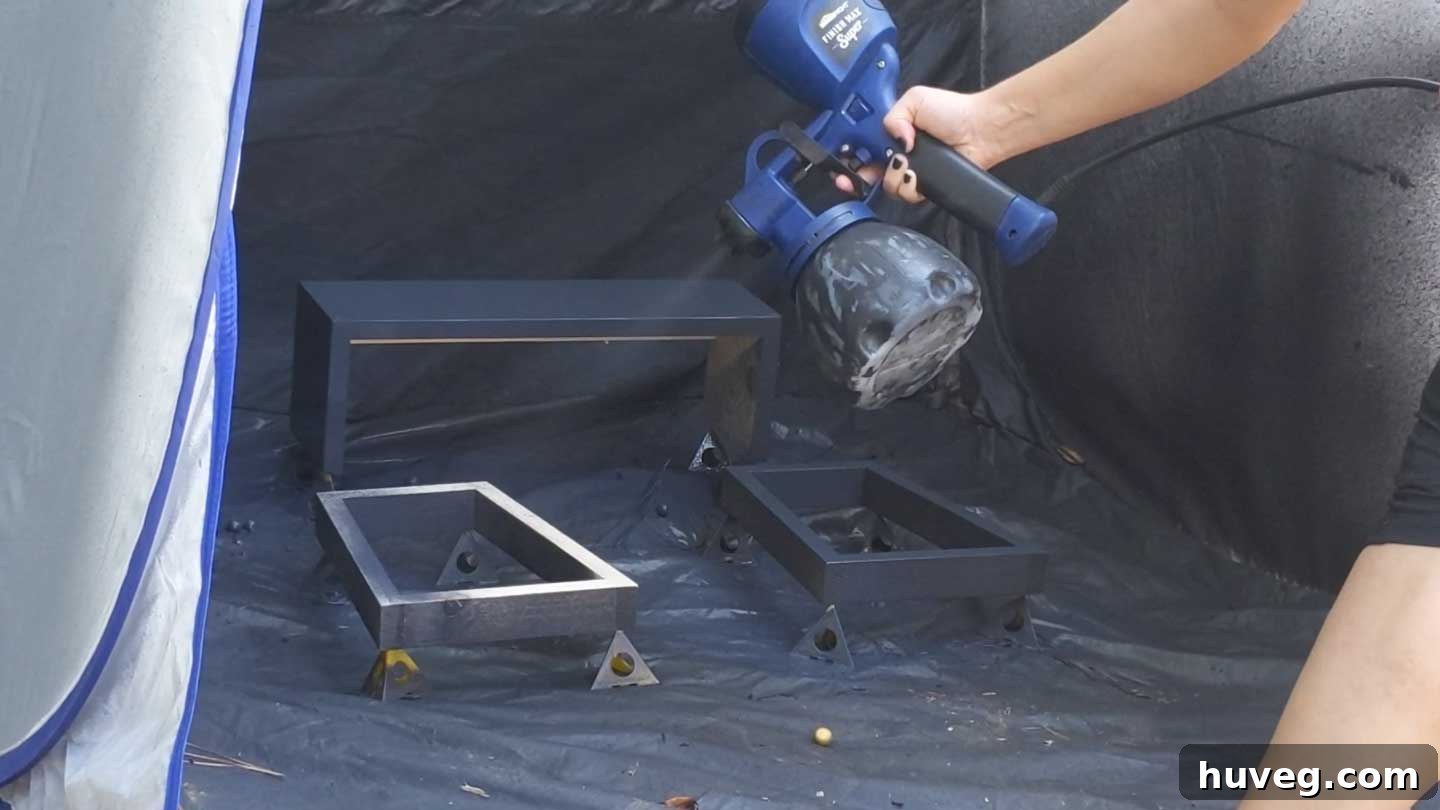
With the shelves perfectly prepped and sanded, it’s time for the exciting transformation with paint! I opted for a deep, sophisticated black – Sherwin-Williams Tricorn Black – to create a striking contrast in my half bath. To achieve a flawlessly smooth and even coat, I took my shelves outside and used my spray tent with a paint sprayer. This method makes quick work of painting and ensures a factory-like finish without brush strokes. If you don’t have a sprayer, high-quality interior latex paint applied with a fine-finish roller or brush can also yield excellent results. Apply multiple thin coats, allowing adequate drying time between each, for the best adhesion and durability. The black paint truly made these shelves pop against the light walls, adding a touch of modern elegance.

-
6. Securely Hang Your Floating Shelves
Proper installation is paramount for floating shelves, ensuring they are both sturdy and perfectly level. I began by marking several level lines on the wall, determining the exact bottom edge for each shelf, working my way from the lowest shelf upwards. Once the lines were marked, I positioned a shelf against the wall, drilled a small pilot hole through the back piece of the shelf, just deep enough to leave a mark on the drywall. This mark precisely indicates where to install your heavy-duty wall anchors. If you can locate a stud using a stud finder, even better – screw directly into the stud for maximum strength. To ensure the screw heads are completely hidden, I used a slightly larger drill bit to create a shallow recess (a countersink) in the back support of the shelf. This allows the screw head to sink flush with or slightly below the surface, preventing it from protruding and ensuring a truly “floating” appearance. While I’m quite meticulous about this detail, it’s worth noting that once you adorn your new shelves with art and decor, the back support often disappears entirely from view. Nevertheless, taking the extra step ensures a clean, professional finish and maximum stability. Repeat this process for all your shelves, ensuring each is level and securely fastened.
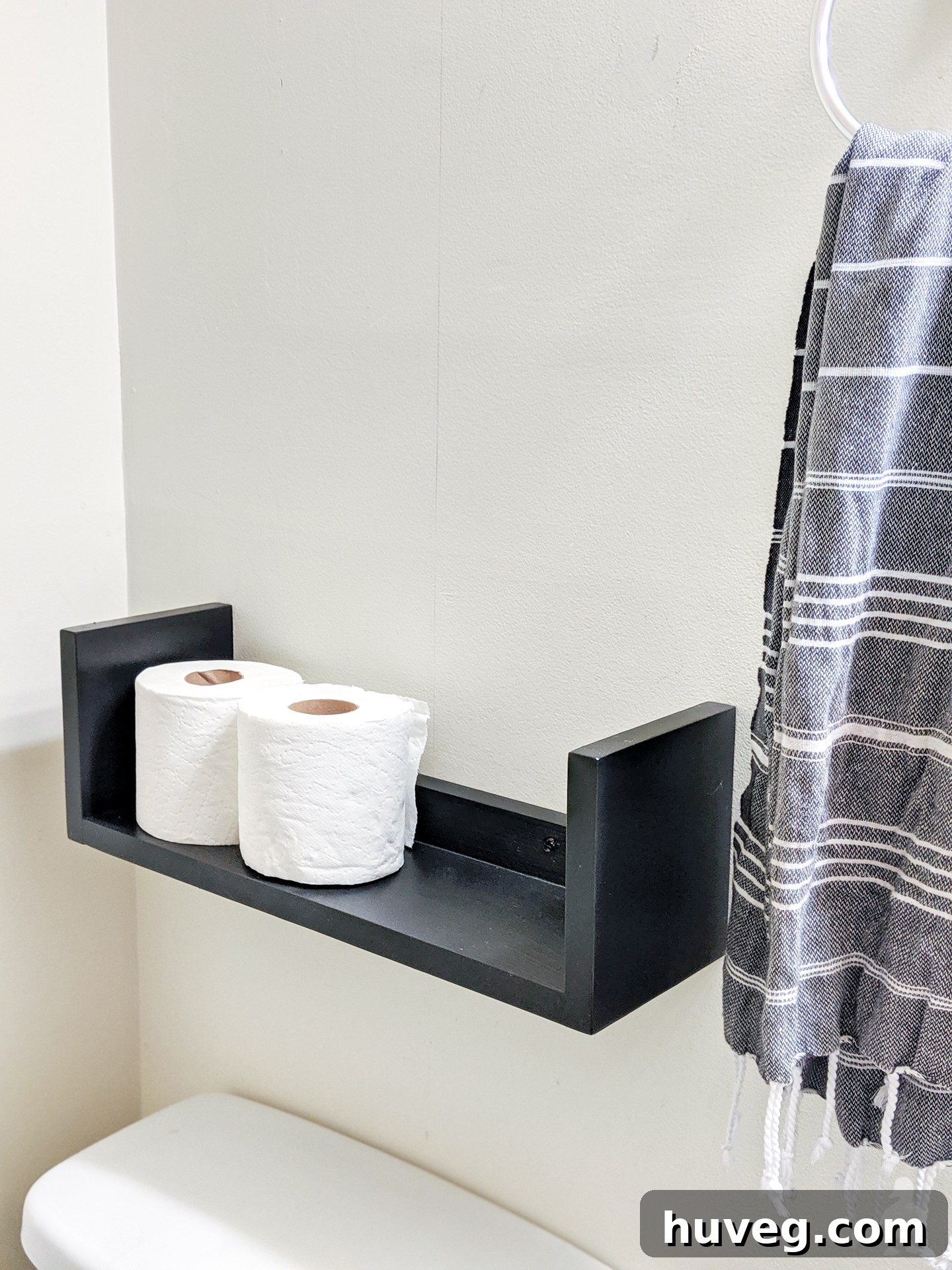
And just like that, the project is complete! Currently, I’m enjoying the process of continually swapping out various home decor items on these shelves, curating the perfect display as I plan the rest of the room’s makeover. I particularly love having my Granny’s cherished green painting prominently displayed here, with the sleek black frames serving as a sophisticated accent. Both pieces are now inspiring elements for the broader design scheme of the entire room, guiding my choices for color, texture, and additional decor.

A common question I receive when discussing shelving projects revolves around weight capacity. While I didn’t perform scientific weight-testing for these specific shelves, my approach is practical and driven by my personal needs. I installed them, placed the art and decorative items I intended for each, and observed their stability. For my purposes, if they remain securely on the wall, I consider the quality control sufficient! I understand the desire for precise weight limits – your needs might vary, and you’re curious about how many heavy items they can hold, which is a perfectly reasonable concern. However, I build primarily for the decorative and light storage requirements of my own home. The heavy-duty wall anchors I linked in the materials list are my go-to for most projects because they significantly exceed the weight I typically need to support, providing ample security. I’m incredibly pleased with how stable and functional these shelves have proven to be for my half bath’s essentials and aesthetic accents.

Expand Your DIY Horizons: Explore More Organization Ideas!
I’m excited to share this project today as part of a fantastic January organization challenge, graciously hosted by Katie at Addicted 2 DIY! If you’re like me and constantly seeking ingenious ways to declutter and organize your home, especially at the start of a new year, you’re in for a treat. Dive into the links below to discover more inspiring step-by-step tutorials from fellow DIY enthusiasts, and be sure to let them know I sent you! These projects offer a diverse range of solutions to common household organizational dilemmas, all designed to make your home more functional and beautiful.
- DIY TV Riser — Addicted 2 DIY
- Rustic Farmhouse Floating Shelf — My Repurposed Life
- Coat Closet Organization — House Becoming Home
- DIY Wall Shelves — Ugly Duckling House (that’s HERE!)
- Router Bit Organization — The Awesome Orange
- Doll Clothes Storage — At Charlotte’s House
More Creative DIY Shelf Ideas to Inspire Your Next Project
If these U-shaped floating shelves have sparked your creativity, you’ll love exploring these other innovative DIY shelving solutions. From elegant display options to robust storage systems, these projects demonstrate the versatility of custom-built shelves in enhancing both the form and function of any room in your home.
- Long and Thin Floating Wall Shelves
- Garage Shelves Using Shelf Brackets
- Floating Bookshelf
- DIY Storage Shelf with Crates/Baskets
- Mudroom Storage Cubby
Don’t forget to pin this project for later inspiration and share it with your DIY-loving friends!

More Creative Scrap Wood Ideas
SEE ALL
Don’t let those valuable cutoffs from larger woodworking projects and home DIYs gather dust! Scrap wood is a treasure trove of potential, offering endless opportunities to create charming gifts, unique decor pieces, and practical additions to your home. Discover innovative ways to reuse and repurpose every last piece of lumber.
-
DIY Stacked Plywood Planters
-
DIY Tree Cutout Art
-
How to Build a Better Bee House | Free Plans
-
25 Great Gift Ideas for the Craft Beer Lover
-
DIY Pinecone Christmas Place Card Holders
-
DIY Carved Hexagon Planter with Plant Stand