Effortless DIY Crafting Station

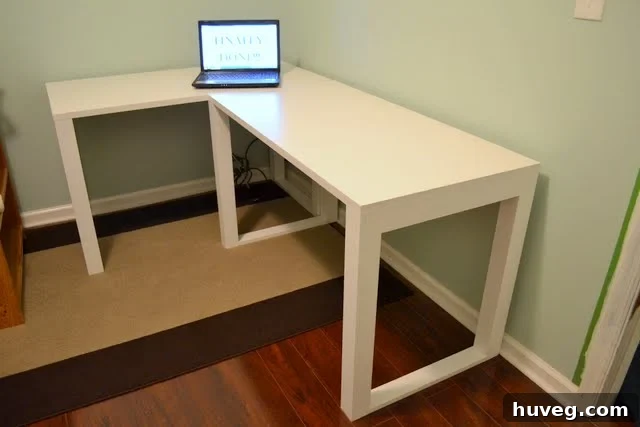
Craft Your Perfect Workspace: A Comprehensive Guide to Building a Custom DIY Desk
Last week, I offered a sneak peek into the exciting beginnings of my brand-new, meticulously crafted desk designed for my versatile “study-o” space. After dedicating a focused weekend to refining the final details and making those crucial adjustments, both tables are now complete and ready for their grand unveiling. This project has been a journey of learning, precision, and immense satisfaction, culminating in a workspace that’s not just functional but also a true reflection of personal style and ergonomic needs.
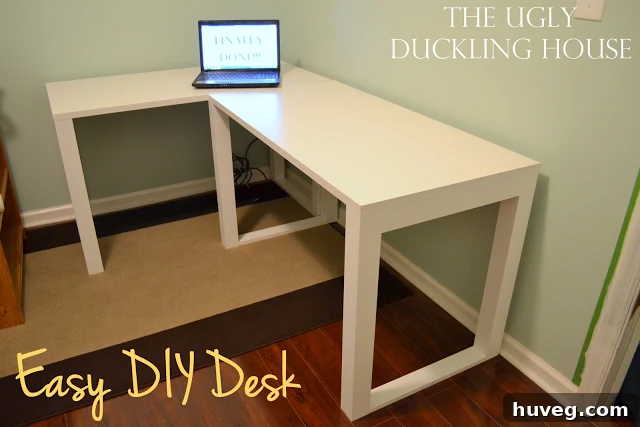
I. Freaking. Made. That. And here’s the detailed journey of how you can build your own custom craft desk, tailored precisely to your needs. This comprehensive guide will walk you through every step, from initial planning and material selection to the finishing touches, empowering you to create a durable and beautiful workspace.
Note: For your convenience, all materials I used are highlighted in bold text throughout this post, making it incredibly easy to compile your shopping list if you’re inspired to embark on this DIY desk project yourself.
The Foundation of Comfort: Researching Optimal Desk Height for Ergonomics
Before diving into any construction, my initial and most critical step involved thorough research into ideal desk heights. Knowing that this spot would become the hub for countless hours of writing, studying, and creative work, achieving an ergonomically sound setup was paramount. Proper desk height isn’t just a matter of convenience; it significantly impacts posture, reduces the risk of repetitive strain injuries, and enhances overall comfort and productivity. Most online resources and ergonomic guidelines suggest that standard desks typically range from 28 to 31 inches tall. However, for tasks involving extensive keyboard use, a slightly lower height can be beneficial, preventing arm and wrist fatigue by allowing your forearms to remain parallel to the floor with your elbows at a comfortable 90-degree angle.
I had already acquired two smooth and sturdy IKEA ANTONIUS desk tops earlier last year, which provided a solid starting point with their one-inch thickness. This meant my leg height range needed to fall between 27 and 30 inches. While 30 inches might seem standard, considering my relatively short stature and the fact that I primarily use a laptop directly on the desk surface (adding its own height), it felt like it would be too tall, forcing my shoulders to hunch. In contrast, 27 inches felt just right – a true “Goldilocks moment” where everything aligned perfectly. It’s much cooler, of course, when you’re discussing building bespoke furniture rather than tasting porridge, though I imagine sawdust and oats might have a similar earthy flavor profile when you’re truly engrossed in a project!
Gathering Your Arsenal: Materials and Initial Acquisitions
During a routine visit to Lowe’s approximately a month prior to starting, I impulsively picked up four robust 3×3 poplar posts, without a specific plan in mind for them. While these weren’t enough to construct both desks, they proved perfect for a trial run – a common and often beneficial approach in DIY to test ideas before committing fully. This initial oversight, however, meant I hadn’t acquired all the necessary components for the frame of each desk. Such moments are valuable learning experiences in DIY; it’s quite simple to pick up additional supplies once you’ve gained clarity on your needs and know you’ll be returning to the store in a few days. After completing my supply run with the much-needed poplar 1x3s, it was time to transition from planning to hands-on construction.
Precision Cutting: The Art of Dimensioning Your Desk Components
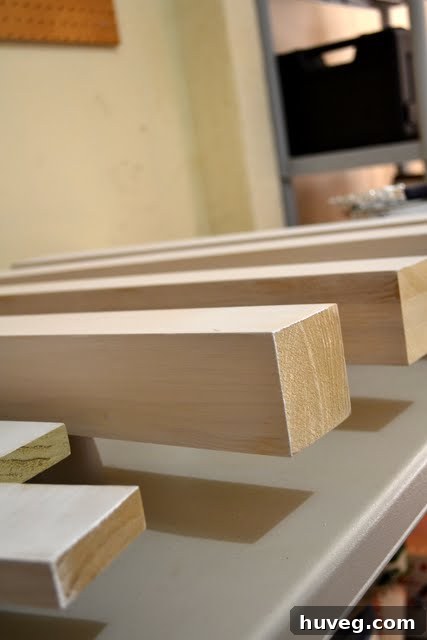
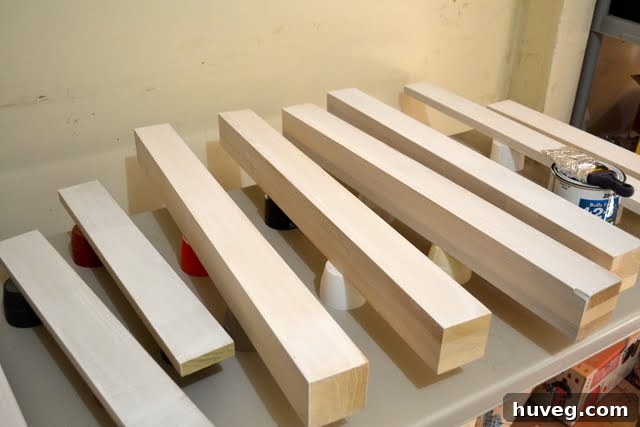
1. Given the fixed dimensions of my pre-purchased IKEA desk tops, I knew from the outset that the finished frame for each desk couldn’t exceed 46 7/8 inches in length (front and back) and 23 5/8 inches in depth (sides). This provided critical boundaries for my cuts. Recognizing that the 3×3 poplar posts each had an actual width of 2.5 inches (it’s crucial to remember the distinction between nominal and actual lumber dimensions), I subtracted a total of 5 inches (2.5 inches for each post) from both the length and depth measurements for the 1x3s that would form the perimeter of the frame. This ensures the frame fits perfectly within the tabletop’s footprint, creating a flush and professional finish. It’s a simple algebraic step but vital for accuracy, looking something like this in concept:

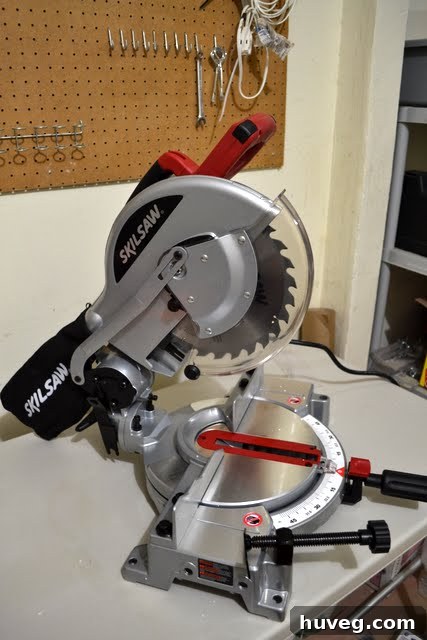
2. With precise measurements in hand, I moved on to cutting all the pieces using my fantastic new compound miter saw – a Christmas gift that immediately revolutionized my woodworking process. Before this, I was frequently borrowing one from my dad, which, while appreciated, certainly highlighted the efficiency and joy of owning your own quality tools. This saw allowed for accurate and clean cuts, essential for a snug fit later during assembly. Always remember to prioritize safety when operating power tools; wear appropriate eye and ear protection, and keep your workspace clear.
The Magic of Pocket Holes: Mastering the Kreg Jig
3. Once all my pieces were accurately cut and pre-primed (a strategic move to streamline the painting process after assembly), it was time to create the joinery. For this, I employed my new Kreg Jig, a tool that truly feels like a game-changer for DIY furniture builders. The Kreg Jig allows for strong, concealed joints by drilling angled “pocket holes” into one workpiece, which are then joined to another with self-tapping screws. Its ease of use and the professional results it yields make it an indispensable asset. Here are a few essential tips I’ve learned for getting the most out of your Kreg Jig:
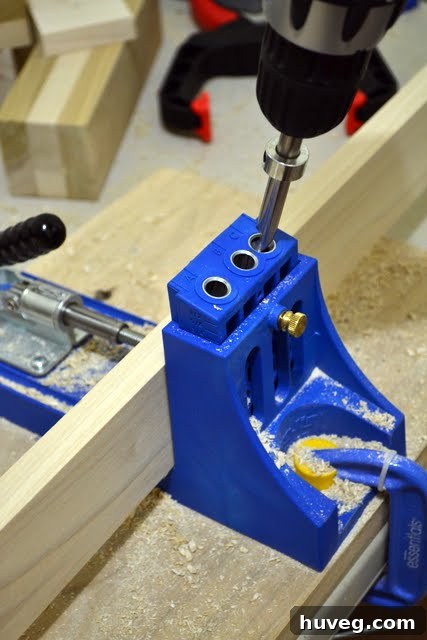
- Embrace Tutorials: For mastering the fundamental operations of the Kreg Jig – such as setting the drill bit to the correct length for your wood thickness, adjusting the jig height, and understanding the clamping mechanisms – I highly recommend seeking out detailed online tutorials. Resources like this excellent guide proved incredibly helpful in building my confidence and ensuring I was utilizing the tool correctly from the start. A solid foundation prevents costly mistakes later.
- Clamp, Clamp, Clamp!: This cannot be stressed enough. The success of pocket hole joinery relies heavily on stability. The number of clamps I used to secure every piece snugly and prevent any movement might have seemed excessive, but when drilling precise holes and joining pieces, you can never be too cautious. Ensure the Kreg Jig itself is firmly clamped to your workbench, and just as importantly, clamp the wood pieces together or to your table when driving in the screws. For securing the 1x3s to the posts at perfect right angles, a dedicated right angle clamp is an absolute lifesaver, ensuring square joints.
- Maintain and Re-check: Sawdust is an inevitable byproduct of drilling, and it can accumulate within the jig, potentially leading to drilling issues or even splitting the wood if not cleared. It’s best practice to periodically disassemble the jig (every few boards, for instance) and thoroughly dust out any debris. Additionally, the depth collar (nut) that ensures the drill bit stops at the precise depth can sometimes shift during prolonged use. Always take a moment to re-check its position after drilling several holes to maintain consistent depth and prevent screws from poking through the surface.
- Power Up: For projects of this scale, relying on a fully charged battery for your drill is crucial. There’s nothing more frustrating than a battery dying mid-hole, especially when precision is required. Keep spare batteries charged and ready to avoid interruptions.
- Embrace the Humor: And finally, a lighthearted note: be prepared for some good-natured snickering from your more immature (but undoubtedly hilarious) friends regarding any phrases that might be taken out of context. It’s all part of the fun of sharing your DIY adventures!
Selecting the Right Screws: A Crucial Detail
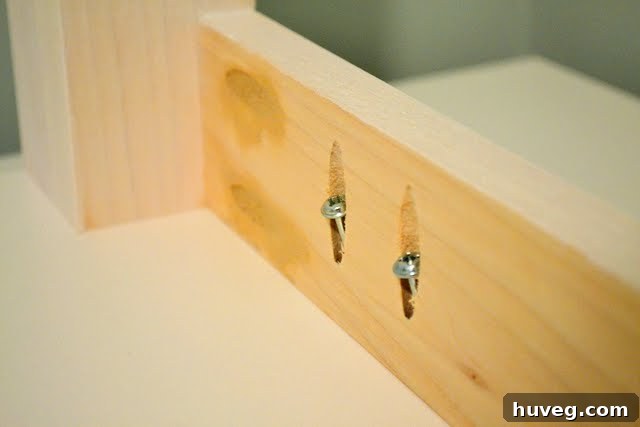
4. For this project, since I was working with boards that were 3/4 inches thick, the correct choice for pocket hole screws was unequivocally 1 1/4 inch screws. Trust me on this one; you absolutely do not need 1 1/2 inch screws, as they will undoubtedly protrude through the surface of the wood, ruining the finish and potentially weakening the joint. However, in a classic DIY learning moment, I initially purchased the incorrect longer screws. Resourcefulness being key, I did use these 1 1/2 inch screws in specific instances where the angle of the joint allowed, such as when connecting the 1x3s to the 3×3 posts, leveraging the angled entry point to prevent the screw from poking through the visible surface. This highlights the importance of precise screw length for clean, strong pocket hole joinery and the ability to adapt when minor missteps occur.
Assembling the Sturdy Framework
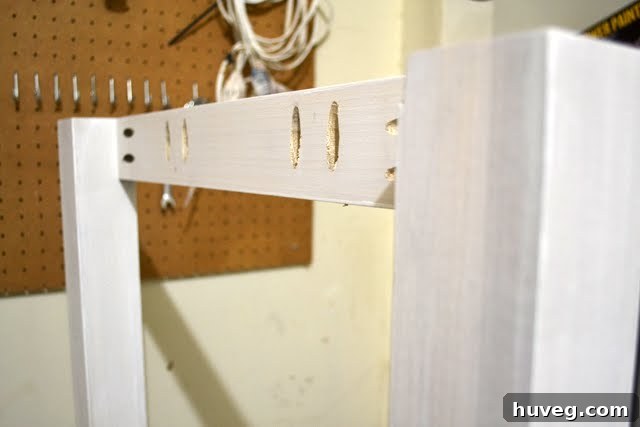
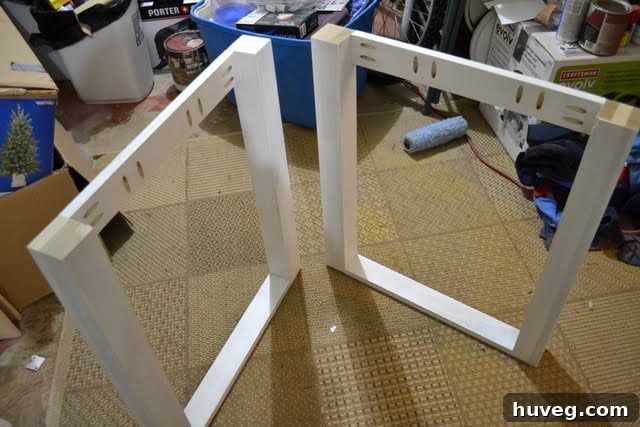
5. With all the pieces precisely cut, pocket holes drilled, and initial priming complete, it was time for the satisfying stage of assembly. I started by using the 3×3 posts as my foundational elements. Then, a 1×3 piece cut to 18 5/8 inches was securely wedged horizontally between the posts, forming a robust cross-support. A second 1×3 piece, cut to the same length, was positioned vertically along the top, serving as the primary support for the tabletop. This creates a highly stable and strong frame, crucial for a desk that will endure daily use. The visual aids below further illustrate how each side of the desk frame came together, providing a clearer understanding of the structural components and their placement.
Learning from Mistakes: The Power of Simple Marking
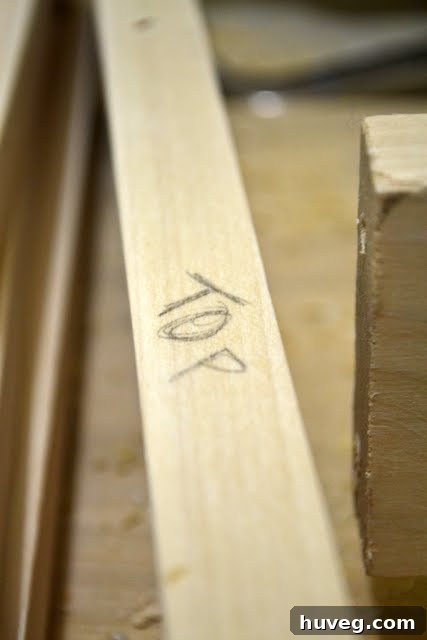
6. As I shared previously, during the construction of the first desk, I made a common DIY error: I inadvertently screwed in one of the leg supports in the wrong direction. This taught me a valuable lesson. For desk #2, I ensured this mistake wouldn’t be repeated by implementing the simplest yet most effective solution: clearly marking the “TOP” on the relevant pieces. It’s a small step that adds mere seconds to the process but can save significant time and frustration. Despite the previous experience, I almost made the same error again on the second desk, but those bold markings served as a critical reminder and saved me from redoing work. This incident underscores that even experienced DIYers benefit from basic organizational techniques; sometimes the simplest solutions are the most powerful.
The Grand Finish: Smoothing, Sealing, and Painting
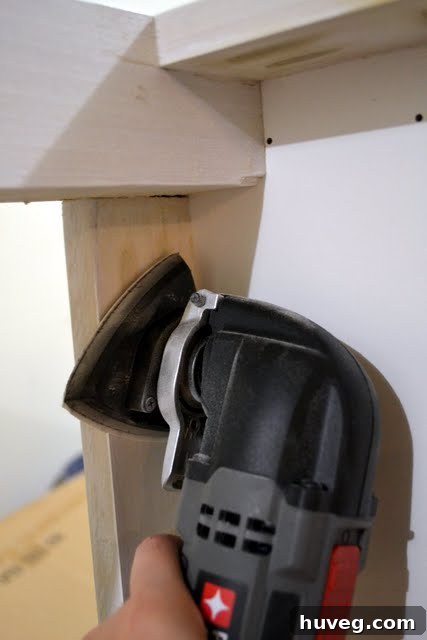
7. Unsurprisingly, desk #2 came together much more swiftly than the first, benefiting from the learned experience and the absence of pesky mathematical re-calculations. Once both frames were fully assembled and secure, I proceeded to attach the desk tops firmly to the frames. The next crucial steps involved perfecting the surface and finish. Any visible screw holes or imperfections were meticulously filled with high-quality wood filler, ensuring a flawlessly smooth surface. Gaps or cracks along the seams were sealed with flexible caulk, creating a seamless and professional appearance. Finally, I applied two smooth, even coats of ultra white satin paint. To achieve the absolute smoothest, most professional finish, I used a fine 220-grit sanding sponge to lightly sand between each coat of paint. This step is often overlooked but dramatically enhances the final look and feel of your furniture. While the finished table top isn’t an exact match to the ultra white paint, the difference is negligible and doesn’t bother me enough to warrant another trip to the store for custom color matching. Perhaps my perfectionist tendencies are mellowing with more DIY experience, or I’m simply too content with the accomplishment to sweat the small stuff! During these finishing stages, my Porter-Cable oscillating tool proved incredibly versatile and handy for various tasks, from sanding in tight corners to cutting small pieces. (By the way, if you’re curious, the winner of last week’s giveaway featuring this versatile tool can be found here).
Future Enhancements: Contemplating Drawers and L-Shape Configurations
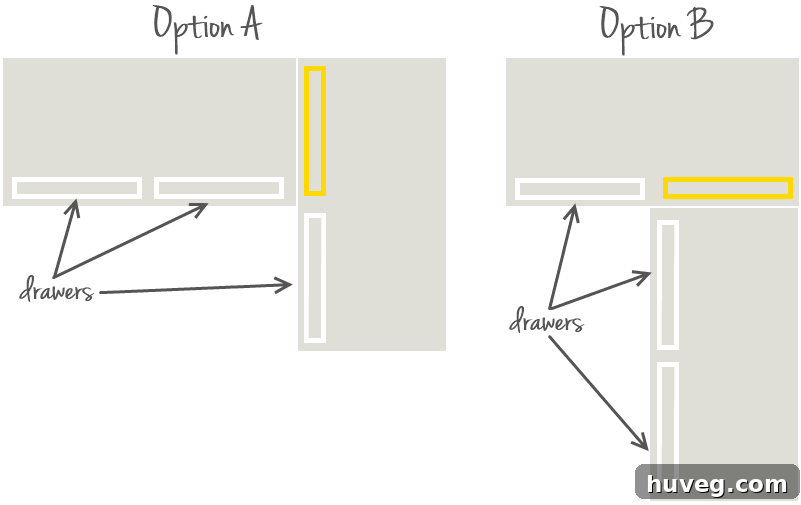
I’m still actively deliberating whether to integrate custom drawers into the desk design, similar to these inspiring plans. However, I want to allow the desk to live in its intended space for a while before committing to such a significant addition. The final decision on drawers will heavily depend on the specific L-shape configuration I ultimately choose for the study-o. Determining which L-shape works best will dictate potential drawer locations, as some areas might be unsuitable for a conventional drawer (or perhaps perfect for a cleverly concealed, secret compartment!). Refer to the diagram below for a clearer visual of my thought process and the various drawer options being considered. If I decide against drawers, the modification is simple: I would merely need to add another 1×3 board to the front of the frames to neatly hide any internal imperfections, creating a clean, finished facade. As you might have observed from the current photographs, I’ve initially opted for “Option B” for the desk placement, and I plan to live with it for a few days to truly assess its functionality and aesthetic appeal before making any permanent design choices. This modular approach allows for flexibility and adaptation, ensuring the desk perfectly integrates into the evolving “study-o.”
The Pride of Creation: A Functional and Beautiful Workspace
So, there you have it: a detailed guide on how to build a simple, yet incredibly sturdy and highly functional custom desk. This project embodies the satisfaction of DIY – crafting something with your own hands that precisely meets your needs and reflects your personal style. And simply because I am so immensely proud of building my very first significant piece of furniture from scratch, let’s take another moment to admire the finished product:
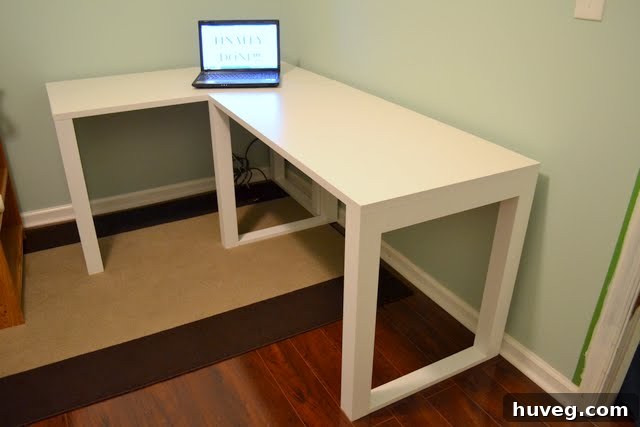
I am eagerly anticipating the next phase of this room transformation, which involves finding the perfect paint color for the walls to complement these beautiful desks and create a cohesive, inspiring atmosphere. However, having these custom-built desks in place represents a monumental leap forward from where I was just a few weeks ago. The core workspace is now established, providing me with the luxury of taking my time to choose the ideal wall color. It’s not as if I’m short on other exciting projects to tackle in the meantime! Who’s ready to embark on a complete bathroom makeover next? Building your own furniture is incredibly rewarding, offering both a sense of accomplishment and a truly personalized space. I encourage anyone considering a similar project to dive in; the journey is as rewarding as the destination.