Start Your Floating Deck: Design and Layout Fundamentals

Embarking on a backyard transformation can be one of the most rewarding DIY projects, and building a floating deck is a fantastic way to create an inviting outdoor living space. This is the inaugural post in a comprehensive series where we’ll guide you through every step of constructing a beautiful, freestanding deck right in your own backyard. From initial planning and budgeting to design choices, material selection, and overcoming common challenges, you’ll find the complete journey documented right here.
- Part 2: Framing the Deck & Essential Waterproofing
- Part 3: Innovative Diagonal Decking Installation
- Part 4: Finishing Touches and Landscaping Around Your Deck
- Part 5: Crafting Custom Light Pole Planters
Hello, fellow DIY enthusiasts! This project, or rather, this detailed series, has been a passion project a long time in the making. I’m thrilled to share the journey of building my new floating deck, also commonly known as a freestanding or ground-level deck. Before we dive into the nitty-gritty of construction, I want to walk you through the crucial decision-making process that shaped this entire endeavor. This initial post will cover extensive research, strategic budgeting, and thoughtful design – elements vital for any successful outdoor renovation project.
As we navigate through these planning stages, I encourage you to consider how these insights might apply to your own potential backyard projects. My primary objective is to demystify the ‘where, what, and why’ of building a floating deck, especially when facing unique challenges like a sloping yard or integrating with an existing concrete patio. If you have questions as we progress, rest assured I’ll do my best to address them in upcoming posts within this series.
A quick legal disclaimer: This content serves as a personal chronicle of my DIY projects and the lessons I’ve learned. My retrospective thoughts often reveal areas for improvement, and therefore, this should not be taken as an exhaustive professional guide for every conceivable scenario. Building codes, permitting requirements, and local regulations vary significantly, and no two homes are identical. It is imperative that you conduct your own thorough research and consult with local authorities to make informed decisions for your specific property. I am not a licensed professional. All information provided and utilized is at your own discretion and risk. Always prioritize safety: wear appropriate protective gear when using power tools, and understand that such tools can be dangerous if mishandled. Please exercise extreme caution and common sense in all your DIY endeavors.
The Journey of Backyard Upgrades: Setting the Stage for the Deck Project
For those who have followed my home improvement journey, much of this will be familiar. However, for new readers, it’s important to understand the significant transformation my backyard has undergone to reach this exciting new phase. For many years, my primary focus was on interior renovations – a common inclination, as we tend to prioritize the spaces we interact with daily, like the kitchen or living room, over areas that can be more easily overlooked, such as an overgrown backyard.
Yet, I consistently dedicated time each year to incremental improvements in the outdoor space. These ‘baby steps’ were crucial in building momentum and confidence. My initial projects included aggressive ivy removal, the strategic clearing of troublesome pine trees, and the arduous task of filling in a significant sinkhole to level my yard. These foundational improvements paved the way for more cosmetic and functional additions, such as planting a vibrant back hedge, constructing a cozy fire pit area, and establishing a charming corner garden. By late last year, everything began to coalesce. It was finally time to tackle the two major outdoor projects I had envisioned for so long: a storage shed and this much-anticipated floating deck.
Like any substantial undertaking, these projects demanded a delicate balance of financial resources, time commitment, labor, and extensive research. The sheer scope can feel incredibly daunting, often leading to procrastination. I confess, I’m quite skilled at finding logical justifications to postpone when faced with numerous complexities!
Timing and Budgeting: The Art of a Juggling Act in Large-Scale DIY
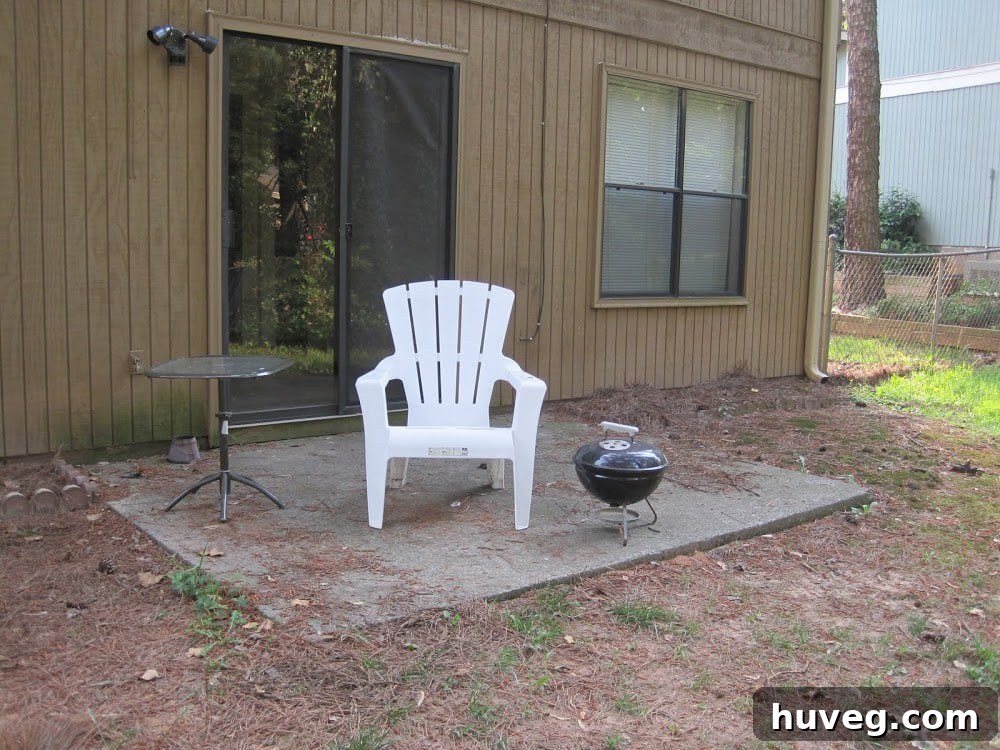
My grand vision for the backyard included building a dedicated shed for much-needed storage towards the rear of my property. I began planning for this shed last summer, and that project is also currently underway, documented in its own dedicated series. Simultaneously, I harbored a long-term goal of eventually building a floating deck adjacent to the existing concrete slab next to the house, envisioning a cohesive outdoor living space.
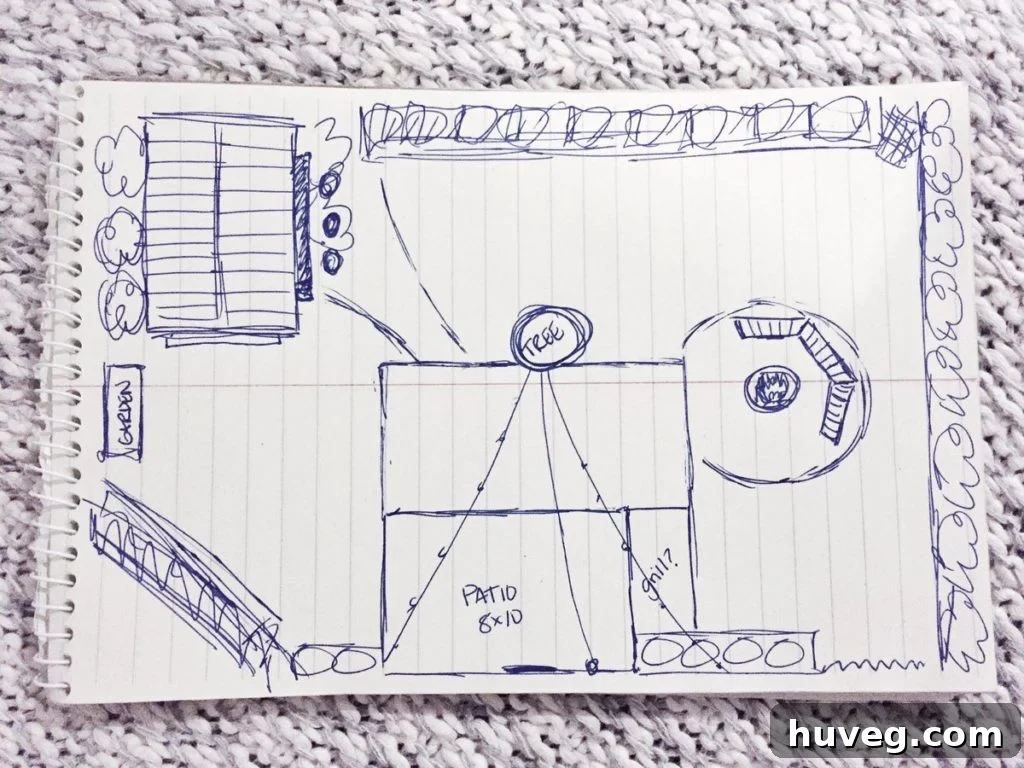
Initially, I conceived these two significant projects—the shed and the deck—as occurring on entirely separate timelines, spaced out over perhaps several years. However, a fortunate turn of events during the shed’s planning phase drastically altered this perspective: I secured a sponsor for the shed build. This was a monumental development, significantly easing the logistical complexities related to weather, budget constraints, and material procurement. A heartfelt thank you goes out to Wood Its Real for their invaluable support! This sponsorship prompted a critical realization: since I had already saved a substantial amount for the shed, I could strategically reallocate those funds. By undertaking both projects concurrently during one intense, yet efficient, summer of building, I could maximize cost savings and efficiency. Many materials would be shared between the two builds, and crucially, the skills and techniques acquired from one project would remain fresh and applicable to the other, fostering a more seamless learning curve. Inspired by this synergy, I quickly sketched out a preliminary plan detailing how these ambitious projects might intertwine and progress.
This revised approach seemed incredibly promising, especially if I could enlist K’s expertise in design and planning. The collective effort, I reasoned, would be well worth it, provided we avoided any serious mishaps with the array of power tools at our disposal. Fortunately, K is not only a professional design engineer but also shares my enthusiasm for power tools, making the ‘sell’ quite easy. With his analytical mind and my vision, we knew we could develop a truly robust and functional plan for our outdoor sanctuary.
Elevating Outdoor Living: Thoughtful Floating Deck Design
My primary design objective for the new floating deck was to foster a seamless and natural flow throughout the backyard. The aim was to create intuitive transitions: from the patio door to the new deck, and from the deck to the fire pit area, ensuring that each space felt connected yet distinct. This approach would maximize the yard’s potential for an open, entertaining ambiance, while still defining separate, functional zones for various activities:
- Existing Patio: Designated as the ideal spot for grilling and outdoor cooking.
- New Floating Deck: Envisioned as a comfortable and stylish seating area, perfect for relaxation and socializing.
- Fire Pit Area: The go-to zone for evening gatherings, s’mores, and classic fire pit shenanigans.
Integrating all these elements efficiently into a single backyard, especially around the yard’s sole remaining mature tree, presented a delightful design challenge. While most of the original trees were removed for practical reasons, preserving this central tree was a deliberate choice. It serves as a natural anchor for the new outdoor lighting scheme, which will beautifully tie all the separate zones together – because, let’s be honest, well-placed patio lights truly elevate any outdoor space! My initial sketch also included the new storage shed and a dedicated area for a vegetable garden. However, once I began physically marking out the dimensions in the yard, it quickly became apparent that the patio I had sketched was disproportionately large for the space.
With K’s professional design input and keen eye for practical details, we collaboratively developed an even more refined and efficient plan:
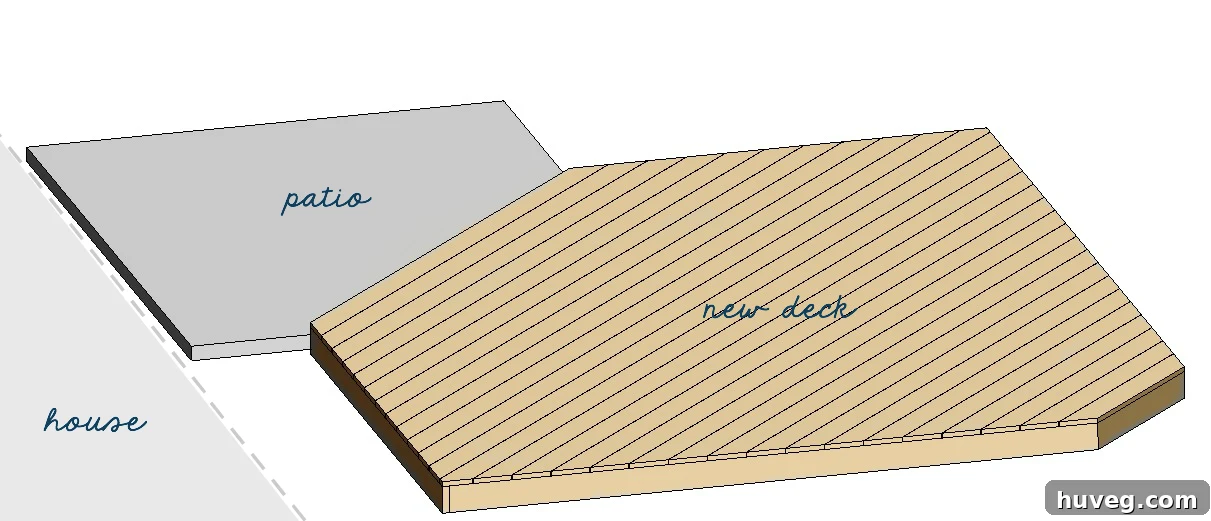
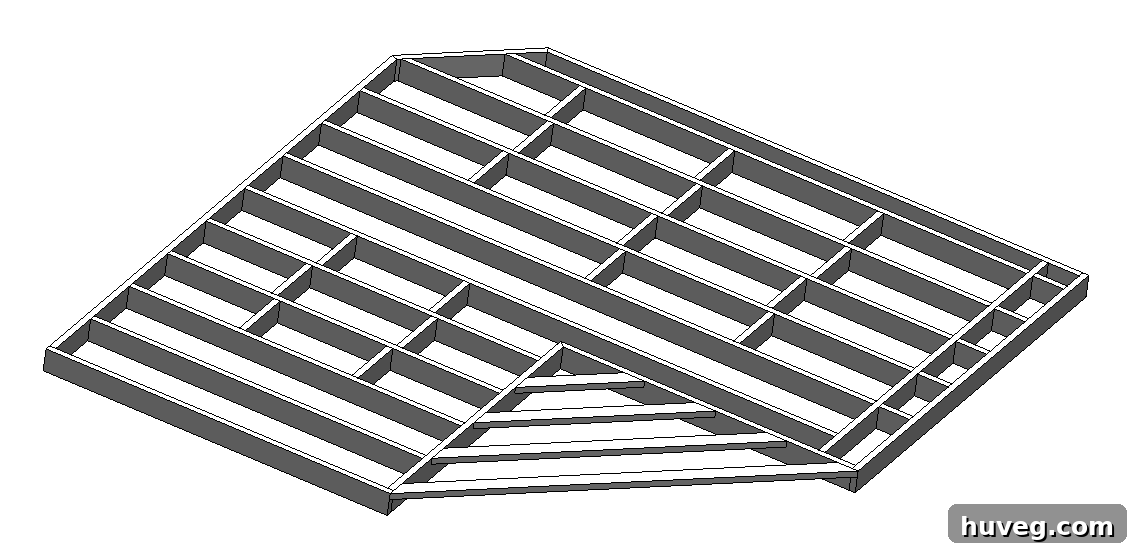
While this updated deck design doesn’t span the entire length of the existing patio, I actually prefer its placement; it perfectly nestles between the patio and the fire pit. A key feature of this new deck plan is the angled right corner. This thoughtful design element isn’t just aesthetic; it’s highly functional, allowing ample space for the lawnmower to pass through easily. This was a critical point for K, and since I personally benefit from not having to mow, I was more than happy to accommodate! With this optimized design, the shed and vegetable garden zone feel slightly more secluded from the main patio and deck areas, yet they still maintain a cohesive relationship within the overall backyard layout.
Navigating Slope Challenges: Designing for Drainage and Stability
As of 2016, my yard received a significant fill, but a distinct slope towards the back was intentionally preserved. This design choice was made for a crucial reason: effective water runoff management. My neighbor’s property to the left is situated at a higher elevation than all the others, which means rainwater naturally flows in a specific direction through and out of my yard. Altering this grade significantly would risk disrupting this natural water flow, potentially leading to erosion of the valuable fill dirt and compromising the stability of my landscaping. To further mitigate future erosion problems, I also strategically planted a hedge line in the lower areas of the yard, providing an additional layer of protection.
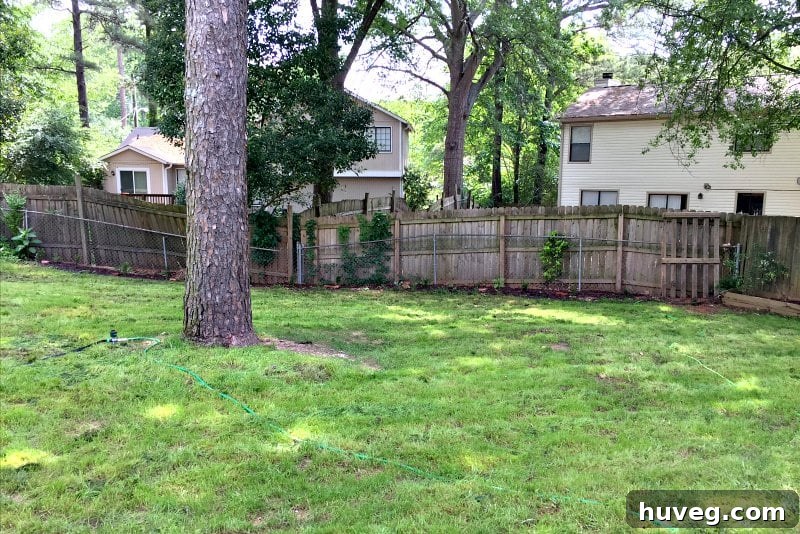
Similarly, almost all hardscaping elements in the yard, including existing patios and even a DIY concrete slab for trash bins, incorporate a subtle slope for the same fundamental reason – drainage. I confirmed this principle on my own patio using a level, discovering that the right corner is indeed the lowest point. The plan for the new floating deck is to seamlessly continue this existing slope. While this means the deck won’t be absolutely “perfectly” level in the strictest sense, the subtle grade will be practically unnoticeable to the eye, ensuring efficient water management without compromising aesthetics or functionality.
Solid Ground: Choosing the Right Foundation for a Floating Deck
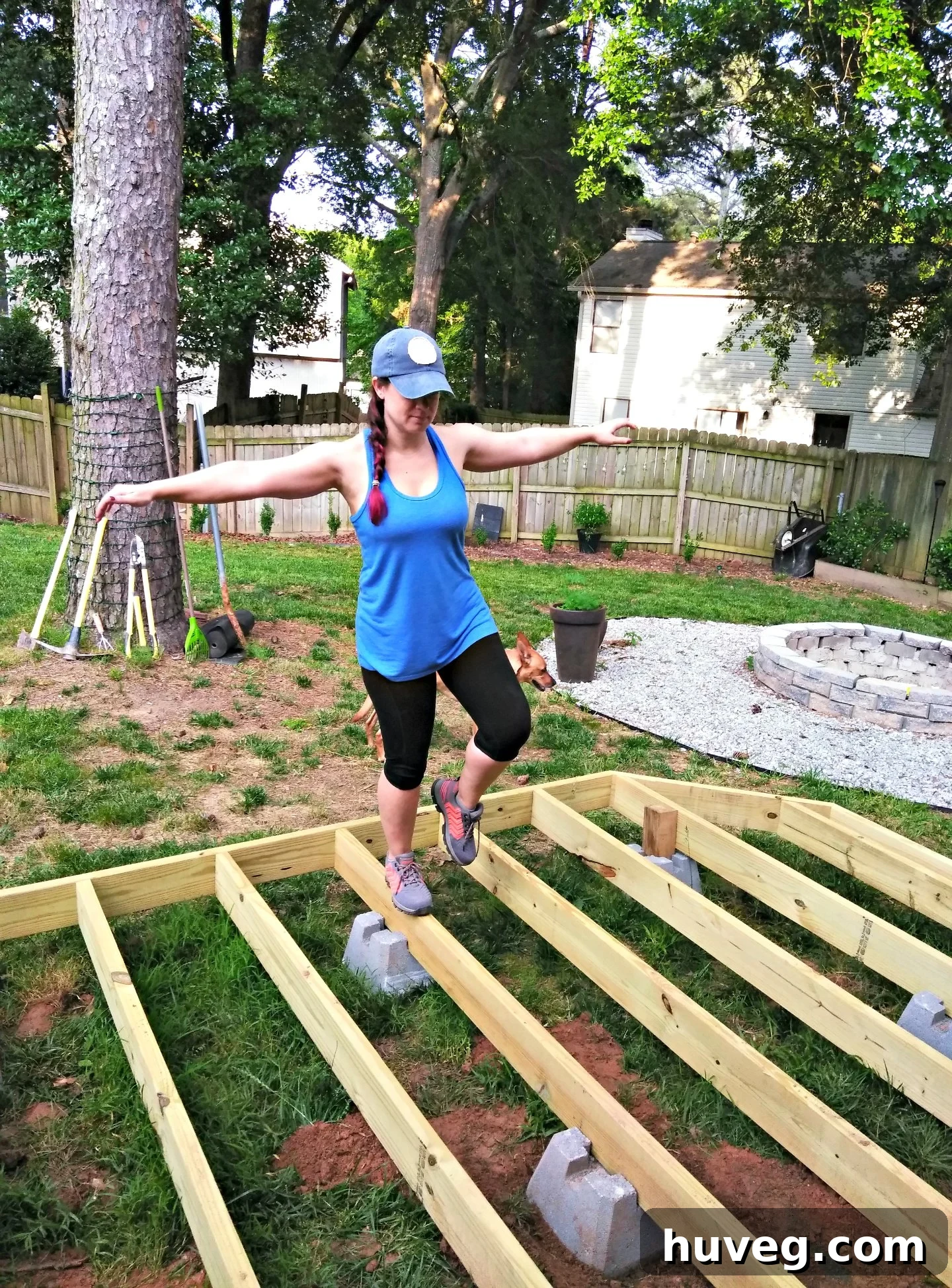
Building a robust and level foundation is paramount for any deck, and a floating deck is no exception, especially when contending with varying ground levels and slopes. After extensive research into suitable foundation solutions, I determined that precast pier blocks were the optimal choice for my project. These blocks, also widely known as deck blocks or Handi-blocks, offered the best combination of availability, ease of use, and adaptability for my specific site challenges.
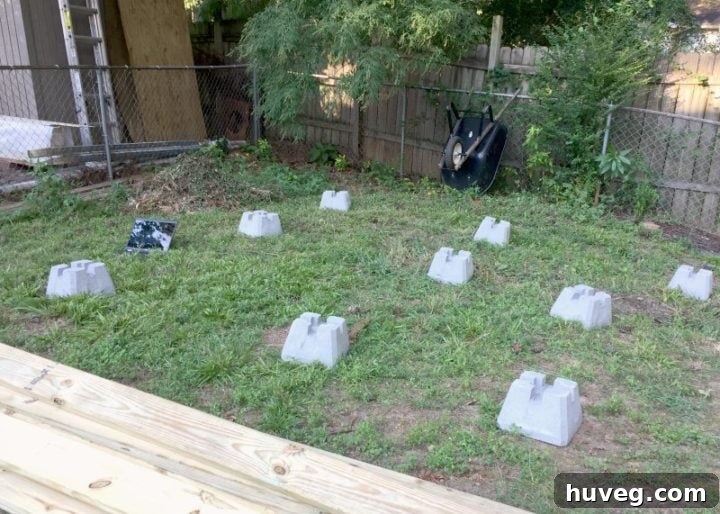
Today’s market offers a wide array of foundation block options, each with slight design variations, including adjustable models. The most significant advantage of using these precast blocks is the considerable reduction in excavation work, minimizing the need for extensive digging. While the primary drawback I encountered was a scarcity of examples detailing their use on significantly uneven ground, and the fact that some specialized types would require a special order, the readily available concrete versions at Home Depot and Lowe’s made them a practical choice. In retrospect, I ponder whether experimenting with different block types – perhaps one for the shed and another for the deck – might have offered valuable comparative insights. I anticipate future opportunities to test various foundation blocks in new projects or assisting friends.
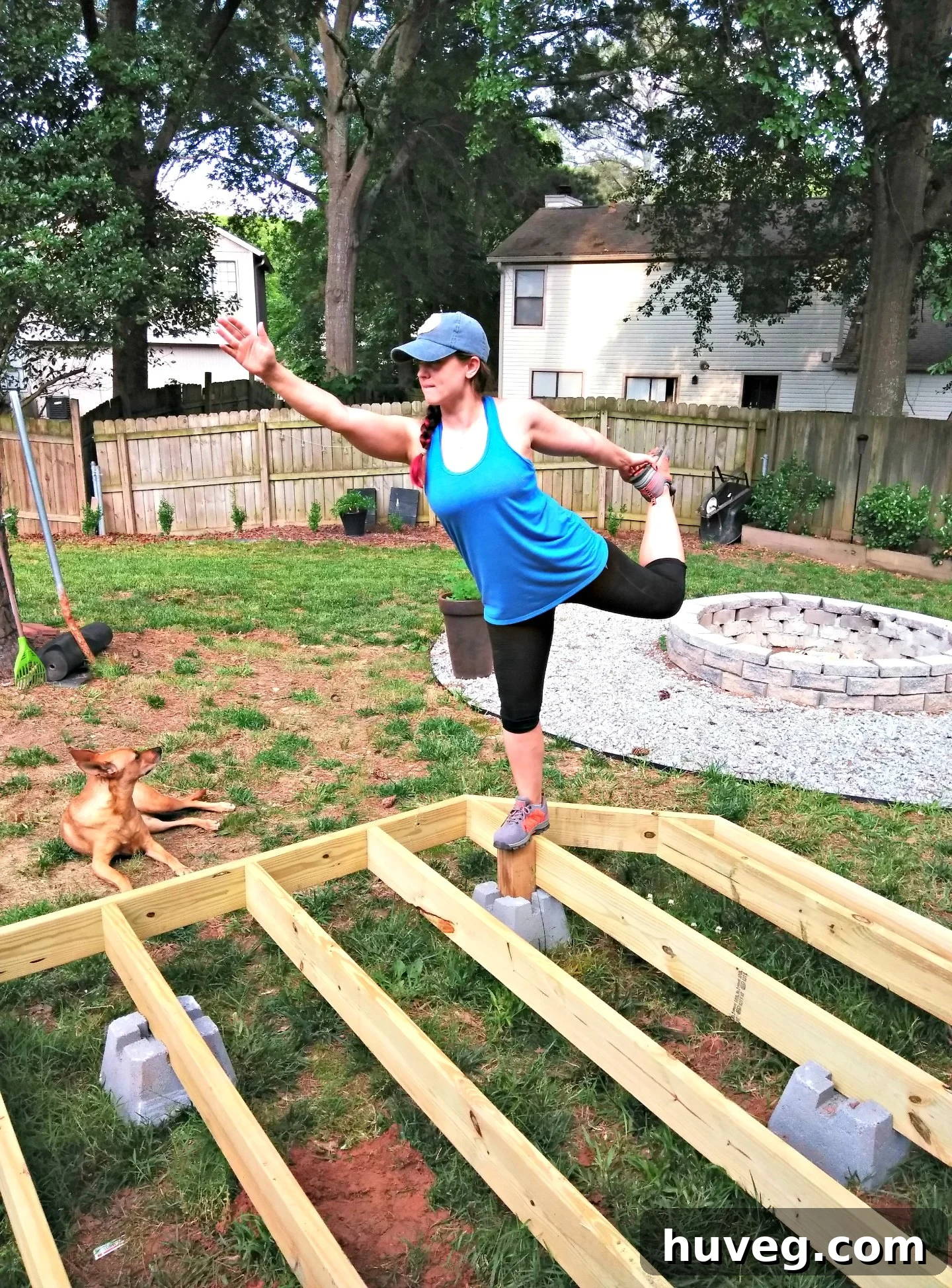
Each pier block features a distinct notch on top, designed to securely accommodate a 2x- joist or a 4×4 post. Given that the floating deck will either rest directly on the ground or hover just above it, these blocks provide crucial extra support. Where the blocks are too high to sit flush, I’ve partially dug them into the soil to achieve the desired grade. For the farthest corner of the deck, closest to the fire pit, the ground level was so low that even a block sitting flush wasn’t sufficient; here, a single 4×4 post was necessary to achieve the correct height. On top of these foundational supports, a robust framework of 2×6 lumber will be constructed, which will then support the final deck boards. And, of course, a moment of awkward celebratory yoga will surely follow once that critical framing step is complete!
The Essential Guide to Ground Contact Lumber for Deck Durability
One of the most critical considerations for this floating deck project, particularly because much of its structure will be in close proximity to or directly touching the ground, is the exclusive use of “ground contact” lumber for the entire support framework (everything excluding the surface deck boards). Many DIYers are familiar with “pressure-treated” or “PT” lumber, which undergoes a chemical treatment process to significantly enhance its resistance to rot, decay, and insect infestation compared to untreated wood. PT lumber is generally recommended for almost any outdoor project exposed to the elements.
However, it’s crucial to understand that a newer, more stringent standard has emerged, and retailers are increasingly stocking “GC” (Ground Contact) pressure-treated lumber. For instance, my nearest Home Depot has virtually transitioned its entire treated lumber inventory to GC, while Lowe’s offers a mix of both. You might notice a subtle color variation between standard PT and GC lumber, though this isn’t always a definitive identifier.
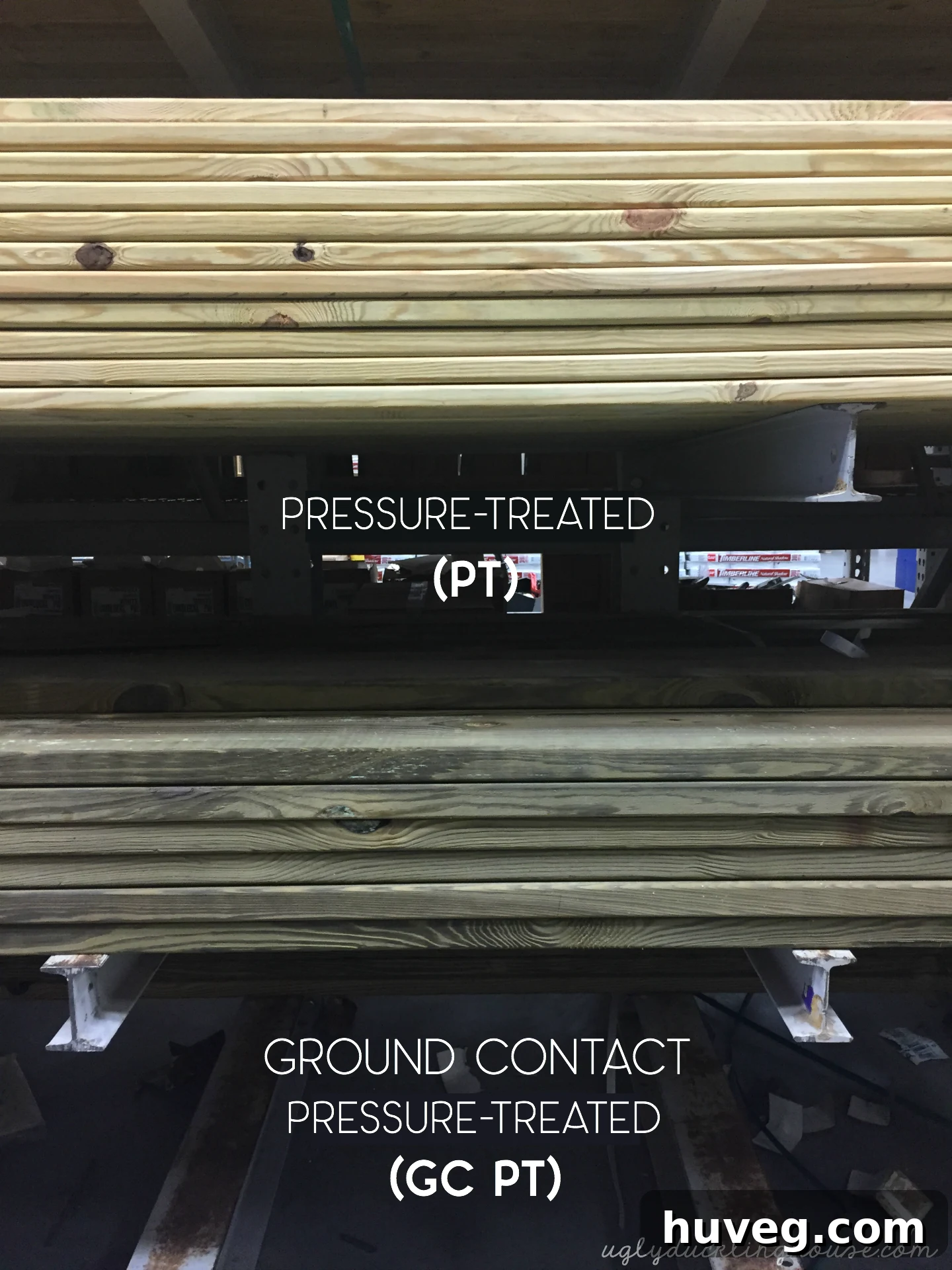
The primary distinction lies in its intended application. This helpful graphic provides a detailed breakdown based on usage scenarios. However, a simple rule of thumb for ground contact lumber is this: if any part of your lumber will be touching the ground, or even within six inches of the ground, it absolutely requires ground contact lumber. Furthermore, if the lumber will be consistently exposed to higher levels of moisture, or if it’s part of a structure that would be particularly challenging to access or repair in the future, ground contact lumber is the smarter, more durable choice. In essence, for maximum longevity and peace of mind, opt for GC lumber whenever you’re dealing with moisture-prone environments or foundational elements.
As this series unfolds, I’ll delve deeper into specific facts about both GC and general PT lumber, including fastening techniques and maintenance tips. There’s a wealth of information to cover! The importance of proper lumber selection, especially for a ground-level deck, warrants this initial emphasis, and I’ll illustrate these principles with practical examples as the build progresses.
Seamless Integration: Partially Covering the Existing Patio with the New Deck
As evidenced by the detailed digital rendering shared earlier, a section of the new floating deck design strategically extends over a small corner of the existing concrete patio. This integration requires a thoughtful approach to ensure long-term stability and prevent moisture-related issues. I found a highly informative tutorial from Family Handyman, and I plan to incorporate several of their ingenious ideas into my build. Essentially, the strategy involves attaching 2×4 support sleepers directly to the concrete patio, using – once again – ground contact lumber for enhanced durability, over which the main deck structure will then be built.
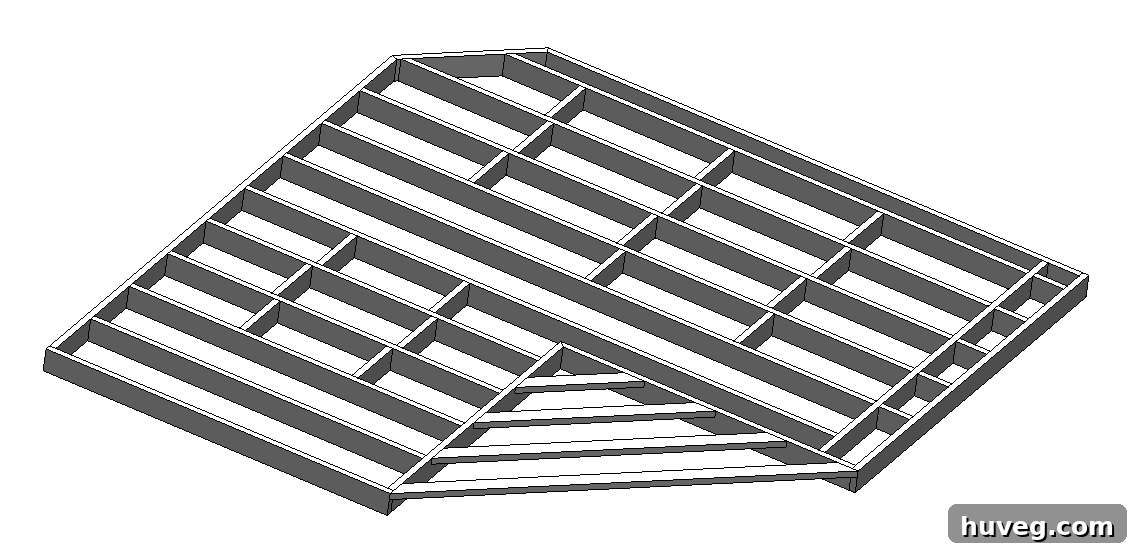
A significant concern when building wood directly over a concrete slab is the potential for water buildup in the interstitial space. This trapped moisture can accelerate wood rot, even in treated lumber. To counteract this, my plan includes raising the framework slightly in these areas using plastic shims. These shims will create a small air gap between the treated wood and the concrete, promoting airflow and allowing any moisture to drain away effectively, thereby significantly extending the lifespan of the deck structure.
Water is the Enemy: Comprehensive Moisture Management Strategies
Reviewing all the planning elements for this floating deck project – from the selection of ground contact lumber and the strategic incorporation of a slope, to the use of plastic shims and ensuring adequate drainage – one overarching theme consistently emerges: combating moisture. It has become clear that water, in all its forms, is indeed the biggest adversary to the longevity of any outdoor wood structure. Every design decision and material choice has been made with the explicit goal of mitigating water damage.
While some might suggest I am being overly cautious, I firmly believe that this proactive and comprehensive approach to moisture management is a sound investment. By meticulously planning for drainage, ventilation, and using appropriately treated materials, my hope is to construct a deck that not only looks fantastic but also endures for many years to come, standing strong against the elements.
Navigating the Labyrinth of Permits: A DIYer’s Approach
I anticipate that the question of building permits will arise frequently throughout this series, so let’s address it upfront. For this specific floating deck project, I did not obtain a building permit. My decision was made after conducting extensive research and confirming that, based on my local guidelines, a permit did not appear to be required for a freestanding, ground-level deck of this nature. While there are widely adopted standards, such as the International Residential Code (IRC), the entire permitting landscape is remarkably complex and highly localized. It took considerable time and effort to decipher the critical nuances:
- What the codes are: Understanding which specific standards and guidelines are used to determine permitting requirements (e.g., local amendments to national codes).
- Where they apply: Distinguishing between city, county, and state regulations, as they can differ significantly.
- When they were adopted: The effective date of your local ordinances matters, as rules can change over time.
- Who enforces it: Recognizing that local code enforcement officers often have some discretion in interpreting and enforcing regulations, affecting approvals and violations.
Prior to commencing any work, I thoroughly reviewed my local guidelines. If you cannot find specific ordinances for your city, begin by researching county regulations, and so forth, expanding your search as needed. In my experience, my county appears to have less restrictive regulations for projects like these compared to some other areas. Regardless, your safest and most reliable course of action is always to directly contact your local permit office and inquire about specific requirements for your project. Regardless of whether a permit is required or not, my unwavering commitment is to build everything, including both the deck and the shed, with structural integrity and sound construction practices as top priorities.
What’s Next: From Vision to Foundation
That was quite an extensive introduction, wasn’t it? We’ve covered the crucial groundwork of decision-making, budgeting, design, and foundational knowledge, all before even showing you the actual construction process! But fear not, the real building begins very soon. In the next thrilling installment of this series, I’ll reveal how we translated the detailed plans and strategic decisions into tangible progress, transitioning from the initial layout marked in the yard:
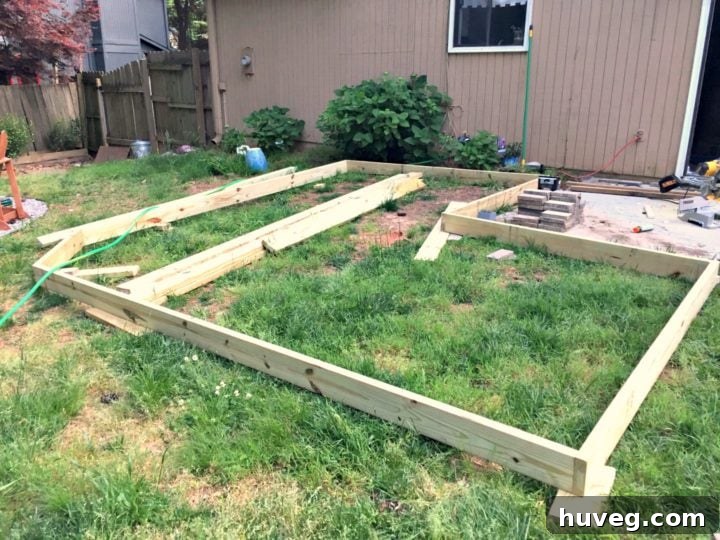
…to the robust and ready-to-build framework:
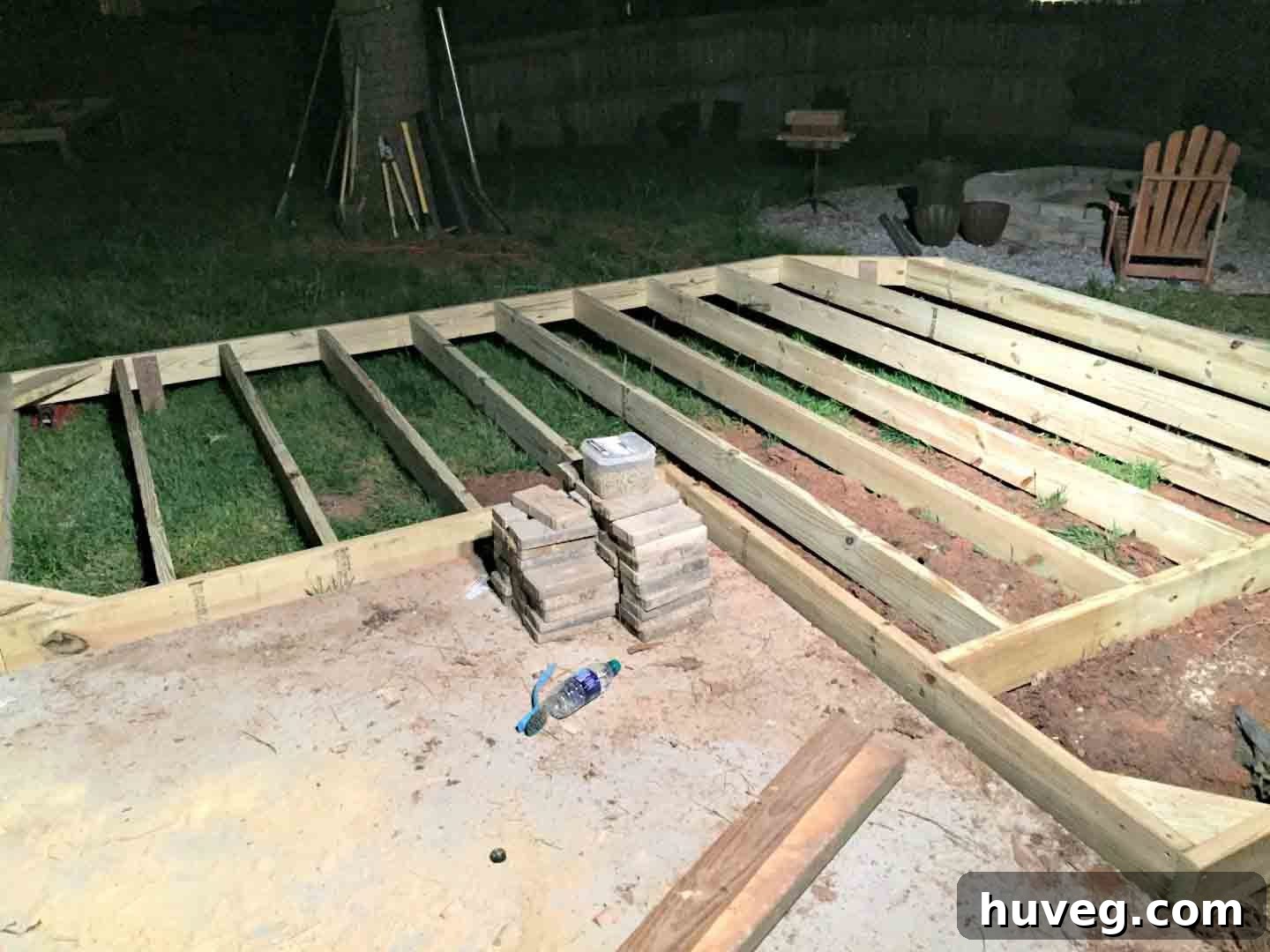
Stay tuned for practical tips, challenges, and triumphs as we bring this floating deck to life!
DIY Floating Deck Series