6 Simple DIY Ideas for Effortless Covered Porch Plants

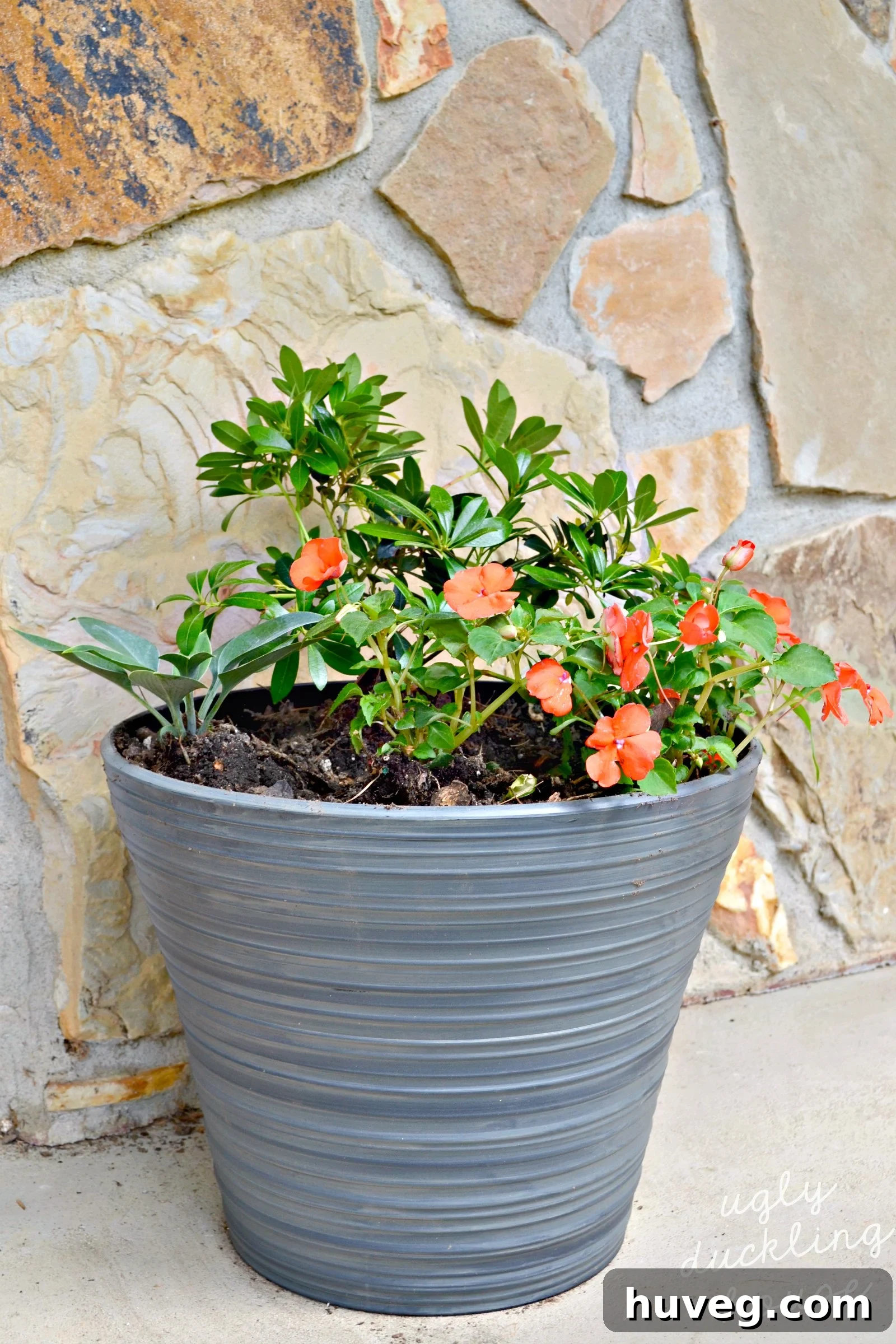
Happy Saturday, fellow home and garden enthusiasts! As I eagerly anticipate cooperative weather to continue progress on the shed this weekend, I’m thrilled to share an exciting update on our front porch. This often-overlooked area is finally getting the stylish refresh it deserves, transforming from a mere entryway into a vibrant, welcoming space that truly reflects our home’s character.
Just a few weeks ago, I opened up about how, despite numerous repairs and essential structural updates to the front porch, I hadn’t truly elevated its aesthetic appeal. Don’t get me wrong; it has come a remarkably long way from its humble beginnings:
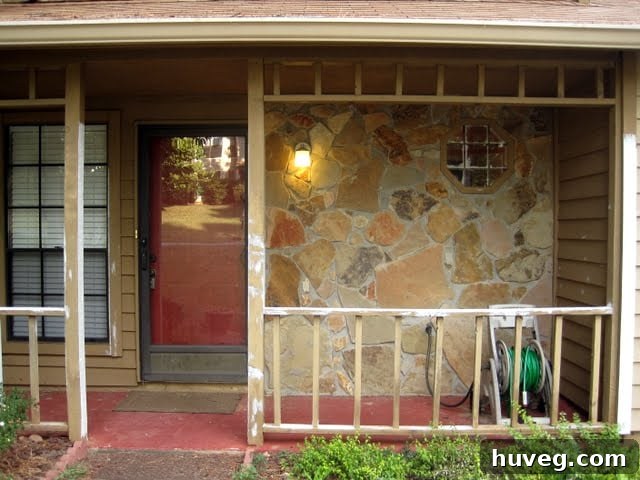
With much of the house now in advanced renovation stages and my growing desire to entertain friends and family after years focused solely on repairs, it’s time to infuse some real personality and charm into the entry area! This journey began recently with the introduction of two striking new planters brimming with seasonal color. As I completed this project, it occurred to me that these simple yet impactful tips could be incredibly useful for anyone looking to enhance their outdoor spaces. So, if you’re ready to transform your porch or patio, read on for practical advice that guarantees better results for your container gardens.
6 Expert Tips for Stunning Porch and Patio Planters
1. Know Your Environment and Your Gardening Habits
Embarking on a successful container gardening journey starts with a deep understanding of two key factors: your specific outdoor environment and your personal plant care routine. Over the years, I’ve learned that forcing a plant into an unsuitable environment or expecting myself to adhere to an unrealistic watering schedule is a recipe for disappointment. The key is to match the plant to your lifestyle and location, not the other way around.
Before you even step foot in a nursery, take a moment to assess your porch or patio space. Consider these vital questions:
- **Sunlight Exposure:** What kind of sunlight does the area receive naturally? Is it direct sun for several hours, or primarily indirect, dappled light? How many hours of sunlight does it get per day? A covered porch, for instance, typically offers significant shade, meaning most light will be indirect.
- **Weather Exposure:** Is your chosen spot fully exposed to rain, wind, and harsh elements, or is it protected and likely to remain dry even during a downpour? This impacts how often you’ll need to water manually.
- **Mobility Needs:** Will the planters need to be moved frequently, perhaps with the changing seasons or for events? Lighter containers or those with built-in wheels might be a consideration.
- **Maintenance Reality:** Be honest with yourself about your plant maintenance habits. Do you enjoy daily watering, or are you looking for a more “set it and forget it” approach? If you barely have time for yourself, a plant requiring daily attention will likely not thrive under your care.
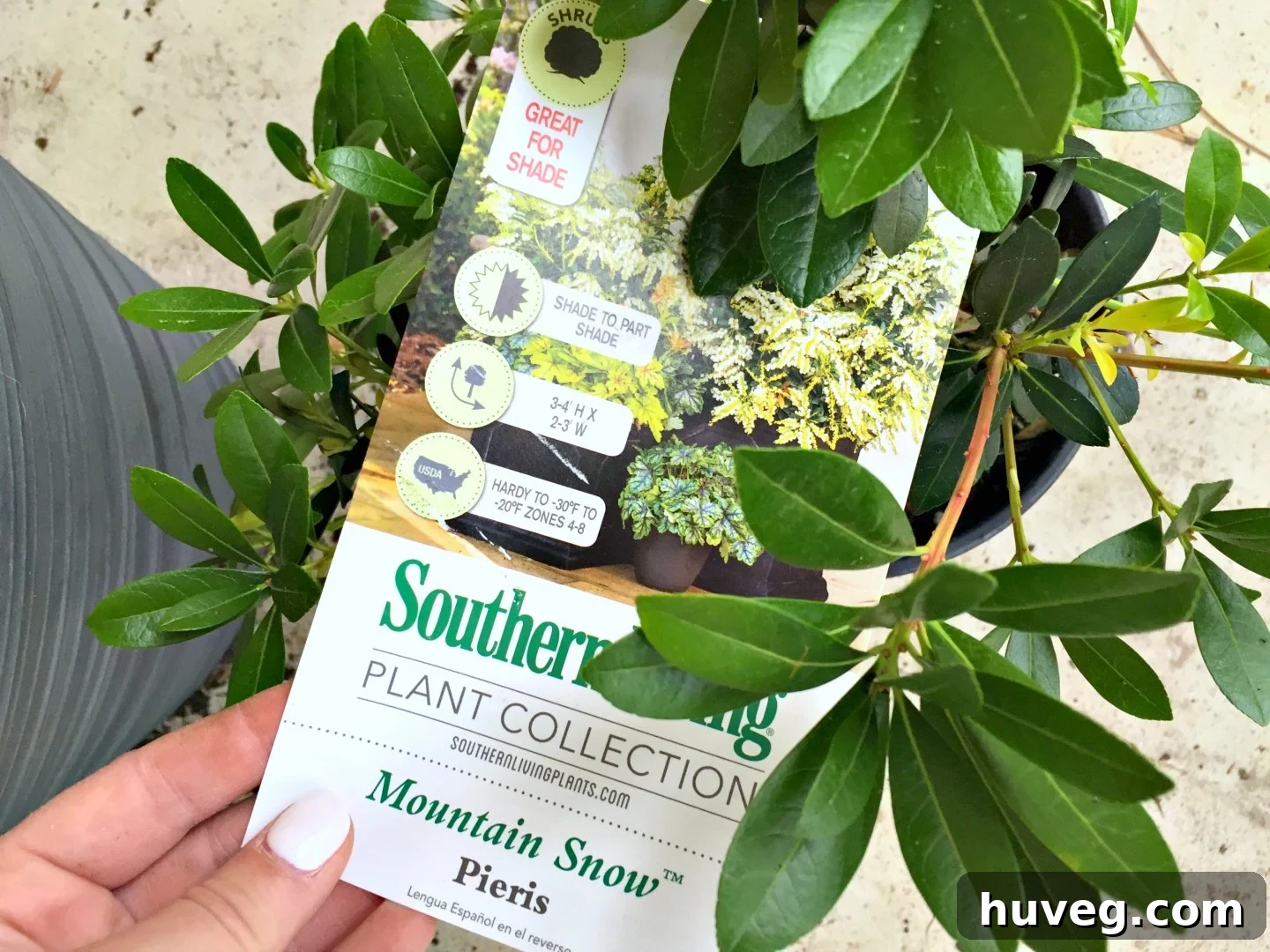
For my covered front porch, the predominant light is indirect, and rain rarely reaches the planters. This means I’m solely responsible for watering, necessitating plants that can tolerate my limited (but consistent) upkeep. Phrases like “full shade,” “partial shade,” and “drought/heat tolerant” become your best friends in the nursery. Resist the temptation to buy a plant solely for its beauty if its care requirements don’t align with your reality. Prioritize compatibility for long-term success; a healthy, thriving plant is always more beautiful than a struggling one.
It’s also crucial to understand your USDA plant hardiness zone. This zone indicates which plants are most likely to survive the typical minimum winter temperatures in your region. Most reputable garden centers stock plants suitable for your local zone, but familiarizing yourself with these zones (you can learn more here) ensures you pick plants that can withstand your area’s humidity and temperature fluctuations year-round, especially for perennials.
What Plants Are Best for Shaded Porches and Patios?
Shaded areas, like covered porches, require plants that thrive without direct, intense sunlight. The good news is there’s a fantastic variety of beautiful, low-maintenance options that flourish in these conditions, bringing lush greenery and vibrant color to your shaded oasis. While specific recommendations might vary slightly with climate, the following list offers excellent starting points for potted plants, generally considered low-maintenance if within their hardiness zone:
- **Sansevieria (Snake Plant):** Extremely low maintenance, architectural foliage.
- **Kalanchoe:** Succulent with vibrant, long-lasting flowers, tolerant of drier conditions.
- **Sedum, Aloe, Hens-and-Chicks, and other shade-tolerant succulents:** Offer unique textures and require minimal watering.
- **Hosta:** Known for their diverse, attractive foliage, from blue-greens to variegated patterns.
- **Lamium (Deadnettle):** Beautiful silver or gold variegated foliage, often with small flowers.
- **Begonias:** Offer a wide range of colors and forms, from tuberous to wax begonias, with stunning blooms or foliage.
- **Ferns:** Classic choice for shade, providing lush, feathery texture.
- **Cypress:** Some varieties can be excellent evergreens for shaded containers.
- **Hellebore:** Early spring bloomers with beautiful, often nodding flowers.
- **Astilbe:** Known for their feathery plumes of flowers in various colors.
- **Fuscias:** Delicate, pendulous flowers perfect for hanging baskets or spilling over containers.
- **Sweet Potato Vine:** Fast-growing, trailing foliage in vibrant greens, purples, and bronzes.
- **Hydrangeas:** While beautiful, many varieties might demand more consistent moisture than some other shade plants.
- **Loropetalum:** I particularly love the deep purple foliage of these plants and their elegant, trailing habit.
- **Lungwort (Pulmonaria):** Attractive spotted or variegated leaves and early spring flowers.
- **Fatsia:** Large, glossy, deeply lobed leaves create a bold, tropical feel.
- **Creeping Jenny (Lysimachia nummularia ‘Aurea’):** Bright chartreuse foliage that spills beautifully.
- **Heucheras (Coral Bells):** Stunning foliage in an array of colors, from amber to deep purple, with delicate flower spikes.
- **Boxwood:** Classic evergreen shrub, offering year-round structure and formality.
- **Musk Geranium:** Offers interesting foliage and subtle blooms.
- **Coleus:** Renowned for their incredibly vibrant and varied foliage colors and patterns.
- **Caladium:** Striking, colorful leaves that bring a tropical splash to shaded areas.
2. The Art of Visual Harmony: Height, Texture, and Color
Creating truly captivating container gardens involves more than just selecting beautiful plants; it’s about arranging them to create visual interest and balance. A popular and effective guideline for achieving this is the “Thriller, Filler, Spiller” rule. This principle suggests incorporating plants with three distinct growth habits into a single container:
- **Thriller:** This is your showstopper – a tall, upright plant that provides a dramatic focal point and adds vertical height to the arrangement. Think tall grasses, upright evergreens, or striking flowering plants.
- **Filler:** These are plants that are full and bushy, designed to fill the body of the container by spreading or growing in attractive clusters. They provide volume and a cohesive backdrop for the thriller. Mounding annuals, compact perennials, or textured foliage plants often serve this purpose well.
- **Spiller:** These are trailing plants that cascade gracefully over the edge of the container, softening its hard lines and adding a sense of abundance and flow. Examples include sweet potato vines, creeping jenny, or ivy.
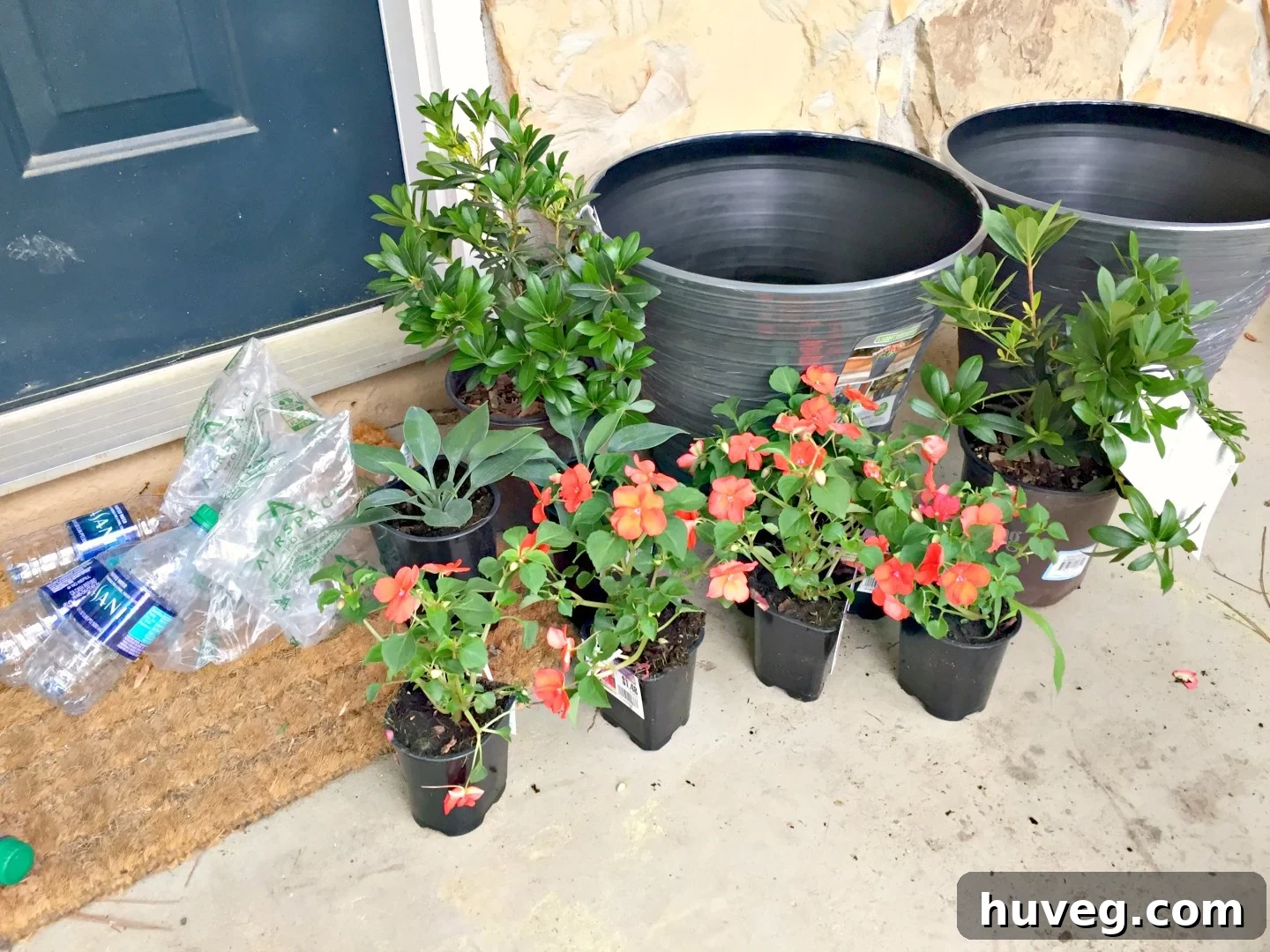
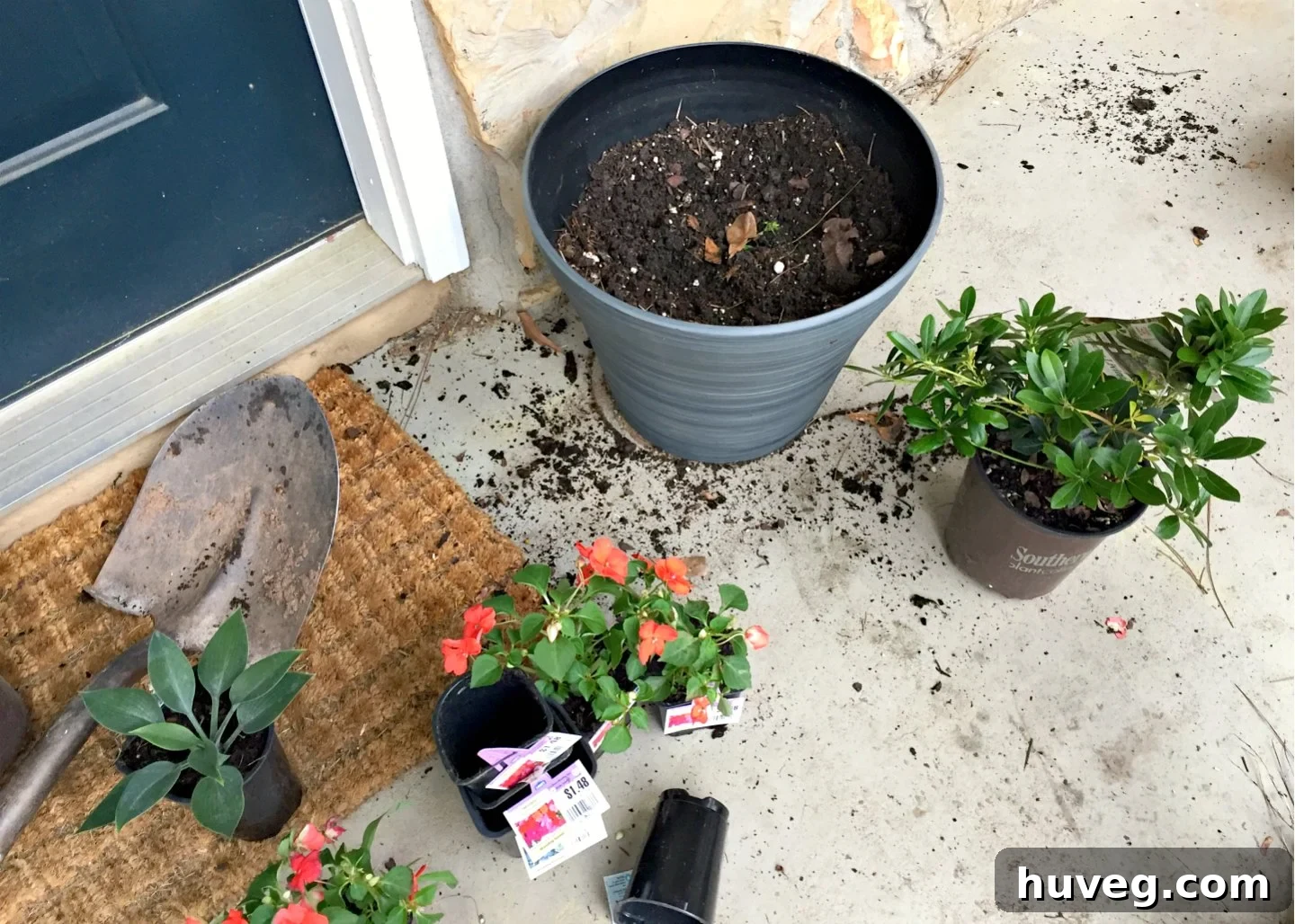
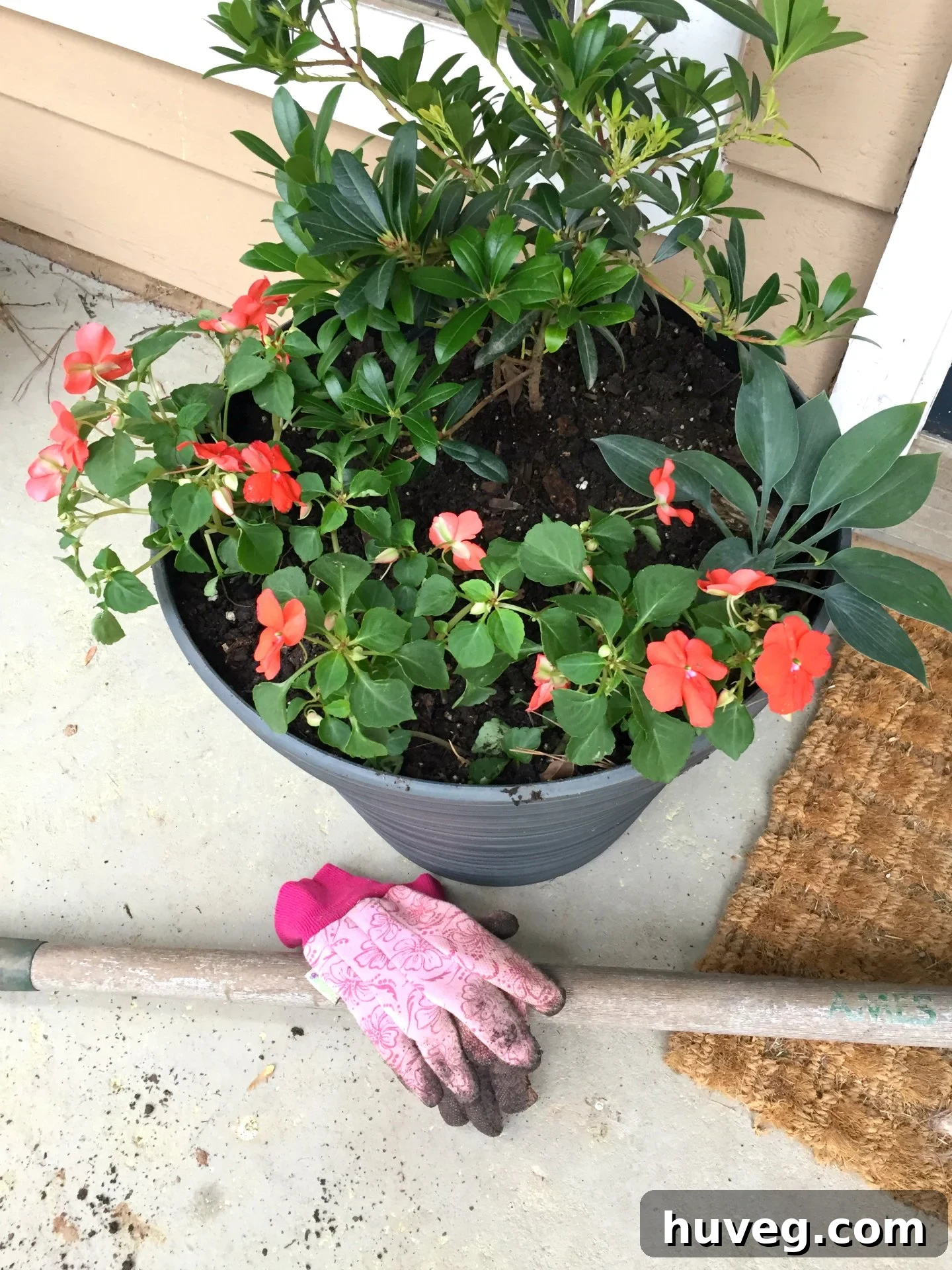
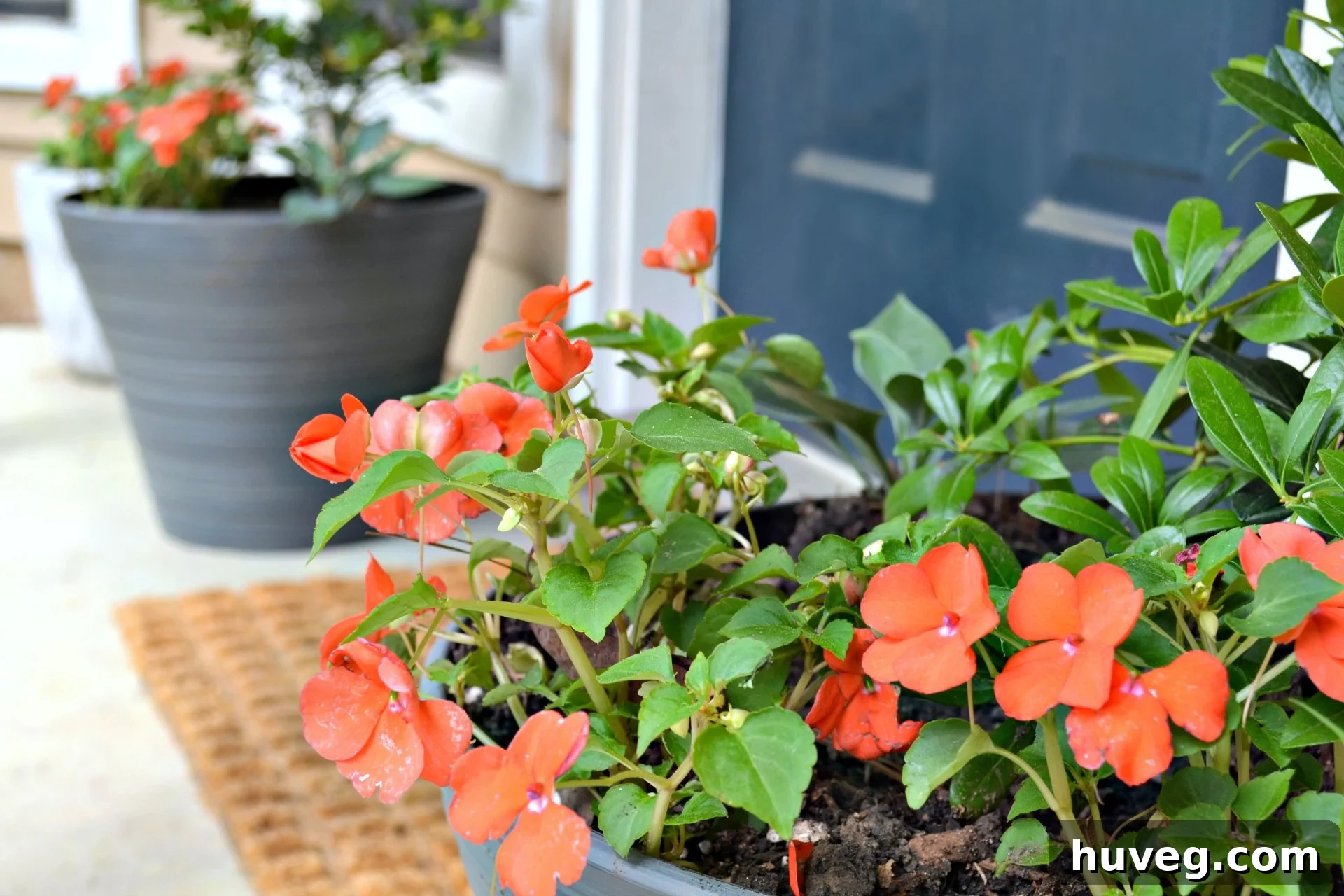
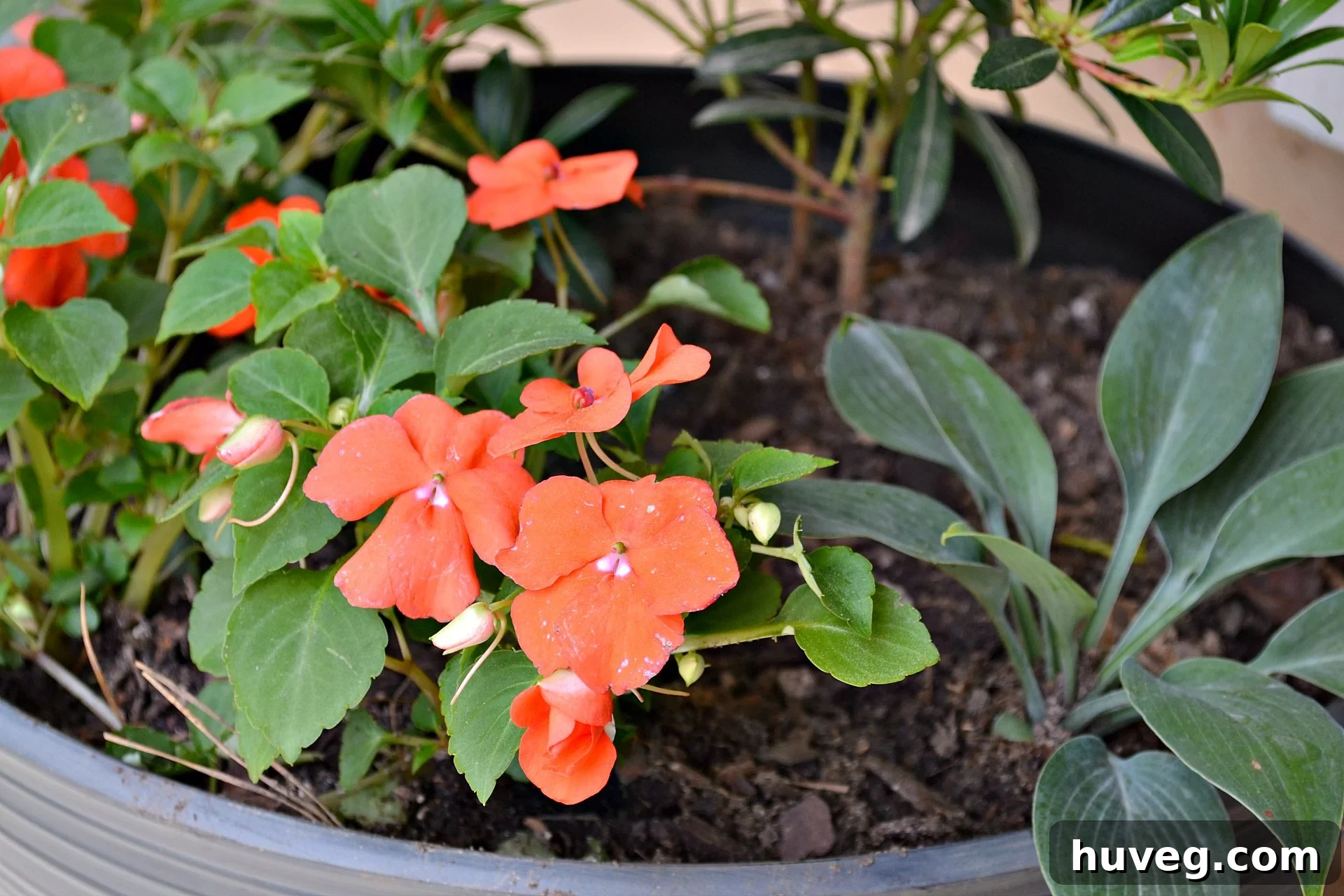
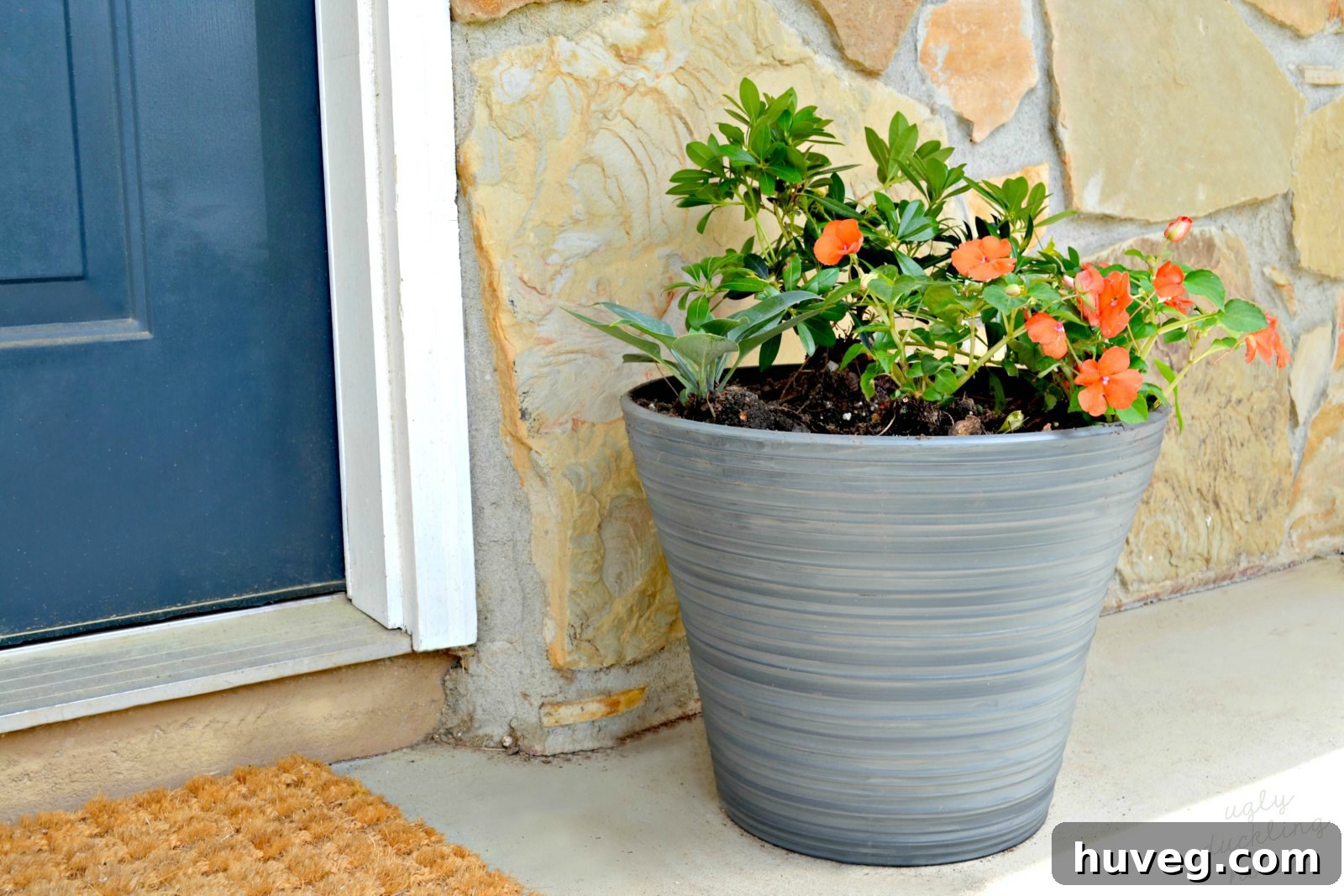
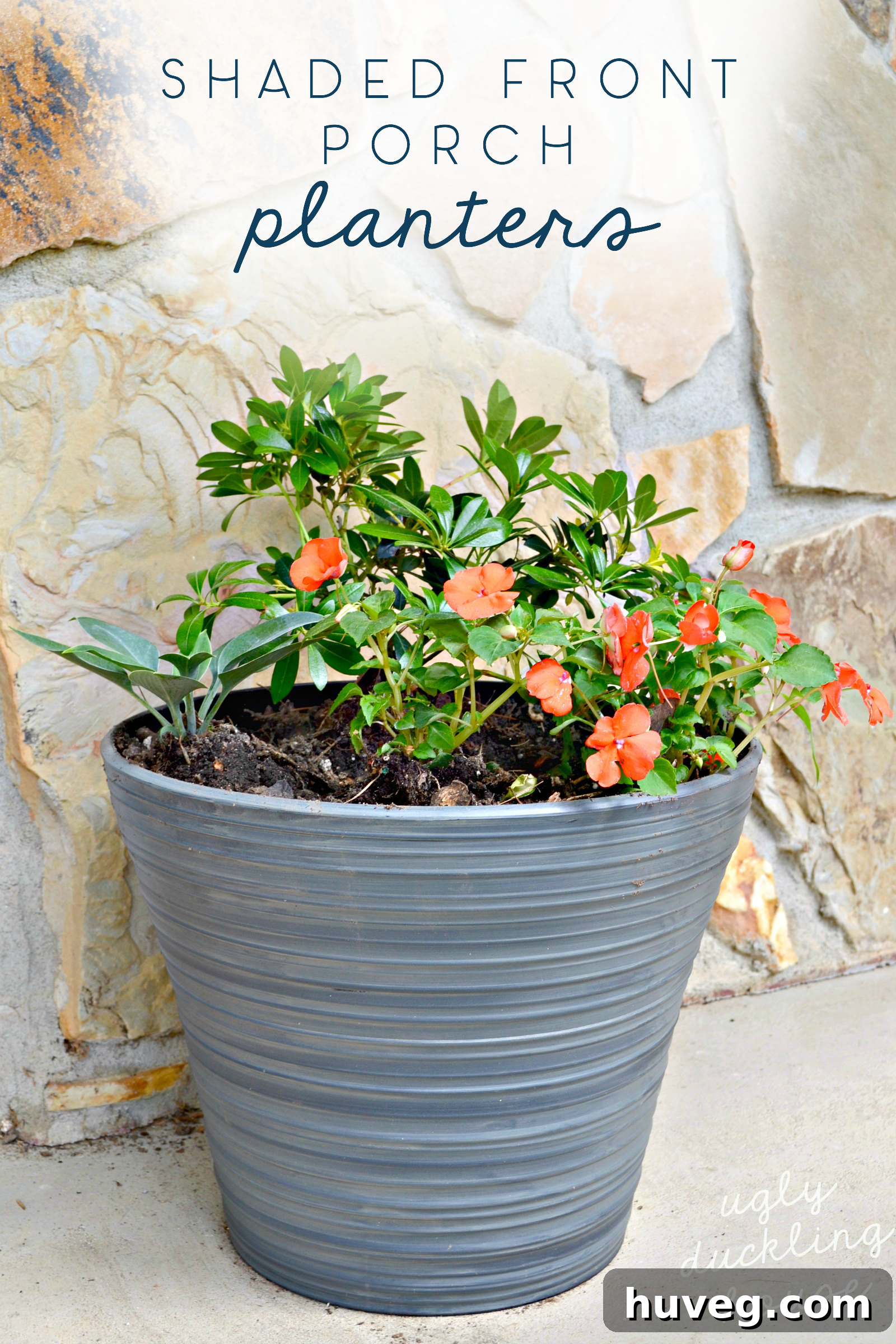
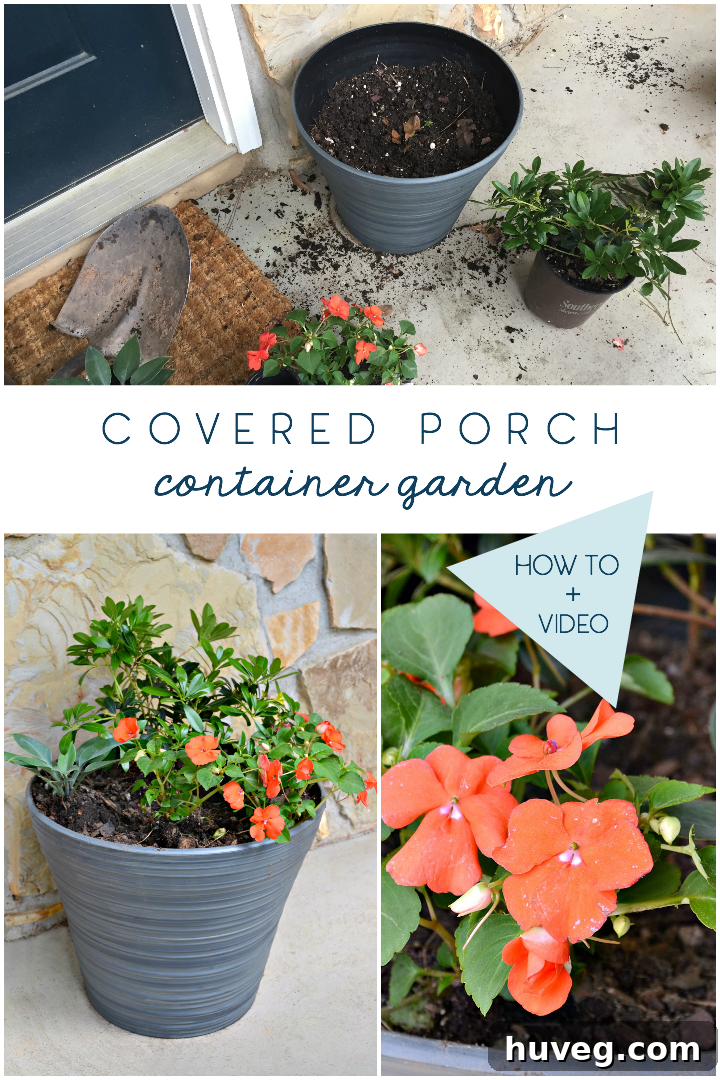
While some plants might cleverly fulfill two of these roles simultaneously, aiming for a selection that collectively offers height, fullness, and varied texture is always a solid strategy. For this season, I opted not to include a traditional “spiller” in every container but still prioritized visual variety. I achieved this by incorporating a larger evergreen shrub towards the back of each container to add significant height and long-term structure. Alongside this, a set of perennials, like the hosta, introduced fascinating texture with their silvery-green leaves. Finally, a third plant was chosen for a bright accent color, with vibrant orange-red blooms, ensuring a lively pop. These colorful impatiens, while annuals, serve as an inexpensive and effective filler option for immediate impact. In time, I might replace them with a more cascading plant, such as Creeping Jenny, to introduce that lovely spilling effect and enhance the overall dynamism of the planters.
3. Ingenious Ways to Lighten Pots and Conserve Soil
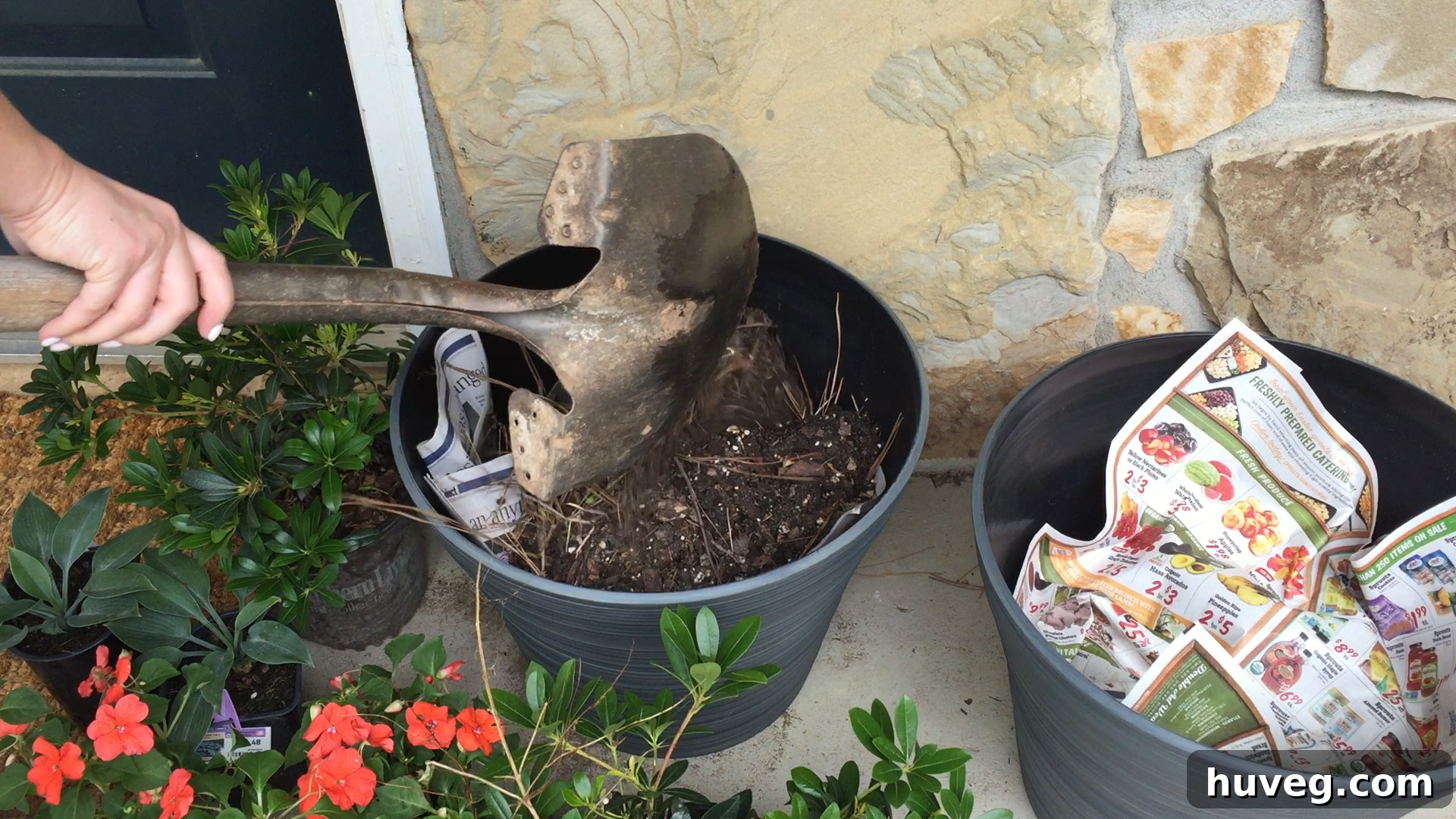
Have you ever struggled to move a heavy potted plant? Or perhaps winced at the cost of filling a large container entirely with potting mix? There’s a brilliant, cost-effective, and environmentally friendly trick that addresses both these concerns. You may have even noticed the empty plastic water bottles peeking out in one of the photos above; that’s the secret! This method, which I discovered years ago, not only reduces the amount of expensive potting soil you need per pot but also significantly lightens the container, making it far easier to relocate when necessary.
The process is simple: start by ensuring your container has adequate drainage holes. Then, collect several empty plastic water bottles (or soda bottles, milk jugs, etc.). Place these empty bottles into the bottom third or half of your container. Arrange them to fill as much space as possible without blocking the drainage. The air inside the bottles contributes to the lightness, and their rigid structure helps maintain the soil level. Once the bottles are in place, lay a layer of newspaper or landscape fabric over them. This prevents the potting soil from sifting down between the bottles and ensures a stable planting surface. Finally, add your potting mix on top of the newspaper and plant as usual. This technique saves on soil, reduces weight, and even provides better drainage by creating airspace at the bottom of the pot. It’s a win-win-win for your wallet, your back, and your plants!
4. Angled Planting for Instant Fullness and Lushness
When I first ventured into container gardening, I mistakenly believed that every plant had to be positioned perfectly upright. It wasn’t until a seasoned gardener enlightened me that I realized the power of subtle manipulation. Angled planting is a clever technique that creates an immediate impression of fullness and abundance, making your planters look more established from day one.
The trick is to slightly tilt your plants towards the edge, or “lip,” of the planter when you’re placing them in the soil. This encourages the roots to establish at an angle, directing the plant’s growth outwards and downwards, rather than strictly upwards. This method is particularly effective for “spiller” type plants, as it helps them cascade beautifully over the container’s rim. However, it also works wonders for fillers and even some thrillers, especially those with dense foliage. For example, I used this technique with the impatiens in my planters. By tilting them slightly outwards, I made their vibrant color pop more prominently and gave the entire planter a much richer, fuller appearance. This simple adjustment can transform a sparse-looking arrangement into a lush, thriving display, creating that desirable overflowing effect much sooner.
5. Nurturing New Arrivals: Consistent Initial Watering
Just like moving day can be stressful for humans and pets, transplanting is a significant shock for plants. They are uprooted from one environment and placed into a new one, and their root systems need time to adjust and re-establish themselves. During this critical establishment period, new plants require more attentive care, especially when it comes to watering.
Immediately after planting, water your containers thoroughly until water drains from the bottom. For the first few days to a couple of weeks, depending on the plant species, weather, and container size, your new plants will need regular, often daily, watering. This consistent moisture helps the roots spread into the new potting mix and reduces transplant shock. Don’t rely solely on surface moisture; stick your finger about an inch or two into the soil to feel for dampness. If it feels dry, it’s time to water. However, be careful not to overwater, as this can lead to root rot. Good drainage is essential. Once the plants begin to show new growth and appear vigorous, you can gradually transition to a regular watering schedule tailored to their specific needs, factoring in local climate conditions and plant type. Think of it as providing extra care for a new baby – consistent attention in the beginning pays off with robust, healthy growth down the line.
6. Embracing Patience for Sustainable Garden Growth
One of the most valuable lessons I’ve learned in gardening is the virtue of patience. It’s easy to get carried away with enthusiasm and overplant, hoping for an instant, lush display. However, I’ve found that a slower, more thoughtful approach ultimately leads to a more beautiful, sustainable, and satisfying garden style. My natural impatience often pushes me to think I haven’t planted enough or that my initial selections are too small during the first year of new plants.
Resist the urge to overcrowd your containers. Plants, especially perennials and shrubs, grow! Giving them adequate space to mature is crucial for their long-term health and the overall aesthetic of your planter. An ambitious planting plan, aiming for immediate density, often results in plants competing for resources, stunted growth, and an overwhelming amount of upkeep. This can quickly lead to stress for both the gardener and the plants, often resulting in brown, struggling specimens.
Instead, embrace a simple, manageable care plan, especially for the first year. For instance, the main evergreen shrubs in each of my containers are expected to grow between 3-4 feet tall. While I added some colorful annuals for immediate impact this year, these will eventually be replaced, and the primary shrubs will naturally fill out the space. This means future seasons will require far less “filling in.” By allowing your plants the time and space to develop their natural form and size, you cultivate a healthier, more harmonious garden that demands less intensive labor and provides greater enjoyment in the long run. Patience truly is a gardener’s best friend.
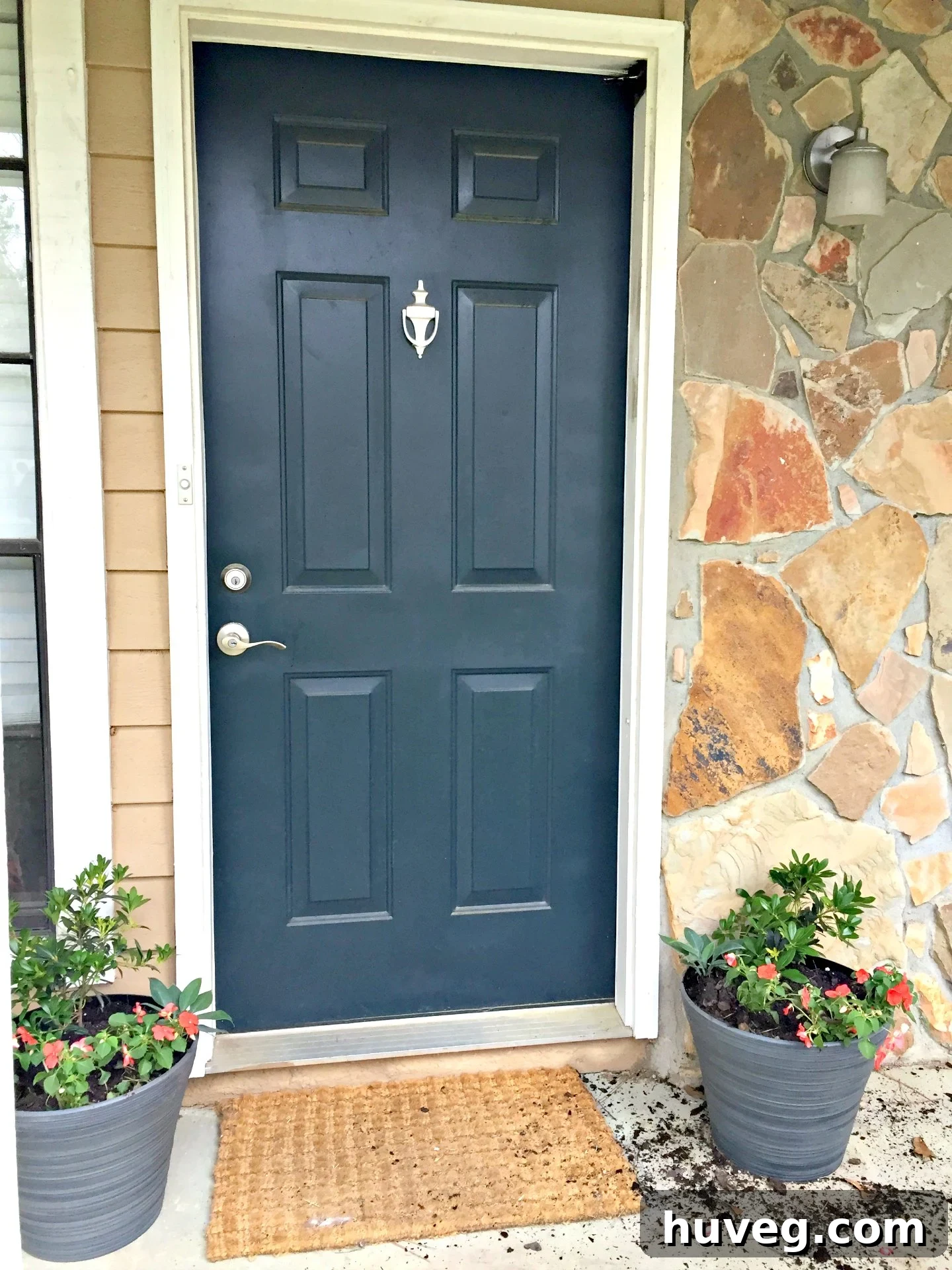
Ultimately, coming home to a porch adorned with vibrant new colors and lush greenery is incredibly rewarding. These thoughtfully designed planters transform a functional space into a welcoming outdoor sanctuary, boosting curb appeal and providing immense personal satisfaction. By applying these practical tips, you can create your own stunning container gardens that thrive beautifully and effortlessly.
Eager for more inspiring outdoor DIY ideas and gardening projects? You’re in luck! Explore these related articles for further inspiration and practical guides:
- How to Create a Wildflower Garden for Butterflies, Hummingbirds, Bees, and Other Pollinators
- How to Build a Raised Vegetable Garden Bed (P.S. Marigolds are a Natural Pest Control Plant!)
- Unlock the Secrets: How to Propagate Hydrangeas for More Blooms
- Smart Ways to Save Money on Mulch and Landscaping Supplies
- Budget-Friendly Gardening: How to Save on Perennials and Hanging Basket Plants
- Illuminate and Decorate: DIY Light Pole Planters
For even more visual guidance and step-by-step tutorials, you can catch a dedicated video playlist right here! Have a fantastic weekend, and happy gardening, friends!